
Table of Contents
As reported on 27/03/2026 by major outlets, the campaign against Iran has inflicted significant damage on U.S. military hardware, with losses concentrated among radar systems and several classes of aircraft. Those assets, valued in the billions by some assessments, were lost or rendered inoperable as a result of a mix of enemy strikes, friendly fire incidents and accidents that followed sustained operations. Alongside kinetic action, Washington has floated a multi-point negotiation blueprint that links dismantling parts of Iran’s nuclear and military apparatus to sanctions relief, while regional chokepoints such as the Strait of Hormuz remain a central bargaining chip.
Visible losses on the battlefield and their operational cost
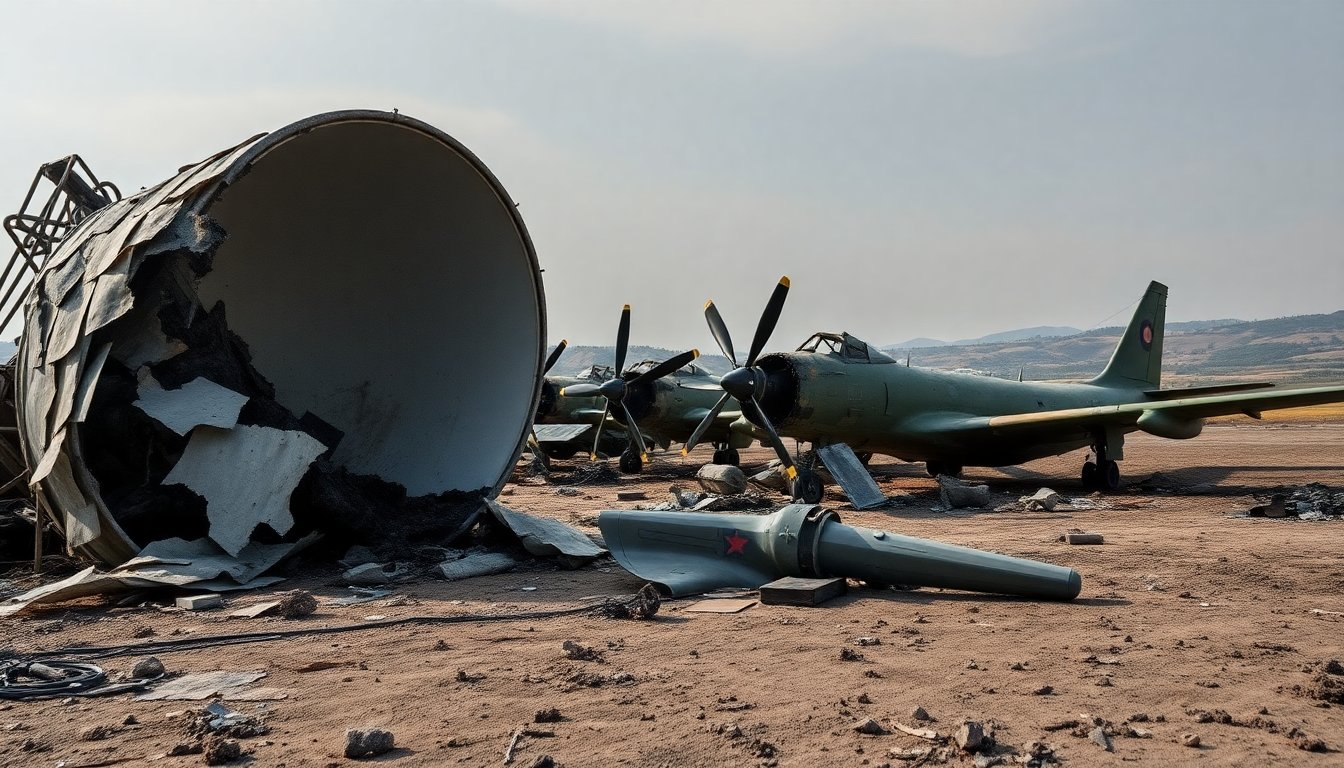
The most immediate consequence of the campaign has been a measurable erosion of some U.S. capabilities in-theater. Damage to coastal and land-based radar systems has complicated early-warning timelines, and the loss or damage of tactical and support aircraft has reduced sortie endurance and flexibility. Analysts emphasize that not all attrition is the result of direct strikes; a portion stems from friendly fire—an incident category where combat identification fails—and from accidents during intense sortie rates. The removal from service of specific sensors and platforms translates into harder operational choices, forcing commanders to prioritize missions and to rely on allies and reserves to fill temporary gaps.
What types of assets were hit
Damage patterns have focused on sensors and logistics nodes: coastal radars, early-warning arrays, tactical aircraft, and support helicopters. Naval units also reported encounters with remnants of mine warfare and other maritime hazards, which the U.S. asserts it has neutralized. Military planners describe the targeted facilities as components of military-industrial infrastructure, a term used broadly to include production lines, research centers and missile assemblages. The combined effect is not simply a headline tally of destroyed equipment but a hit to the replenishment and sustainment chain that underpins long-term operations.
Diplomacy in parallel: offers, counteroffers and public rhetoric
On the diplomatic front, the United States presented a detailed, multi-point proposal aimed at curbing Iran’s nuclear and naval threats in exchange for phased relief from economic penalties. The plan reportedly ties steps such as the demilitarization of sensitive sites and guarantees for freedom of navigation through the Strait of Hormuz to sanction relief. Tehran countered with its own set of conditions. Public statements by U.S. leadership signaled cautious openness to negotiation while setting a compressed timeline for decisive outcomes. At the same time, criticism of transatlantic partners has surfaced, with officials asserting that the conflict tested the cohesion of NATO and that allied responses were uneven.
Allies, international forums and energy stakes
Key diplomats and politicians have urged collective action to reopen shipping lanes, and representatives from the G7 have discussed measures to secure trade through the Gulf. Energy markets and supply chains are closely watched: proponents of kinetic pressure argued it could force Tehran back to the table, while others warned of spillovers to global crude prices. Concurrently, some U.S. officials acknowledged that materiel destined for other theaters could be reallocated in wartime, a friction point for partners worried about secondary shortages.
Strategic recalibration and what lies ahead
Operational and diplomatic moves have converged on a common tactical logic: degrade the opponent’s ability to rebuild hard-power nodes while extracting political concessions. Parties involved shifted focus from provoking internal unrest to dismantling production and command capabilities. Observers note a rise in hawkish voices within Iran advocating for a stronger deterrent posture, even as Tehran negotiates. Escalatory incidents—explosions in urban centers, exchanges with nonstate actors, and cross-border strikes—underscored how quickly kinetic pressure translates into political statements and public fear.
Outlook and risks
Officials in Washington maintained that the campaign could be time-limited and that a window exists to secure meaningful constraints on Iran’s capabilities, yet leaders also warned that incomplete coordination among allies might blunt leverage. The coming weeks will test whether battlefield pressure and sustained diplomacy can be synchronized to produce a durable settlement, or whether further attrition and reciprocal strikes will deepen regional instability. Whatever the outcome, the intersection of damaged military assets and high-stakes negotiation will shape both immediate operations and longer-term strategic relationships in the region.