
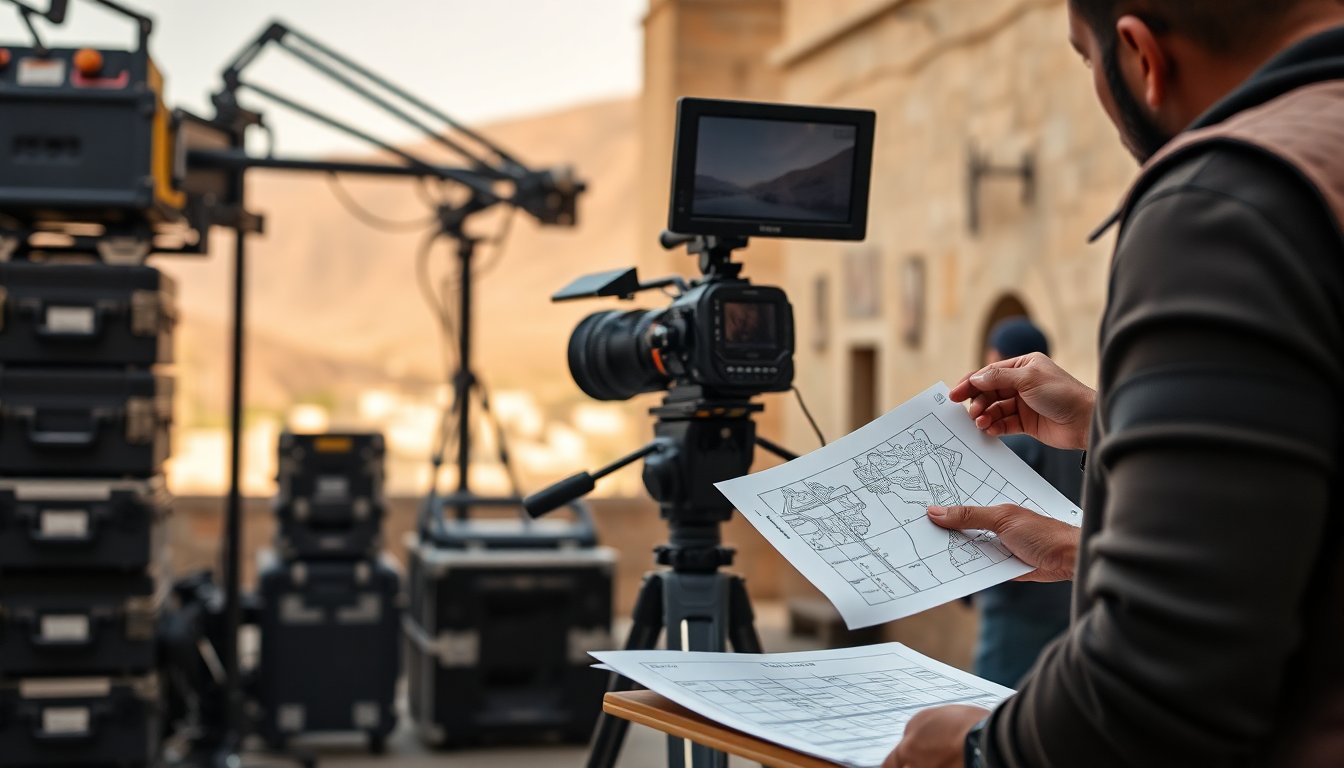
Morocco’s film scene has quietly evolved. No longer just a picturesque backdrop for foreign crews, the country is starting to export its own stories. A mix of smarter policies, fresh incentives and targeted training has nudged the industry from short-term service work toward sustained creative production. International projects still arrive for locations and experienced crews, but increasingly Moroccan companies are developing content for global platforms—broadening cultural exports beyond tourism and remittances and making the sector more appealing to investors.
Policy moves and practical supports
A turning point came in 2018 with the launch of a production tax credit, now capped at 30%. The Moroccan Cinematographic Center (CCM) has used the scheme to support 23 foreign films, and by 2026 those shoots had generated more than $165 million in local spending. That money didn’t just pay for trailers and catering; it seeded longer-term activity—training, equipment hire and vendor relationships—that help build a local production ecosystem. Film schools, foundations and producers have responded with workshops, grants and capacity-building programs so Moroccan crews can compete on the international stage.
By the numbers
– 23 foreign productions directly used the incentive framework.
– Over $165 million in local expenditure traced to those shoots by 2026.
– The tax credit (up to 30%) has helped lower effective costs for many international projects, and CCM figures show the result: more shoot days, more local contracts and higher supplier spend.
Where Morocco fits in the market
Location choices today are rarely decided on scenery alone. Producers weigh incentive generosity, administrative predictability and the availability of skilled crews. The 2018 reforms nudged Morocco up the shortlist, particularly for shoots where contracts and payments are smooth and bureaucracy is predictable. In short: the country now competes not just with other scenic destinations but with established production hubs across Europe and Africa.
Risks and openings
The vulnerabilities are familiar—policy reversals, slow administration and currency volatility—but they’re manageable. Clearer incentive rules, faster permit processing and greater transparency would likely unlock more bookings. One modest improvement, such as shaving days off permit turnaround, could boost the number of shoots. Yet bottlenecks remain: studio space and post-production facilities haven’t expanded at the same pace as demand.
Spillover effects
Film production ripples through the local economy. Hotels, transport providers, caterers and equipment suppliers all benefit. Film schools report rising enrollment, and local festivals and talent platforms see more projects reach festival-ready quality. The multiplier effect—from supplier contracts to short-term hires—helps justify public and private investment in the sector.
Connecting creators to markets
Beyond fiscal incentives, Morocco has built bridges between local creators and international buyers. Initiatives like the Marrakech Film Festival’s Atlas Workshops combine training with marketplace access: filmmakers meet mentors, polish dossiers and pitch projects to potential partners. These programs have helped more than 150 projects and reduced the pressure on regional talent to relocate in search of co-producers or sales agents.
Atlas Workshops in practice
The Workshops are part classroom, part marketplace. Filmmakers refine their projects with industry mentors, participate in development sessions, and get introductions to potential financiers and distributors. Alumni frequently land festival selections and follow-on financing—an encouraging sign that the program lifts visibility for North and West African cinema.
Professionalizing market representation
The CCM has shifted from ad-hoc promotion to targeted market strategy. By selecting producers for key markets and emphasizing parity and dossier quality, the goal is simple: make it easier and cheaper for buyers to commit. As an example, 10 producers were chosen to attend the Berlin market from a pool of more than 75 applicants—an indication of both demand and selectivity.
What drives dealmaking
Several practical factors shape outcomes: the strength of a dossier, the team’s track record, gender balance, timing relative to funding cycles, and currency risk. Stronger pitches lead to better budgets, wider distribution options and more professional contracts. When workshops and mentorship raise the standard of proposals, the entire value chain benefits.
Policy moves and practical supports
A turning point came in 2018 with the launch of a production tax credit, now capped at 30%. The Moroccan Cinematographic Center (CCM) has used the scheme to support 23 foreign films, and by 2026 those shoots had generated more than $165 million in local spending. That money didn’t just pay for trailers and catering; it seeded longer-term activity—training, equipment hire and vendor relationships—that help build a local production ecosystem. Film schools, foundations and producers have responded with workshops, grants and capacity-building programs so Moroccan crews can compete on the international stage.0
Policy moves and practical supports
A turning point came in 2018 with the launch of a production tax credit, now capped at 30%. The Moroccan Cinematographic Center (CCM) has used the scheme to support 23 foreign films, and by 2026 those shoots had generated more than $165 million in local spending. That money didn’t just pay for trailers and catering; it seeded longer-term activity—training, equipment hire and vendor relationships—that help build a local production ecosystem. Film schools, foundations and producers have responded with workshops, grants and capacity-building programs so Moroccan crews can compete on the international stage.1
Policy moves and practical supports
A turning point came in 2018 with the launch of a production tax credit, now capped at 30%. The Moroccan Cinematographic Center (CCM) has used the scheme to support 23 foreign films, and by 2026 those shoots had generated more than $165 million in local spending. That money didn’t just pay for trailers and catering; it seeded longer-term activity—training, equipment hire and vendor relationships—that help build a local production ecosystem. Film schools, foundations and producers have responded with workshops, grants and capacity-building programs so Moroccan crews can compete on the international stage.2
Policy moves and practical supports
A turning point came in 2018 with the launch of a production tax credit, now capped at 30%. The Moroccan Cinematographic Center (CCM) has used the scheme to support 23 foreign films, and by 2026 those shoots had generated more than $165 million in local spending. That money didn’t just pay for trailers and catering; it seeded longer-term activity—training, equipment hire and vendor relationships—that help build a local production ecosystem. Film schools, foundations and producers have responded with workshops, grants and capacity-building programs so Moroccan crews can compete on the international stage.3
Policy moves and practical supports
A turning point came in 2018 with the launch of a production tax credit, now capped at 30%. The Moroccan Cinematographic Center (CCM) has used the scheme to support 23 foreign films, and by 2026 those shoots had generated more than $165 million in local spending. That money didn’t just pay for trailers and catering; it seeded longer-term activity—training, equipment hire and vendor relationships—that help build a local production ecosystem. Film schools, foundations and producers have responded with workshops, grants and capacity-building programs so Moroccan crews can compete on the international stage.4
Policy moves and practical supports
A turning point came in 2018 with the launch of a production tax credit, now capped at 30%. The Moroccan Cinematographic Center (CCM) has used the scheme to support 23 foreign films, and by 2026 those shoots had generated more than $165 million in local spending. That money didn’t just pay for trailers and catering; it seeded longer-term activity—training, equipment hire and vendor relationships—that help build a local production ecosystem. Film schools, foundations and producers have responded with workshops, grants and capacity-building programs so Moroccan crews can compete on the international stage.5