
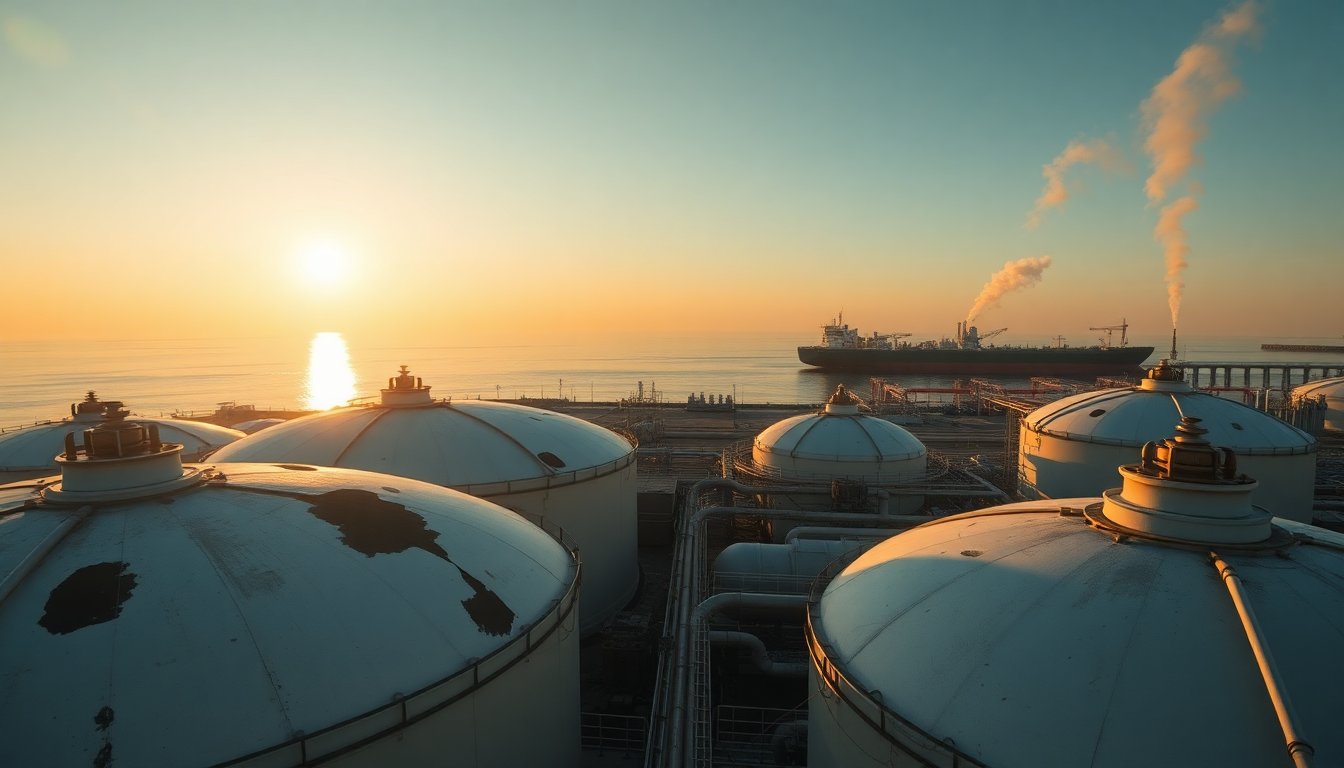
FLASH — In the last hours: state-owned QatarEnergy paused production at affected facilities after drone strikes damaged energy and power sites in Qatar’s industrial zones, officials and reporters on the ground confirm. The company said the shutdown is a precaution responding to an immediate security threat. Markets, utilities and policymakers have moved quickly to assess the fallout; because Qatar supplies a large share of global LNG, even a short outage could tighten near-term availability and push prices higher.
What happened
– Where and when: Strikes hit industrial areas in Mesaieed and Ras Laffan in recent hours.
– Who: Unmanned aerial vehicles targeted energy and power infrastructure. QatarEnergy and regional security services are managing the response.
– Immediate impact: Facilities sustained damage but, according to officials, there were no casualties. QatarEnergy invoked contingency protocols and suspended output at the affected sites to protect staff and inspect equipment.
Operational consequences
The shutdown affects electricity generation and fuel processing at Ras Laffan, a major LNG hub. Operations were halted as an emergency safety measure, which also triggers temporary suspension of some contractual supply commitments. Logistical teams are on site securing personnel and critical assets while engineers and security crews conduct damage and integrity checks.
Market fallout
Markets reacted quickly: benchmark gas indicators in Europe and Asia rose on reports of the strikes. Traders are reworking forward curves and importers are weighing their exposure. Buyers with flexible contracts have started shopping for alternative cargoes on the spot market, while those tied to long-term supplies face fewer immediate options.
Shipping and insurance
Vessel movements through nearby chokepoints were already constrained by regional tensions; the production pause compounds maritime congestion and has disrupted scheduled shipments. Carriers report slot squeezes and longer laytimes. Insurers are monitoring claims risk as delays and reroutings increase vulnerability to losses.
Who can step in
Some exporters have spare capacity or flexibility to help plug gaps. The United States and Australia could raise shipments, and producers in Russia and West Africa might redirect cargoes where logistics and contracts allow. But shipping bottlenecks and contractual limitations mean relief won’t be instantaneous — rerouted cargoes take time to load, transit and clear destination requirements.
What to watch next
– QatarEnergy’s updates on damage, safety checks and restart timelines.
– Shipping manifests and vessel movements through regional chokepoints.
– Spot-market activity and any force majeure notices that affect contractual liabilities.
Market volatility is likely to persist until supply and export timelines are clarified.
Policy and industry responses
Governments and system operators are reviewing contingency measures. Options under consideration include tapping strategic reserves, relaxing nomination and balancing rules, and coordinating emergency purchases. Longer-term policy choices — such as accelerating new liquefaction or regasification projects and hardening infrastructure — will depend on damage assessments, insurance outcomes and commercial feasibility. If assessments show limited damage, the interruption could be brief; if not, reallocation of global LNG flows and sharper price moves are possible. Reporters on the scene and officials say further official statements are expected as inspections conclude. We will update this story as new, verified information becomes available.