
Table of Contents
savoring slow food: the roasted tomato that tells a story
The palate never lies… Close your eyes. Warm, sun‑kissed flesh yields to a gentle press. The perfume of caramelized sugars rises, a whisper of smoke appears, and a deep, lingering umami settles like a memory. This is the roasted tomato—humble in appearance, profound on the tongue. Behind every dish there’s a story… As Elena Marchetti, former Michelin‑starred chef turned food writer, I present technique and terroir as co‑authors of flavor. As a chef I learned that simple ingredients reveal complexity when treated with care.
behind the tomato: history and the story of seasonality
The tomato’s journey begins with cultivation and climate. Varieties developed over centuries show distinct terroir signatures. Heirloom types bring concentrated sugars and aromas. Industrial breeds favour yield and shelf life over taste.
Seasonality governs intensity. Summer sun increases sugar and acid balance, producing tomatoes that caramelize when roasted. Off‑season fruit lacks that concentration, yielding flatter results. For operators and home cooks alike, timing is a primary tool for flavor.
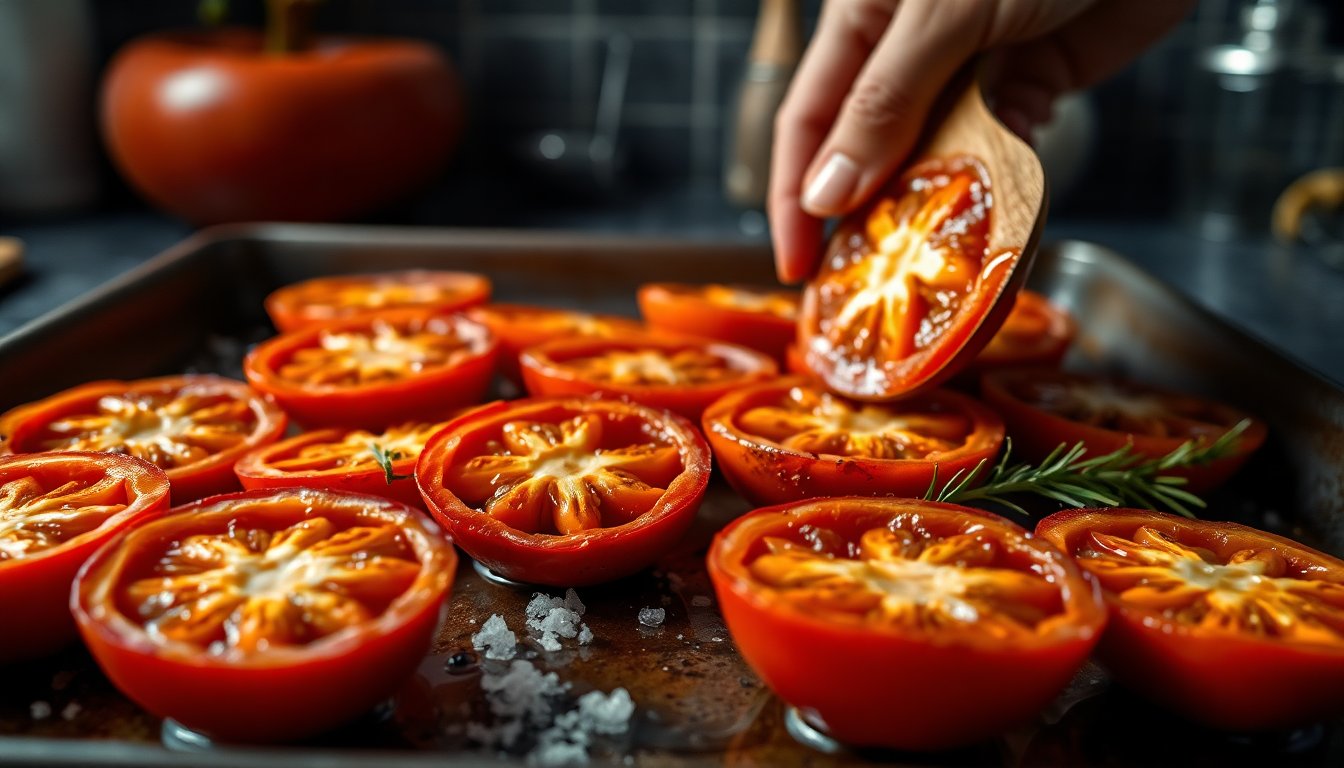
Roasting is both preservation and transformation. Slow heat concentrates juices, initiates Maillard reactions, and releases volatile compounds that define aroma. Controlled dehydration intensifies umami and sweetness without adding fat.
Attention to the short supply chain matters. Local growers, proper harvest timing and minimal transport preserve the tomato’s original profile. Traceability supports consistent results and aligns with sustainability goals prized by chefs and diners.
The palate never lies: roasted tomato announces itself with a glossy, concentrated sweetness and a savory depth that fills the air.
Traceability supports consistent results and aligns with sustainability goals prized by chefs and diners. Roasting translates those supply-chain assurances into a predictable flavour profile. Heat drives Maillard reactions and controlled caramelization. Those chemical processes amplify free amino acids and reducing sugars. The result is an intensified umami that reads as both savory and rounded on the tongue.
TECHNIQUE MADE ACCESSIBLE: HOW ROASTING BUILDS UMAMI
Start with even pieces to ensure uniform heat exposure. Dry the surface to encourage browning rather than steaming. Moderate oven temperatures concentrate flavor without charring the flesh. A light coating of oil conducts heat and promotes even coloring while preserving the tomato’s innate acidity.
Roasting is as much timing as temperature. Shorter, hotter roasts preserve brightness; longer, gentler roasts yield jammy depth. Layering aromatics such as thyme or garlic early in the roast infuses savory notes without masking the tomato’s character. Salt applied before roasting draws moisture outward and accelerates flavor concentration.
Technically, umami emerges from glutamate and nucleotides released and transformed during heating. Fermentation and curing share this chemistry, which is why roasted tomato pairs readily with aged cheeses, cured meats, and soy-based elements. Behind every dish there’s a story of transformation—from field selection to oven technique—that makes simple fruit sing.
The palate never lies: the slow roast should smell of caramel and sun-ripened flesh. Behind every dish there’s a story of transformation—from field selection to oven technique—that makes simple fruit sing. As a chef I learned that small choices change the final note.
Simple variations and preservation
Turn roasted tomatoes into a quick sauce by smashing them with a fork and a splash of good olive oil. For brightness add a few drops of lemon or a shaving of preserved lemon rind. A little crushed red pepper lifts sweetness without stealing center stage.
For herb accents, fold in torn basil or oregano just before serving. Toasted breadcrumbs or a scatter of grated hard cheese adds texture and a savory edge. Use these elements sparingly so the concentrated tomato flavor remains the protagonist.
To deepen savory layers, stir in a teaspoon of miso or a small spoonful of tomato paste while the tomatoes are still warm. These ingredients increase umami and bind the sugars into a more rounded mouthfeel.
Preserve cooked tomatoes by one of three simple methods. Cool them to room temperature on a wire rack to avoid excess condensation in storage. Pack into sterilized jars, cover with olive oil and refrigerate for up to two weeks. Label jars with the day prepared.
Alternatively, spread flat on a tray and freeze in single layers, then transfer to airtight bags. Frozen tomatoes keep well for about six months and thaw into sauces or stews without losing their concentrated profile.
For a longer pantry option, simmer roasted tomatoes with vinegar, sugar and spices into a chutney. Jar using proper canning technique and follow food-safety guidance for shelf stability. This creates a condiment that carries terroir and seasonality into winter kitchens.
Small gestures—timing, a pinch, a choice of fat—deliver the transformation. Practical preservation preserves taste and reduces waste. Expect reliable results when technique and respect for the ingredient guide each step.
Connection to territory and sustainable sourcing
The palate never lies: flavours reveal provenance as clearly as soil charts. Expect reliable results when technique and respect for the ingredient guide each step.
Prioritise supply chains that shorten the distance from field to plate. Partnering with small growers and filiera corta reduces food miles and preserves varieties suited to local microclimates. Heirloom tomatoes, for example, hold distinct terroir notes that survive gentle roasting and transformation.
Supporting producers who practise crop rotation and minimal intervention strengthens biodiversity. Organisations such as Slow Food and Gambero Rosso link culinary quality to ecological and social responsibility. As a chef I learned that provenance shapes texture as much as taste.
An invitation to taste and try
Begin with a single technique and scale up. Flash-roast at high heat for charred complexity when time is short. Confit roasted fruit submerged in olive oil to extend shelf life without sacrificing aroma.
Ferment diced roasted tomato with a measured salt starter to develop a tangy, lactic paste that balances roasted sweetness. Use the paste sparingly with grains or grilled fish to let both acidity and umami sing. Behind every dish there’s a story of origin, method and season; this one is no different.
Practical tip: label portions and note the roast time and salt percentage for repeatable results. The palate never lies—record what you taste, then refine.
The palate never lies—record what you taste, then refine. Roast tomatoes slowly to concentrate sweetness, deepen umami and reveal terroir in every bite.
As a chef I have learned to listen to ingredients. Roast at moderate heat until edges caramelize and juices thicken. This gentle concentration transforms texture and amplifies aroma.
Start simply: spread roasted tomato on warm grilled bread, finish with torn basil and a scattering of toasted almonds. Use the same tomato to elevate roasted eggplant or to finish a risotto; the ingredient will lift the whole plate.
Seek tomatoes that show sun-ripeness at the market. Note skin thickness, juice and scent. Keep a small tasting log of time, temperature and salt levels to reproduce successful results.
Behind every tomato is soil, hands and time. Roast with patience and you let that story speak through flavour, texture and memory.