
Table of Contents
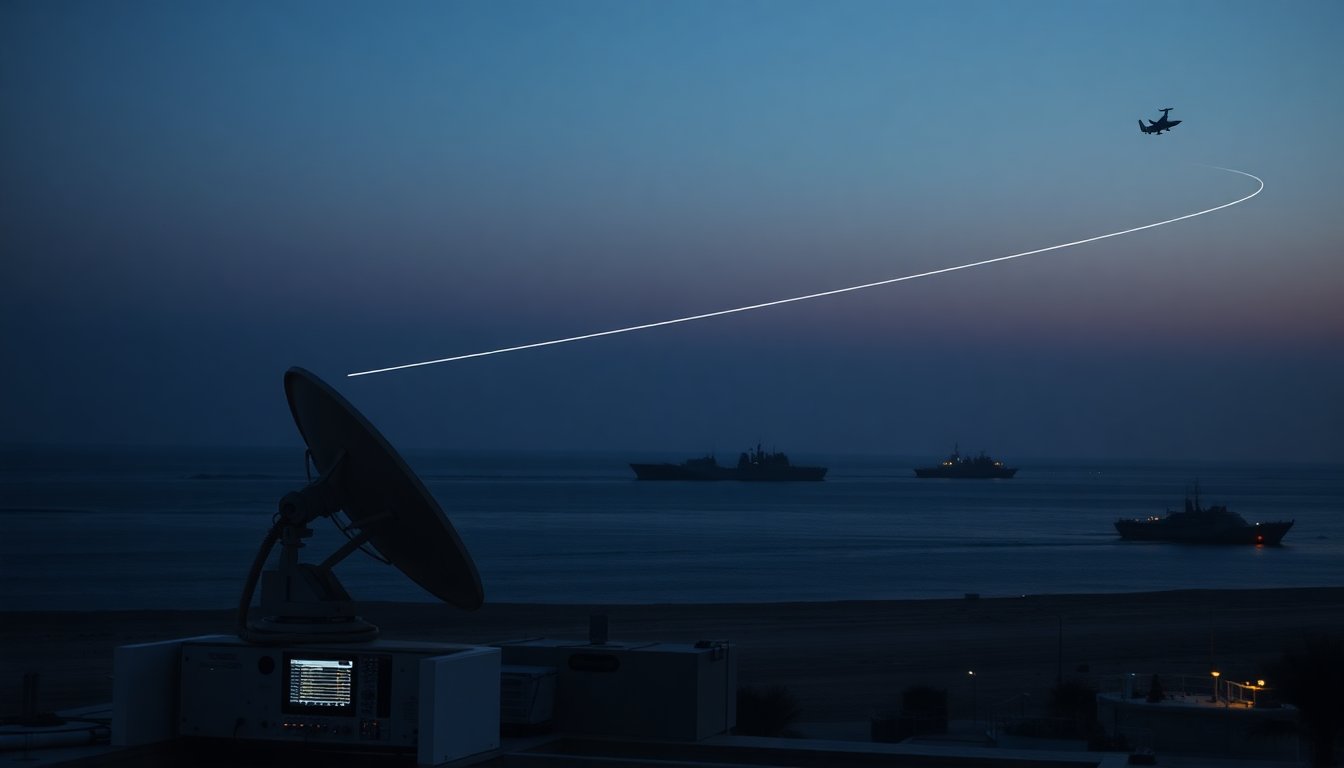
The strategic landscape around the Gulf has been changing not primarily through new troop deployments but through the transfer of sensors, data and strike platforms. In recent reporting, analysts describe how Moscow and Beijing have moved beyond traditional arms sales to provide Tehran with satellite imagery, shared intelligence and electronic systems that materially improve Iranian targeting. This exchange is not merely technical assistance: it is a shift in how battles are fought, where control of information flows and the electromagnetic spectrum can be as decisive as missiles and ships.
Viewed together, these transfers amount to a practical narrowing of capability gaps. Iran’s own reconnaissance constellations are limited; with access to foreign overhead surveillance and advanced signals equipment, Tehran can track fast-moving naval and air assets with a precision it lacked before. That improves the lethality and accuracy of Iranian drones and missiles, and it forces the United States and Israel to adapt to an adversary that now has better visibility of the battlefield.
What Moscow and Beijing are providing
Russia’s contribution centers on high-resolution imagery and intelligence sharing that supplements Iran’s reconnaissance gaps. Transferred overhead assets and downlinked optical and radar data give Tehran continuous situational awareness over wide maritime and land areas. At the same time, China has been exporting systems and architectures that affect navigation and detection: the shift from Western satellite navigation to BeiDou-3 for encrypted positioning, and the deployment of low-frequency radars tailored to detect stealthy platforms, are two examples. Together, these items create a more integrated targeting chain for Iranian forces.
Satellites, feeds and targeting
The practical effect of shared satellite imagery is to provide Iran with near-real-time cues about the location of naval task forces and aircraft. When imagery is paired with signals intelligence and coordinate data, it forms the backbone of precision strikes. For Iran, this kind of information is not an accessory: it is the sensor layer that converts a long-range missile or a guided drone from an area weapon into a pinpoint threat.
Radars and anti-ship weapons
On the ground and at sea, Chinese systems have improved Iran’s detection and strike options. Low-band radars designed to counter stealth coatings can reduce the surprise advantage of modern aircraft, while high-speed anti-ship missiles — export variants similar to the CM-302 class — shrink reaction time for carrier groups by flying at supersonic speeds and sea-skimming altitudes. These capabilities are often described as leveling technologies: they do not require parity in numbers so much as they require the defender to close gaps in sensing, interceptors and countermeasures.
Operational effects and recent incidents
The operational consequences have been visible in a string of strikes and near-misses across the region. Several reported attacks have struck facilities linked to US or allied operations with coordinate accuracy that suggests external intelligence inputs. One high-profile case involved a weapon that reached a base housing American personnel, producing tragic casualties and highlighting how improved targeting can translate into unexpected operational outcomes. Those events have prompted intensified countermeasures by the US and Israel, including strikes aimed at degrading radar and communications hubs that enable Iranian targeting.
Countermoves and the contest for the spectrum
Washington and Tel Aviv have responded by hunting command nodes, destroying detection sites and attempting to sever the data links that feed Iranian strike systems. This reciprocal campaign underlines a simple truism: in short, whoever controls the sensors and the electromagnetic spectrum gains the initiative. Destruction of a radar or the disruption of a satellite downlink can blind an adversary as effectively as knocking out a battery of launchers.
Strategic implications and what comes next
The transfers from Russia and China to Iran are not just tactical choices; they reflect broader strategic priorities. For Beijing, supporting Iran’s targeting network offers live operational data that can inform doctrine development relevant to other contingencies. For Moscow, sharing intelligence and hardware is a means of projecting influence and reciprocating support received elsewhere. The net effect is a partial erosion of what was once uncontested technological dominance by the US and its allies in the Gulf.
Beyond the immediate fight
Looking forward, the region may become a proving ground where electronic warfare, networking and satellite-enabled targeting determine outcomes more often than sheer firepower. That raises hard questions about resilience: how to protect sensor networks, harden command-and-control, and ensure redundancy in navigation and surveillance. As this contest unfolds, the side that can most effectively manage and deny information will hold a persistent advantage. The fight has already moved from missiles and ships into the realm of signals and sight, and the consequences will shape regional security concerns for years to come.