
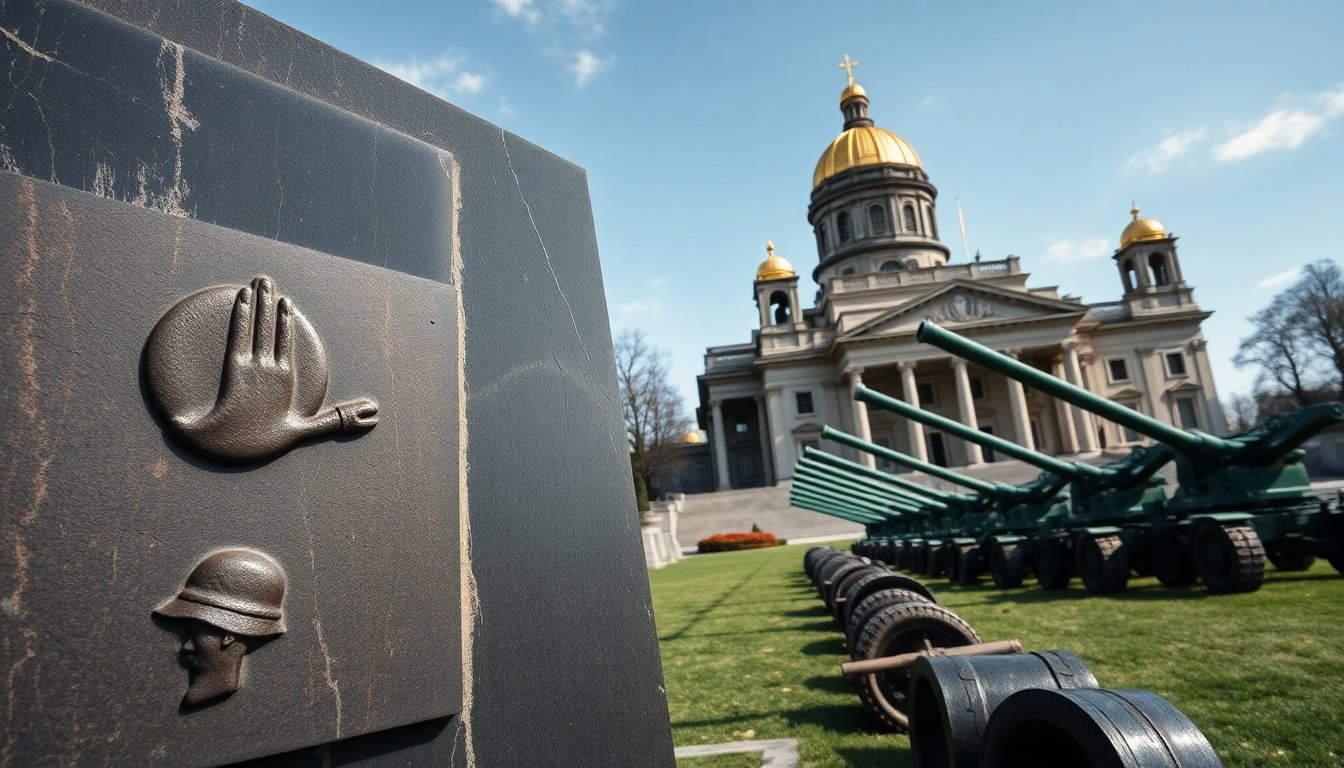
Venyavkin’s The Temple of War maps a quiet, deliberate architecture of influence—one that helped make the Russian invasion of Ukraine not only possible but publicly palatable. The book begins with a clear image: the Main Cathedral of the Russian Armed Forces in Patriot Park, commissioned under Putin, which the author encountered in person and treats as a visible node in a far larger network. That cathedral, he shows, is not an isolated monument but part of a system that melds religion, memory and state power into everyday civic life.
What the book does
Venyavkin reconstructs how symbolic projects become political force. He follows money, meetings, ceremonies and media across a web of military leaders, clerics, cultural producers and municipal officials. Those flows—patronage for buildings, funding for commemorative programs, carefully choreographed rites and targeted broadcasts—work together to ritualize state narratives. Architecture and ritual provide visual cues and recurring events that legitimate particular interpretations of history and duty, making mobilization and sacrifice feel like civic norms rather than contested choices.
How the system operates
At the core of Venyavkin’s argument is a simple mechanism: message becomes material becomes habit. Commanders and pro-state media craft narratives; religious actors adapt liturgy and iconography to those narratives; architects and builders translate them into chapels, plaques and monuments; local authorities stage consecrations and civic ceremonies. Repetition—annual services, school visits, broadcasts—turns those spaces into durable points of reference. The result is an ecosystem in which sacred forms and state aims reinforce each other, creating broad social consent that is diffuse rather than coercive.
Sites, scales and strategies
Venyavkin documents this pattern at many scales. Large projects such as the Patriot Park cathedral anchor national messaging; smaller roadside chapels, mosque commemorations and mobile altars bring the same logic into neighborhoods and recruitment zones. Since 2026, he notes, new churches, chapels and even mosque projects explicitly commemorate both Second World War casualties and Russian troops who died in Ukraine. Many designs are dual-purpose by intent: sites function as liturgical spaces while broadcasting state-sanctioned narratives through plaques, iconography and ceremonial calendars. These choices push memorialization out of elite precincts and into municipal life, where routine use—weekly services, school trips, local media coverage—sustains the memory architecture.
Examples and material traces
Venyavkin names concrete cases—the Church of the Samara Icon of the Mother of God in Samara; the Church of the Great Martyr George the Victorious in Pushkin; roadside chapels and front-line sanctuaries—showing how dedications, visual programs and site selection connect contemporary military events to sacred practice. He documents funding streams (municipal grants, quasi-state foundations, private donors), permits and public ceremonies, and traces how clergy and planners coordinate to time consecrations with civic anniversaries or recruitment efforts.
Benefits and risks
There are two sides to this cultural engineering. On the one hand, ritualized commemoration can provide real solace: focal points for mourning, pastoral care for veterans, and occasions for community solidarity. Thoughtfully designed memorials can also foster reconciliation when they accommodate diverse voices. On the other hand, sacralizing military narratives blurs lines between faith and policy, narrows the space for dissent and can obscure the human costs of conflict. Venyavkin emphasizes that these outcomes often arise from structural incentives rather than single villains: the apparatus of patronage, media cycles and institutional habit creates its own momentum.
Practical consequences and applications
The architecture Venyavkin describes has concrete political effects. Funding and ceremonial programming prepare institutions for large-scale mobilization; sermons and school visits normalize martial metaphors; local consecrations and media coverage lower resistance to military action by reframing loss as patriotic sacrifice. For researchers, his book also offers a toolbox: map donor networks, audit seminary curricula, cross-reference event calendars with state media output, and use satellite imagery and permit records to spot new construction. Those methods help expose how ritual calendars and built environments intersect with policy.
A crowded landscape of actors
This phenomenon spreads because a wide cast of actors has something to gain: military leaders provide narratives and authority; media figures supply audiences; clerical entrepreneurs lend moral framing; architects and builders materialize the story. The ecosystem is adaptable—large cathedrals or modest chapels, mosque projects or mobile altars—and that flexibility makes replication cheaper and faster where political will exists. Civil-society groups, alternative media and minority faith communities offer counter-narratives in some regions, but where party ties and funding align, state-aligned commemorative templates tend to dominate.
Publishing and circulation
Meduza published Venyavkin’s book in partnership with the StraightForward Foundation to reach readers beyond state-controlled channels. That collaboration favored a digital-first distribution—print and EPUB sold through Meduza’s Magaz storefront—helping the book reach diaspora, scholars and independent readers even if it limits placement in major retail chains. For researchers, the EPUB format also makes searching and citation simpler.
Methods and outlook
Venyavkin draws on archival records, field observation and interviews. He points to growing digitization—of parish records, construction permits and philanthropic registries—that should improve transparency about patronage and programming. Looking ahead, he expects more cross-disciplinary work combining ethnography, network analysis and geospatial methods to quantify symbolic influence. Open-data initiatives and independent monitoring offer the best tools to push back against opaque funding and to preserve pluralistic memory practices. Venyavkin shows how built space, ritual and media can be orchestrated to convert contested policies into commonsense civic duties. The book is a warning and a manual: public architecture and religious ritual are powerful levers of consent, and without transparency and pluralistic safeguards they can be turned into instruments of strategic politics.