
Table of Contents
Tomato confit: a slow, sensory invitation
The palate never lies… Close your eyes. Warm, sun-ripened tomatoes collapse into silk. The air carries basil, garlic and a thread of caramelized sweetness. A deep umami note lingers on the palate. This is the opening gesture of slow-fermented tomato confit, a preparation that requires time and rewards it with sustained aroma and memory.
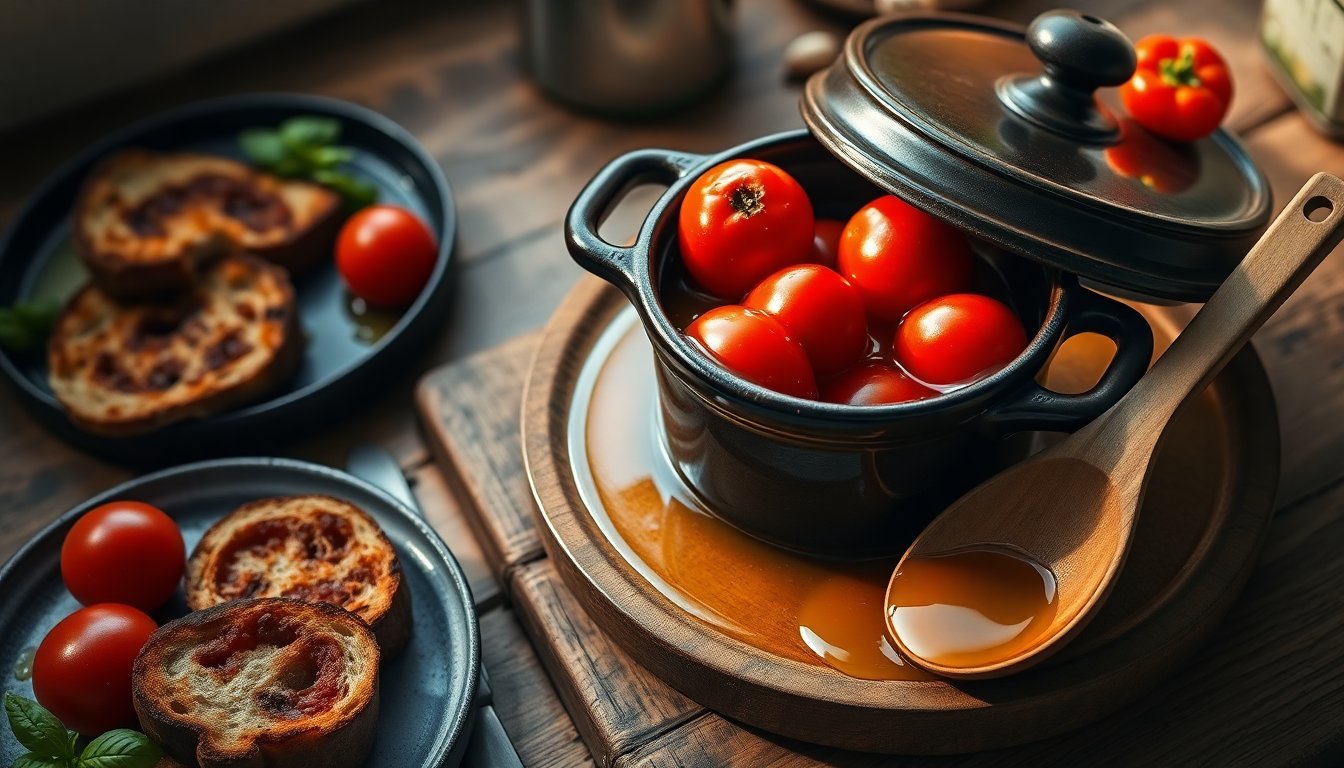
Tomato confit is a preservation method and a flavor concentrator. Tomatoes are cooked slowly in oil at low temperature until tissues break down and sugars concentrate. The result is glossy fruit, intensified acidity and a savory finish that upgrades simple dishes.
As a chef I learned that slow heat coaxed complexity from humble ingredients. The technique emphasizes controlled temperature, gentle fat infusion and careful seasoning. Typical aromatics include garlic, bay, and basil, while acid balance is tuned with vinegar or lemon zest when needed.
Behind every dish there’s a story of supply chains and terroir. Choosing ripe, locally sourced tomatoes and high-quality olive oil matters for texture and shelf life. Short supply chains reduce time from field to pot and preserve varietal character.
The next sections describe step-by-step technique, preservation guidelines and recipe applications for home cooks. Practical tips will cover oven temperatures, jar sterilization and two preservation approaches: refrigerated short-term storage and safely preserved oil-packed confit.
behind the tomato: history and story
Behind every dish there’s a story… The palate never lies: tomatoes carried the sun of distant lands into European kitchens and changed regional cooking. They arrived slowly, then spread fast through household gardens, market stalls and communal preserves.
Preserving tomatoes served practical needs and social functions. Families and neighbours exchanged jars during harvest as a form of mutual support. That exchange reinforced local supply chains and the principle of filiera corta, keeping flavour tied to place.
Traditional methods, from slow roasting to salted fermentation, emphasised terroir more than speed. The recent revival of artisanal techniques such as fermentazione restores layered umami and acidic tension while signalling respect for origin. As a chef I learned that slow acidification reveals textures a quick cure cannot.
This history informs two preservation paths in the confit process: short refrigerated storage and longer-term oil-packed or canned methods. The next section will cover oven temperatures, jar sterilization and practical steps to move from seasonal fruit to year-round pantry staples.
Technique explained: how slow fermentation transforms tomatoes
As a chef I learned that time can be an ingredient. Slow fermentation and gentle heat concentrate flavour, deepen aroma and unlock natural umami without masking the fruit.
Begin with ripe, locally sourced tomatoes that hold their shape. Halve or cut into thick wedges. Season lightly with coarse salt, a drizzle of good olive oil, torn basil and crushed garlic. Add a pinch of sugar to encourage controlled fermentation.
Allow a brief cool fermentation at 18–22°C (64–72°F) for 24–48 hours before applying low heat. This phase promotes lactic activity that builds gentle acidity and aromatic complexity while preserving freshness.
Finish by slow-cooking at 90–120°C (195–250°F) until the flesh becomes glossy and concentrated. Gentle heat collapses cell walls and releases glutamates. The result is a confit-like texture with layered sweetness and savory depth.
Technically, this method balances enzymatic breakdown, Maillard-like caramel notes and mild lactic fermentation. Salt draws out moisture and concentrates sugars. Hygiene and close monitoring of smell and texture are essential to ensure desirable flora dominate.
Practical checks: use clean equipment, discard any off odours or slimy textures, and keep temperatures stable. The palate never lies; the finished jar should smell bright, slightly sweet and savory, not sharp or acrid.
Next, the article will detail oven temperatures, jar sterilization and step-by-step guidance to transform seasonal fruit into reliable pantry staples.
territory on a spoon: sustainability and provenance
Following oven temperatures and jar sterilization, attention turns to the origins that define flavour and impact. Terroir matters: soil composition, local sun exposure and the hands that harvest fruits shape final taste. The palate never lies; familiar notes betray a tomato’s source and growing practice.
Slow preparations extend the season and reduce surplus. They favour a filiera corta model that keeps value in local communities and shortens transport emissions. Regional guides, including Slow Food, recommend varietal diversity to preserve biodiversity and to produce more layered, distinctive confits.
serving suggestions and sensory cues
Serve the confit warm on toasted bread, folded into fresh pasta with ricotta, or paired with braised meats where its concentrated juices add a glossy, tangy finish. Seek a syrupy viscosity, a warm herb-scented aroma and a lingering umami note that rounds the palate.
On tasting, aim for balanced contrast: bright acidity, measured sweetness and savory depth that invites another bite. As a chef I learned that texture is as telling as flavour; pearls should yield without disintegrating, and the oil should carry, not drown, the tomato essence.
Behind every dish there’s a story of harvest and technique. Preserve that story by labelling jars with cultivar and date of preparation, and by sourcing from growers who prioritise soil health and seasonal rhythms.
A closing invitation
Observe that story by labelling jars with cultivar and date of preparation, and by sourcing from growers who prioritise soil health and seasonal rhythms.
As a former chef and now a writer, I treat food as a conversation between hands, land and time. Try this slow-fermented tomato confit not as a recipe to rush but as a practice in listening to ingredients.
Bring attention to sourcing, to seasonality, and to the quiet alchemy of fermentazione. Pay attention to texture and scent as much as to taste. The palate never lies; Il palato non mente mai — let it guide you to tomatoes that tell their own story.
Behind every jar there is a chain of choices: seed selection, soil care, harvest timing, and gentle handling. Protect that chain by choosing local producers and by recording provenance on each label. This is how terroir survives on your plate.