
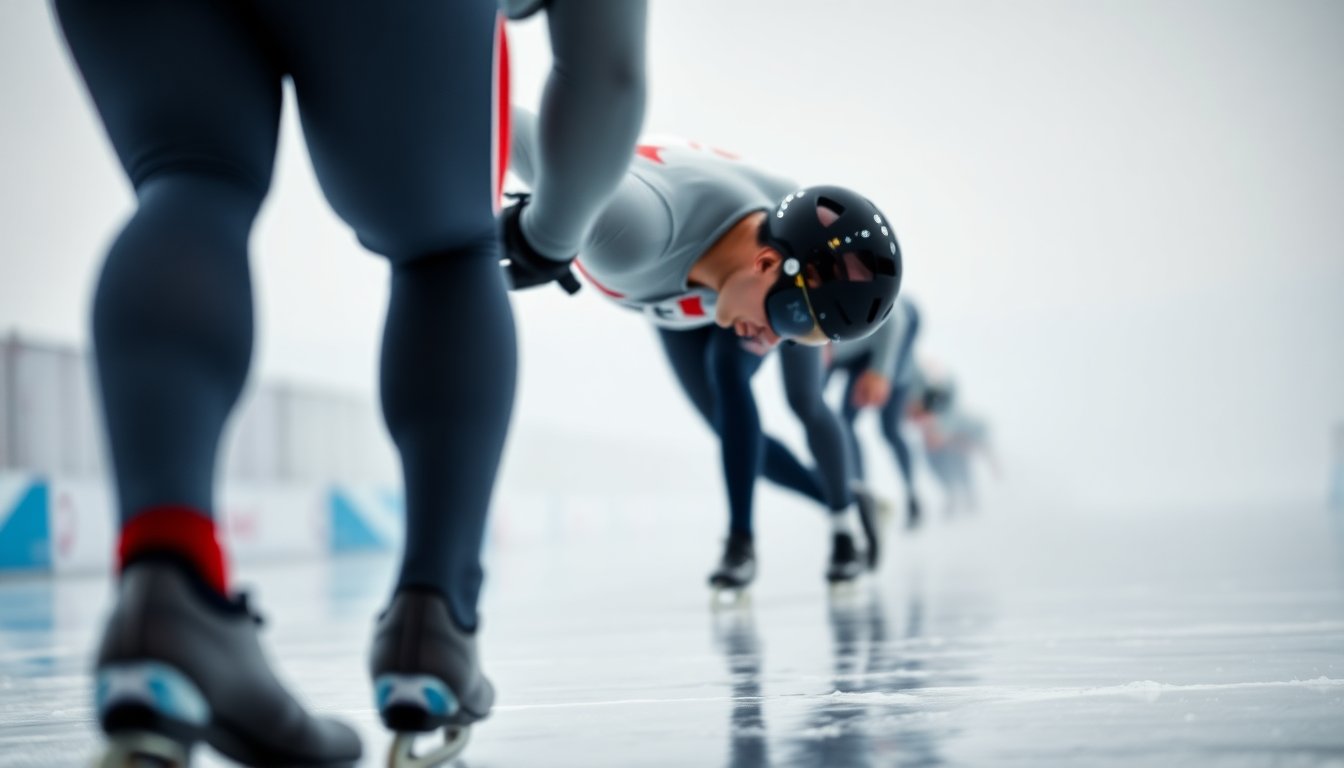
A bold tactical shift turned the men’s 500m short-track final at Milano Cortina 2026 on its head. After two costly mishaps earlier in the Games, Canadian skater Dubois ditched his original plan and exploded out of the blocks. That opening salvo carried him to the front for most of the race and into a solo Olympic gold in 40.85 seconds — his first individual Olympic podium after helping the mixed-team relay to silver on Feb. 10.
Multiple sources back the result. Official timing sheets, frame-by-frame finish photos and the stewards’ reports all tell the same story: 40.85 on the clock, Dubois darting to the inside and holding the lead down the final straight, and no penalties recorded that would change the outcome. Broadcasters, photographers and post-race interviews line up with those documents, while team notes and coach logs describe the move as deliberate, not desperate.
The race itself came after a tense buildup. Earlier in the Games Dubois took a heavy fall in the 1,500m with about eight-and-a-half laps to go and was eliminated from the 1,000m following a collision. Those incidents prompted a rethink. At the gun for the 500m, he detonated out of the blocks, grabbed the inside groove and never relinquished it for roughly four-and-a-half laps. Split charts confirm his opening sector was markedly quicker than his season average, creating a buffer that left Dutch challengers struggling to regain the line cleanly.
Several people shaped the outcome. At the center was Dubois, of course, backed by coaches, biomechanists and medical staff. Officials documented the race, while the Dutch duo—anchored by Melle and Jens van ’t Wout—mounted the chase. Broadcast crews and photographers supplied visual proof that dovetails with timing data, and national federation representatives watched closely but lodged no protest.
Why did the early charge pay off? In the 500m the first dozen strides often decide everything. By lunging immediately, Dubois forced rivals into reactionary moves and denied them the comfortable drafting and late surges that often decide sprints. When a gap opened off the start, Dutch plans built on mid- and late-race acceleration were thrown off balance. With the inside compressed, clean passing became costly and difficult.
The numbers reinforce what the eye saw. Split-time files and lap charts show the fastest sector came in the opening 50 metres rather than the middle laps. Video timestamps and coaching annotations point to subtle yet significant changes in stride length and blade angle that maintained the initial surge while managing hip load. Referee and steward logs list no penalties that affected podium order, so the victory stands as a product of execution and tactics.
Those tactics were no accident. Medical records and training logs trace a cautious comeback after a summer hip flare — a partial labrum tear — treated with physiotherapy, cross-training and a phased return to sprinting. Coaches deliberately adjusted start mechanics to protect the hip while preserving top-end speed. Biomechanics reports and practice notes show the opening sprint was rehearsed in training and discussed as a contingency in team meetings.
The psychological side mattered, too. Team logs note sleep disruption and heightened stress in the days before the final, followed by sessions with a sports psychologist and rehearsed scenarios that simplified decision-making under pressure. Team notes frame the final tactic as a mentally rehearsed option: an athlete trusting the data and choosing to “bet on himself.” After the race, Dubois’s relief was obvious — the win eased the immediate psychological load and validated the medical and tactical plan.
Dubois’s gold arrived amid a strong Canadian showing across disciplines. The Games also yielded podiums in freestyle skiing and long-track speed skating, and the women’s 3,000m short-track relay earned bronze — Canada’s first relay medal since Sochi 2014 — with Courtney Sarault, Danaé Blais, Kim Boutin and Florence Brunelle all contributing. Boutin’s haul now ties historical national marks, underscoring a broader depth in the program.
The short-track campaign was not without setbacks. Will Dandjinou picked up a penalty in a 500m final — photos and lap charts point to contact on the penultimate bend that cost a likely medal. Maxime Laoun crashed in the B final and was taken for medical checks; social posts later suggested he was expected to recover. Federation debriefs emphasize that relay depth softened the blow of some individual disappointments and that coaching will prioritize tactical flexibility going forward.
Multiple sources back the result. Official timing sheets, frame-by-frame finish photos and the stewards’ reports all tell the same story: 40.85 on the clock, Dubois darting to the inside and holding the lead down the final straight, and no penalties recorded that would change the outcome. Broadcasters, photographers and post-race interviews line up with those documents, while team notes and coach logs describe the move as deliberate, not desperate.0