
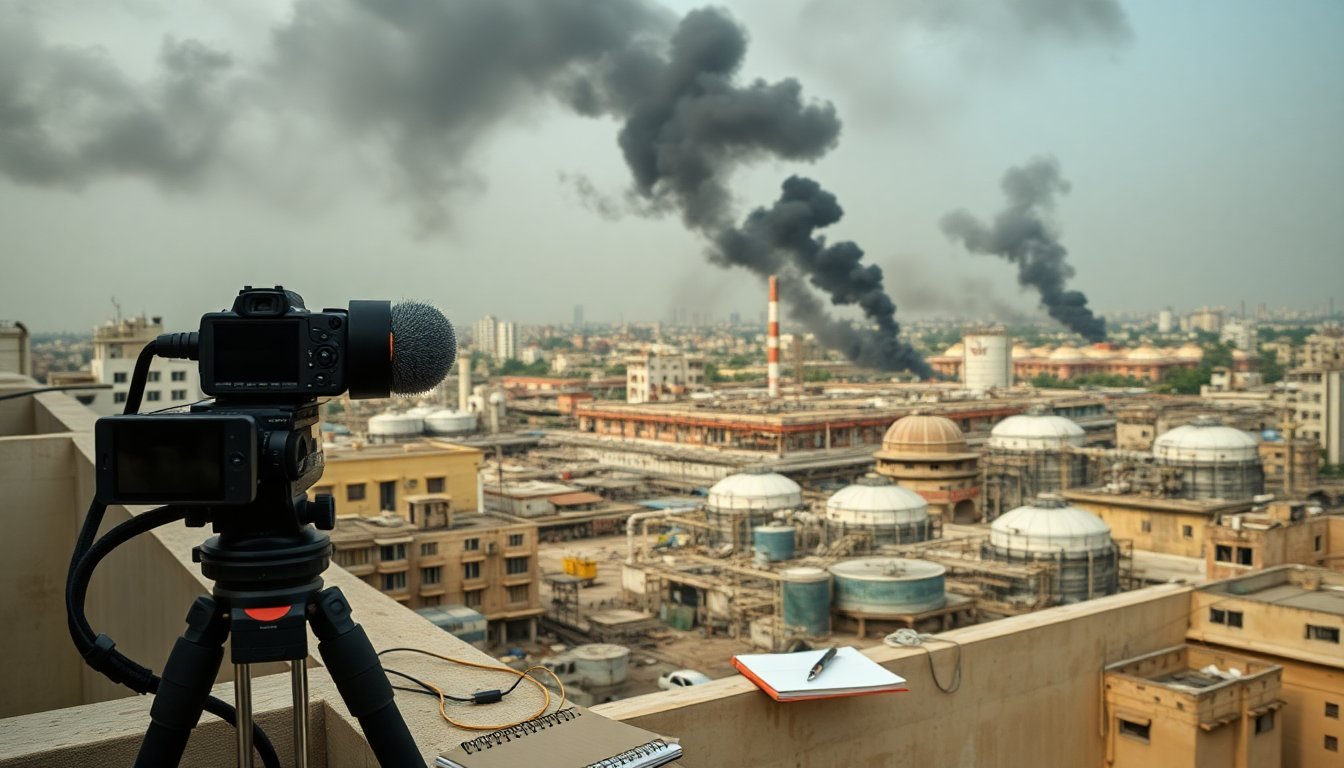
Since early March 2026, a series of U.S. and Israeli operations has reshaped both Iran’s physical landscape and the way the fighting is reported. March 8 alone underlined that shift: officials said a seventh U.S. service member was killed in related clashes; state media announced Ayatollah Ali Khamenei’s son as supreme leader; and Israeli strikes on fuel depots sent plumes of smoke over parts of Tehran. Those developments have sharpened debates over military aims, press access and how targets are chosen.
Reporting from inside Iran is becoming harder. Journalists face tight restrictions, periodic blackouts and open criticism from officials; at the same time, information coming out of the country is more fragmented and harder to verify. Observers increasingly see a pattern in the strikes that goes beyond neutralizing immediate battlefield threats and instead appears aimed at degrading the regime’s capacity to govern and the public’s ability to withstand pressure.
The targeting profile has broadened. Strikes have hit fuel depots, communications hubs and transport arteries—systems that do more than power missiles or move materiel. Damaging them reduces state capacity, hampers emergency response and creates civilian risks: pollution from burning fuel, interruption of medical and logistics networks, and curtailed access to independent reporting. Fewer operational reporters and damaged lines of communication make independent verification of events much harder, complicating assessments of proportionality and civilian harm.
Investigations using open-source material show that the strikes have not been limited to military bases and weapons sites. More than 120 headquarters, barracks and local installations linked to paramilitary groups — alongside regional police and internal security units — have been hit. Striking organizations that perform domestic policing blurs the crucial distinction between combatant and civilian roles, muddying legal judgements under international humanitarian law and prompting urgent humanitarian questions.
Operationally, degrading internal security networks can have unpredictable consequences. Removing or disrupting command-and-control structures can create security vacuums where nonstate actors expand or where authorities respond with harsher measures — arrests, curfews and intensified policing — that compound civilian suffering and obstruct aid. In short, pressure intended to weaken a regime can also fuel fragmentation and instability.
Those same communications and transport disruptions make it tougher for journalists, monitors and diplomats to track what’s happening on the ground. Reduced transparency raises diplomatic tensions and complicates crisis management by outside states. Humanitarian organizations and foreign ministries are warning of rising needs and are pushing for stronger safeguards and clearer post-strike reporting; human rights groups say they will step up scrutiny of operational targeting and civilian impacts.
From a military standpoint, the logic driving the campaign seems twofold: degrade the state’s ability to surveil and control, and increase internal pressure on leadership. But analysts warn this approach carries substantial risks. Instead of producing a controlled political outcome, it can accelerate disorder, spur insurgency or entrench militarized policing — outcomes that are costly and destabilizing in their own right.
Officials point to tactical results: a reported sharp drop in Iranian strikes on regional targets — roughly a 90% decline in ballistic missile launches and an 83% fall in unmanned aerial assaults — which they attribute in part to interdictions at sea. More than 30 vessels said to be involved in deploying airborne systems have been disabled or destroyed, apparently reducing seaborne launch capacity. Yet those maritime actions have their own collateral toll: fishing communities and coastal economies face growing hardship, peripheral ports and transit hubs have suffered infrastructure damage, and secondary blasts have added to civilian risk.
The picture that emerges is complex and contradictory. Some military metrics show short-term effects; at the same time, broader disruption to services, press access and domestic security raises hard questions about legality, proportionality and long-term stability. As the campaign continues, expect intensified scrutiny from human rights monitors, pressure for clearer post-strike transparency from diplomats, and mounting concerns about the humanitarian fallout for ordinary Iranians.