
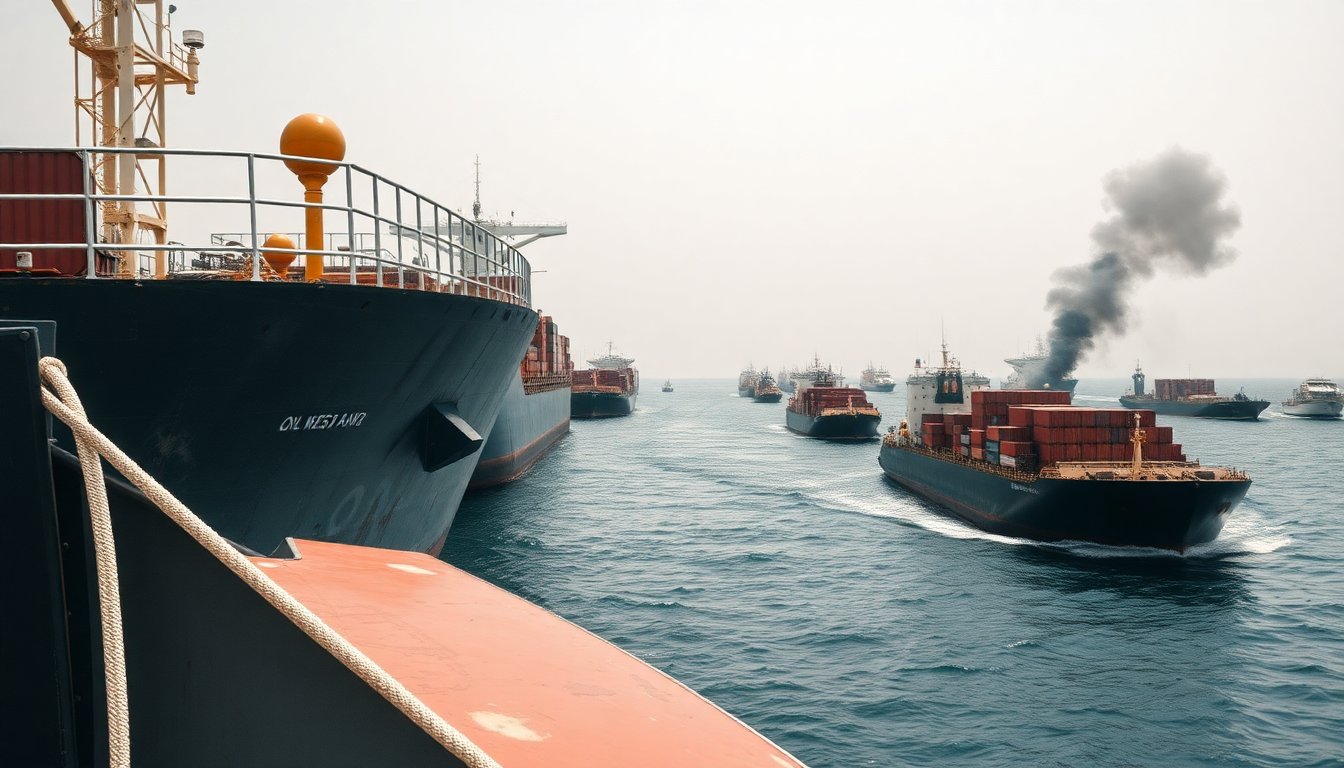
Violence and retaliatory strikes around the Strait of Hormuz have jolted energy markets. Tanker attacks and the fear of further incidents have slowed vessel movements through the narrow passage and pushed oil and fuel prices up. Because the strait funnels a significant share of global seaborne crude and refined products, even short interruptions shrink practical supply, tighten inventories and magnify price swings—effects that can show up at the pump and in the cost of imported goods within weeks.
Why the strait matters
The Strait of Hormuz is a choke point: ships must pass through constrained channels between landmasses, so traffic is concentrated and vulnerable. Under normal conditions roughly one-fifth of globally traded oil moves through this corridor. That concentration makes routing predictable and efficient—but also fragile. When incidents force tankers to wait, reroute or operate under higher insurance and war-risk premiums, the cost of moving fuel rises and refinery feedstock becomes more expensive. Those additional costs travel down the supply chain, squeezing margins for refiners, raising freight rates for shippers and eventually affecting retail prices.
How disruptions translate into market moves
Two mechanisms explain the swift market reaction. First, there’s the physical channel: delayed sailings, longer voyages (often around Africa’s Cape of Good Hope), and reduced tanker availability increase freight rates and delivery times. Second, there’s the financial channel: traders and insurers reprice risk. Futures and spot markets quickly incorporate the higher cost of transport and the chance of future scarcity; that sentiment-driven premium can move prices even before physical effects fully materialize. Inventory buffers and spare tanker capacity mute the shock, but those buffers vary widely by region.
Operational consequences
Rerouting tankers adds days or weeks to voyages, increases fuel burn and crew costs, and reduces the number of tankers available for new cargoes. Port congestion and revised schedules create bottlenecks at loading and discharge terminals. Insurers respond by tightening cover and lifting premiums, which further increases the delivered cost of fuel. Smaller traders and shippers—less able to absorb surging insurance and freight bills—face the biggest short-term risk.
Winners and losers
The disruption has both constructive and painful effects. On the upside, heightened risk encourages investment in resilience: expanded storage, pipeline capacity outside the Gulf, and longer-term supply contracts. Ports and transshipment hubs that sit on alternative routes could gain traffic and revenue. On the downside, immediate costs rise—higher insurance, longer transit times, and more expensive imports. Just-in-time manufacturers and smaller businesses feel the strain most. Shifting or replacing lost throughput is neither quick nor cheap; infrastructure projects take years and capital, so the near-term advantage goes to companies with deep pockets and flexible logistics.
Practical responses for businesses and governments
– Businesses: diversify suppliers, increase safety stock for critical inputs, integrate real‑time vessel tracking into procurement systems, and use derivatives or higher-frequency hedging to manage price exposure. Consider short-term charters or pre-positioned storage where feasible.
– Shipping industry: revise routing algorithms, coordinate convoys when security allows, and negotiate coverage strategies to limit war-risk exposure.
– Governments: assess and, if needed, release strategic petroleum reserves, coordinate with allies on maritime security, and consider temporary targeted support for vulnerable households or firms to blunt the social impact.
Market landscape and investor signals
Integrated players—traders, refiners and shipping firms with storage and flexible fleets—are best positioned to adapt. Financial markets have already reflected higher risk: freight rates and insurance premiums have surged and regional price spreads widened. Key metrics investors watch include spare tanker capacity, freight-rate indices, insurance bulletins, refinery utilization rates and announced additions to strategic storage. These indicators often lead price moves and reveal whether the shock will be absorbed or sustained.
What to watch next
The immediate market outlook will hinge on three things:
– Duration and scale of maritime disruption: brief interruptions tend to cause short-lived volatility; prolonged or widening conflict embeds higher prices.
– Insurer responses and policy moves: lowered war-risk premiums or government-backed insurance guarantees can restore normal flows quickly.
– Operational capacity and spare tonnage: how many tankers can be redeployed and how fast new routing patterns can be established.
Pay attention to freight-rate spikes, insurer reassessments, port throughput data and any coordinated reserve releases. Shifts in forward curves and trading volumes often precede larger repricing.
Broader economic and political consequences
Rising oil benchmarks quickly translate into higher retail fuel prices, which can erode consumer confidence and strain household budgets—especially for lower-income groups. Politically, this can prompt emergency debates, reserve releases or subsidies; each option carries trade-offs between short-term relief and long-term resilience. Persistently higher energy prices also tend to accelerate capital flow into exploration, storage and renewable projects, even as they compress margins for energy-intensive industries. If the corridor is secured and insurers ease premiums, freight rates and price volatility should unwind relatively quickly. If tensions persist, expect sustained upward pressure on transport costs, accelerated investment in alternative routes and storage, and repeated price pressure for consumers and businesses. The coming days and weeks will be shaped by insurer bulletins, shipping notices, spare tanker availability and any coordinated actions by governments—those are the clearest signals of whether the price spike is temporary or the start of something longer.