
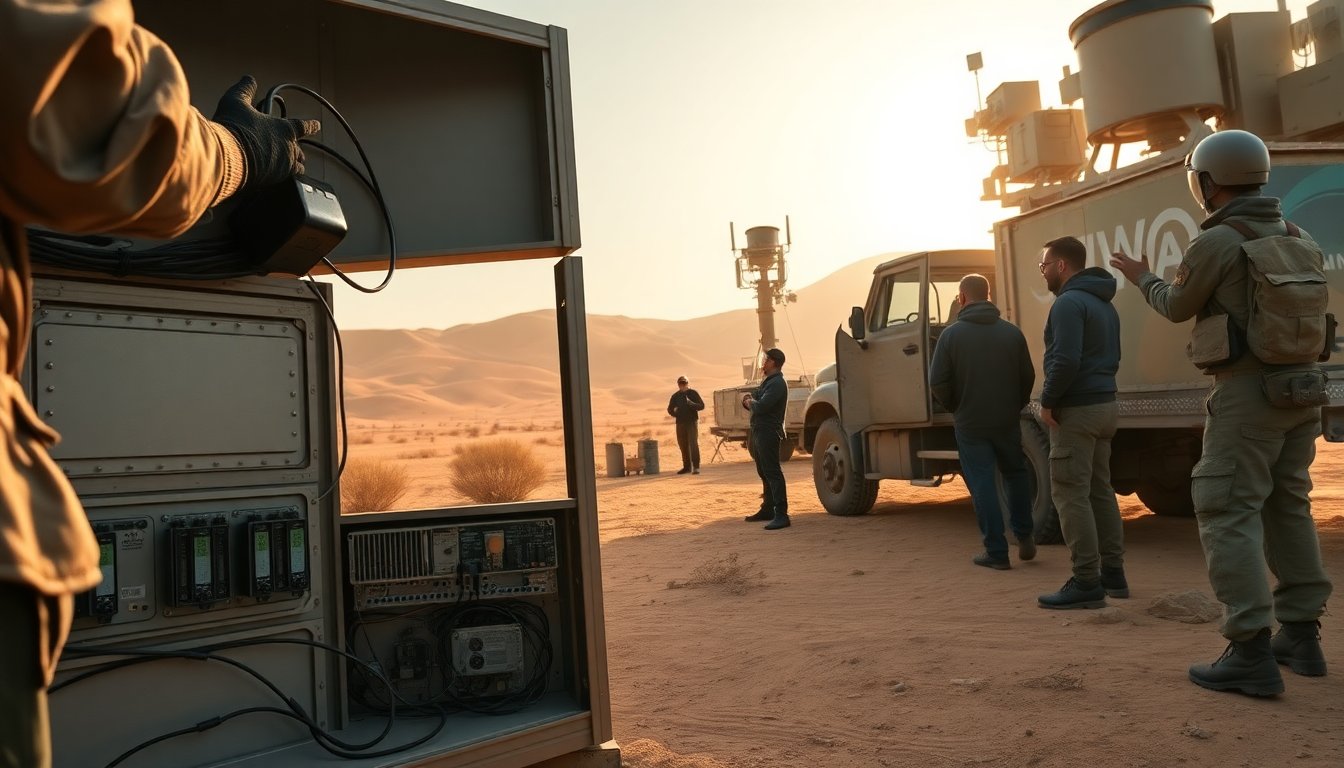
The United States has asked Ukraine for help defending the Middle East against swarms of Iranian Shahed drones, President Volodymyr Zelensky said on social media. Kyiv answered by offering equipment and teams of Ukrainian specialists—combat-proven crews who have developed techniques for detecting, disrupting and destroying these low-cost, loitering munitions under fire.
What Ukraine is offering
– Deployable teams of advisers and technicians who would work side-by-side with local forces.
– Ukrainian-made interceptor drones and a package of layered, low-cost countermeasures that combine electronic warfare, small interceptors and practical repair/redundancy plans.
– Hands-on integration support so systems can be fielded and sustained quickly.
Why this matters
Ukraine’s experience matters because these are tactics refined in combat. The systems are designed to be affordable and scalable, filling a gap in missile-heavy defenses that struggle to cope with massed, expendable drones. On-site teams can accelerate integration, troubleshoot problems in real time and train local crews—turning a temporary fix into something operationally useful rather than merely symbolic.
Practical limits and logistics
Effectiveness will hinge on the usual trinity: logistics, training and rules of engagement. Even well-proven systems need spares, supply lines and compatible command-and-control arrangements. Deployment also raises legal and political questions about what Ukrainian personnel will be permitted to do on foreign soil. In short, success depends less on headline hardware and more on sustainment and interoperability.
Field-proven tactics
Ukrainian forces describe a layered defense: electronic measures to confuse or degrade incoming drones, active interceptors to shoot them down, and rapid-repair workflows to keep systems online. These are presented as pragmatic, battle-tested tools—refined through iterative use rather than theoretical models. The emphasis is on redundancy and speed of repair rather than a single, expensive interceptor.
Diplomatic and strategic fallout
The offer has wider implications. Affordable, modular kits could let more states join a defensive coalition without massive investment, potentially shifting donor priorities from long-lead, high-cost programs to immediately fieldable options. But proliferation of cheap countermeasures could also spur adversaries to adapt—either improving their drones or mass-producing simpler swarms—so the arms dynamic will keep evolving.
Moscow’s reaction and related diplomacy
Russia has been cautious in public, urging that any talks respect its security concerns and not yet committing to attend diplomatic meetings. Meanwhile, negotiations around prisoner swaps continue as a fragile confidence-building measure; such exchanges are politically sensitive and logistically tricky.
Operational challenges for the U.S. and allies
Command-and-control integration, sustained supply chains and training remain pressure points. Political friction can slow the flow of sensitive intelligence and complicate cross-border logistics. Rapidly delivered systems require compatible doctrines and practiced crews; those take time and steady political backing to develop. Planners also must weigh the tactical gains against the risk of escalating tensions in a volatile region.
Gulf partners turn to Ukrainian tools
Recent Iranian strikes exposed limits in missile-centric defenses, increasing Gulf interest in Ukrainian counter-drone technologies and expertise. Gulf states are reportedly discussing procurement of Ukraine-made interceptors and seeking ways to stitch low-cost solutions into existing layered defenses. How quickly Ukrainian teams are embedded with regional operators will shape the near-term impact on defense postures—and on diplomacy involving Moscow.
What to watch next
– Speed and scale of Ukrainian team deployments with Gulf forces.
– How Gulf states integrate low-cost counter-drone systems with missile defenses.
– Procurement talks between the Pentagon, regional states and Kyiv over Ukrainian platforms.
– Any changes to trilateral or multilateral diplomatic meetings that reflect shifting security dynamics.
– Metrics: deployment timelines, approved transfers, interoperability tests, and diplomatic statements that reveal bargaining trade-offs. But turning those assets into lasting capability will require more than equipment: reliable logistics, legal clarity, interoperable systems and sustained political commitment from partners. If those pieces fall into place, the contribution could reshape short-term defenses; if they don’t, it risks adding complexity without delivering durable protection.