
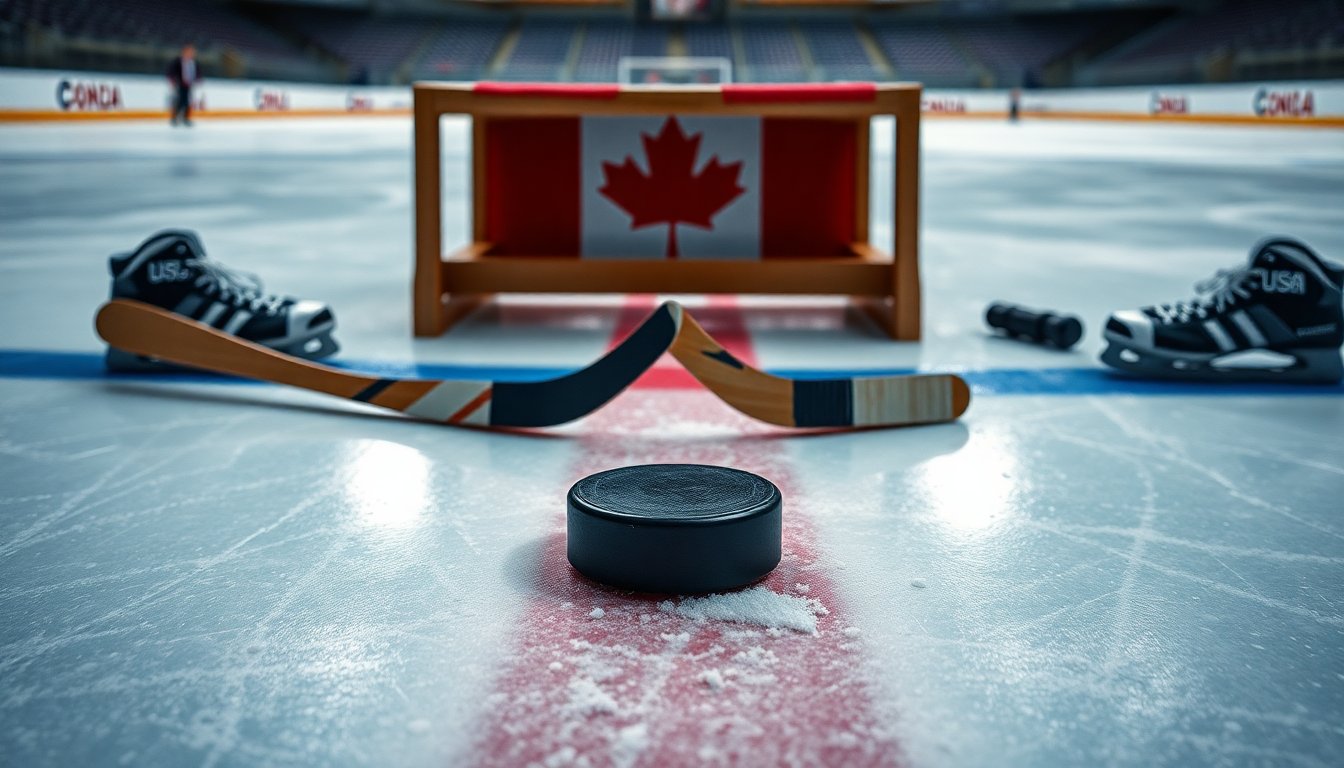
USA and Canada will do what hockey fans dream about: meet in a classic Olympic final at Milano Cortina. Two unbeaten powerhouses collide for gold at the Santagiulia Arena on February 22, — a rematch of styles and wills that promises a tense, physical, fast-paced game.
When and where – Gold-medal game: Feb. 22, 8:10 a.m. ET – Venue: Santagiulia Arena – TV/streaming: NBC and Peacock in the U.S; CBC and TSN in Canada
Road to the final Team USA punched its ticket with a controlled 6-2 semifinal win over Slovakia on Feb. 21, displaying balance from top line to fourth line. Canada scraped past Finland 3-2, preserving its perfect record and reminding everyone of its trademark mix of veteran composure and punishing forecheck.
The numbers say it’ll be close Both teams enter 5-0, and the raw stats reinforce how evenly matched they are: – USA: 24 goals for, 8 against; 201 shots for, 124 against – Canada: 27 goals for, 8 against; 202 shots for, 106 against
Those totals suggest the final won’t hinge on one runaway performance. Instead it will come down to small margins: who wins the board battles, who finishes high-quality chances, and who avoids a costly turnover in transition.
What matters most – Depth: scoring has been spread across multiple lines for both teams, so secondary contributions will matter as much as star moments. – Goaltending and special teams: both goalies have limited high-danger chances, so power play and penalty kill success could decide the game. – Possession and transition speed: control of the neutral zone and faceoff wins will determine territorial advantage; one defensive lapse could flip momentum in an instant.
Players to watch and tactical themes Expect tight structure and disciplined neutral-zone schemes. Coaches are likely to shorten benches in tense moments and rely on trusted veterans for high-leverage minutes.
Team USA – Jack Hughes has been the offensive spark, coming off a hot semifinal and finishing the preliminary schedule with balanced scoring and playmaking. After a stop-start season, he’s peaking at the right time. – Zach Werenski has been vital in turning defense into offense, helping to jumpstart transitions with his skating and passing. – Veterans Dylan Larkin, Brady Tkachuk and Jack Eichel supply secondary scoring, possession grit and an edge in the corners that sustains pressure. – Connor Hellebuyck’s 22 saves in the semifinal underline how crucial timely goaltending will be: a few key stops could turn sustained pressure into a different story.
Canada – Canada’s recipe has been steady frontline scoring, a relentless forecheck and compact zone defense. Their 3-2 win over Finland showed they can grind out tight games. – Look for Canada to push tempo in the offensive zone, tie up opposing defensemen in the corners and test breakouts with physicality around the net. – On the tactical front, special teams and clean transition play are where Canada will try to force errors and manufacture opportunities.
Matchups that will decide the day – Board battles and net-front presence: the team that wins those scraps will generate the better, higher-percentage chances. – Faceoffs and rebound control: cleaning up second chances and avoiding odd-man rushes are essential. – Coaching chess: timely line changes and matchup adjustments late in the game could tilt the ice. Expect a physical opening, tight defense, and one or two game-changing moments that determine who takes home Olympic gold.