
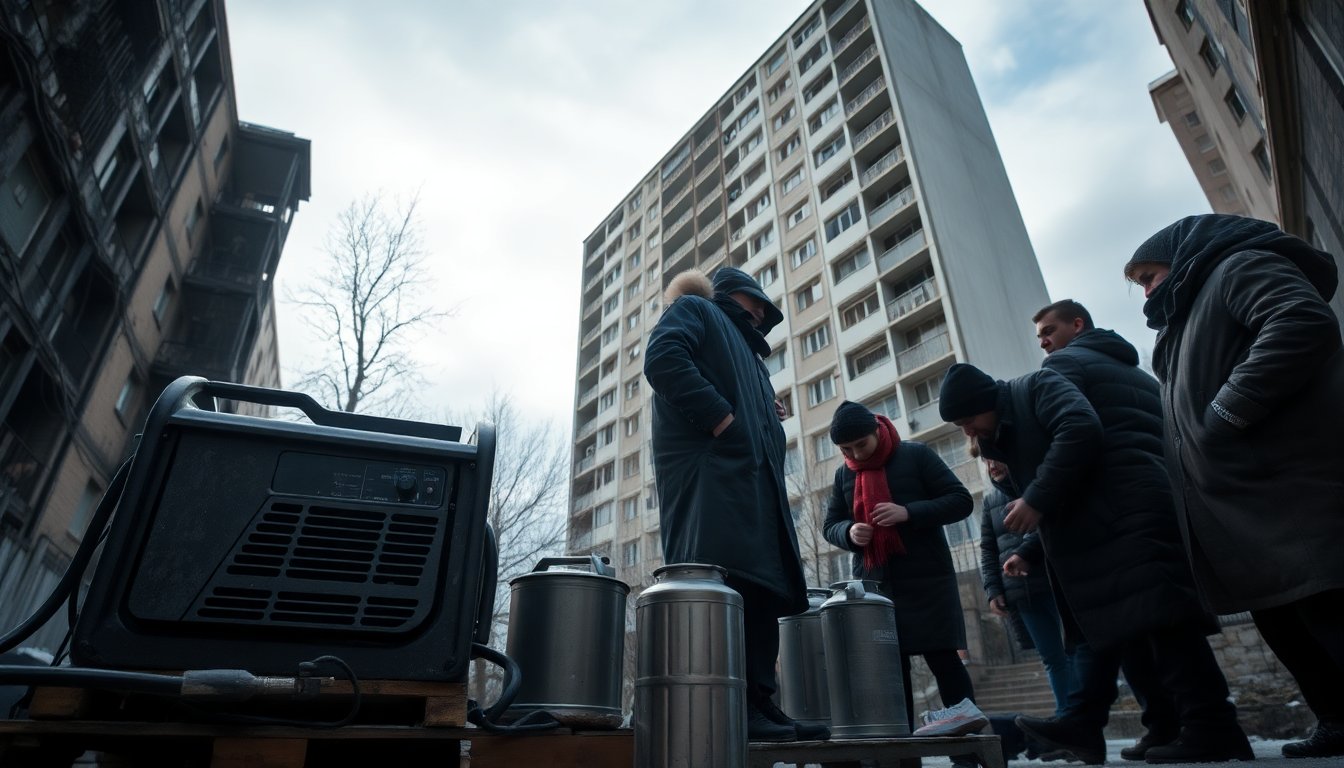
Winter strikes on Ukraine’s energy grid have left thousands of people cold and scrambling across cities and towns. Repeated hits on heating systems and power lines have plunged households into long blackouts just as temperatures have dived well below freezing. Families are improvising to stay warm—using generators, makeshift stoves and community warming points as lifelines.
The latest wave of attacks on February 12 damaged several high-rise blocks in Kyiv. By February 16 the mayor said roughly 500 apartment buildings still had no heat. Eyewitness accounts, photos and letters from residents in Kyiv, Kremenchuk, parts of Donetsk and beyond tell the same story: exhausted people doing whatever they can to get through the nights and hoping repairs arrive before the cold gets worse.
Those most vulnerable—older people, families with small children, and people with chronic illnesses—are suffering the worst. Hospitals and care homes are juggling intermittent power while trying to keep lifesaving equipment running. Local aid groups and municipal teams are racing to reach these households, but access can be dangerous or slow, and resources are stretched thin.
On the ground, adaptations are practical and creative. Stairwells become charging hubs, basements host shared generators, and courtyards are organized as fuel depots. Neighbours pool what they have: trading hot meals, rotating stays in the warmest flats, and lining up at community centers that open as emergency warming shelters. These small acts of solidarity make a big difference.
But the quick fixes bring new dangers. Portable heaters and open-flame stoves raise fire and carbon-monoxide risks, and small electric heaters can overload fragile wiring. People are balancing immediate survival against these safety hazards, often with no easy options.
Authorities are focusing on restoring main distribution nodes and publishing repair priorities where possible. Utilities are running damage assessments and trying to coordinate crews despite security risks near frontline areas. Clear, public repair timetables and transparent hotspot mapping would help residents plan and allow aid groups to target the worst-hit zones faster.
There’s also a documentation angle: careful records of outages and damage help unlock emergency funds and guide relief efforts. That said, collecting personal information for aid must be done responsibly—keeping people’s safety and privacy in mind while getting help where it’s needed.
Beyond the physical strain, the cold is taking a psychological toll. Sleep, concentration and daily routines break down; mental-health services are seeing more people in distress. Informal networks—neighbours, small charities, shopkeepers—are filling gaps where formal support can’t reach, offering food, shelter for pets and a place to charge phones or warm up.
The pattern is clear: repeated outages near contested or logistical chokepoints make repairs slower and civilian life harder. Quick restorations prevent secondary harms—hypothermia, interrupted treatments, spoiled food—and ease pressure on relief operations. Practical steps that help now include expanding community heating points, sharing portable battery banks and improving communication about repair schedules so people know where and when help will come.