
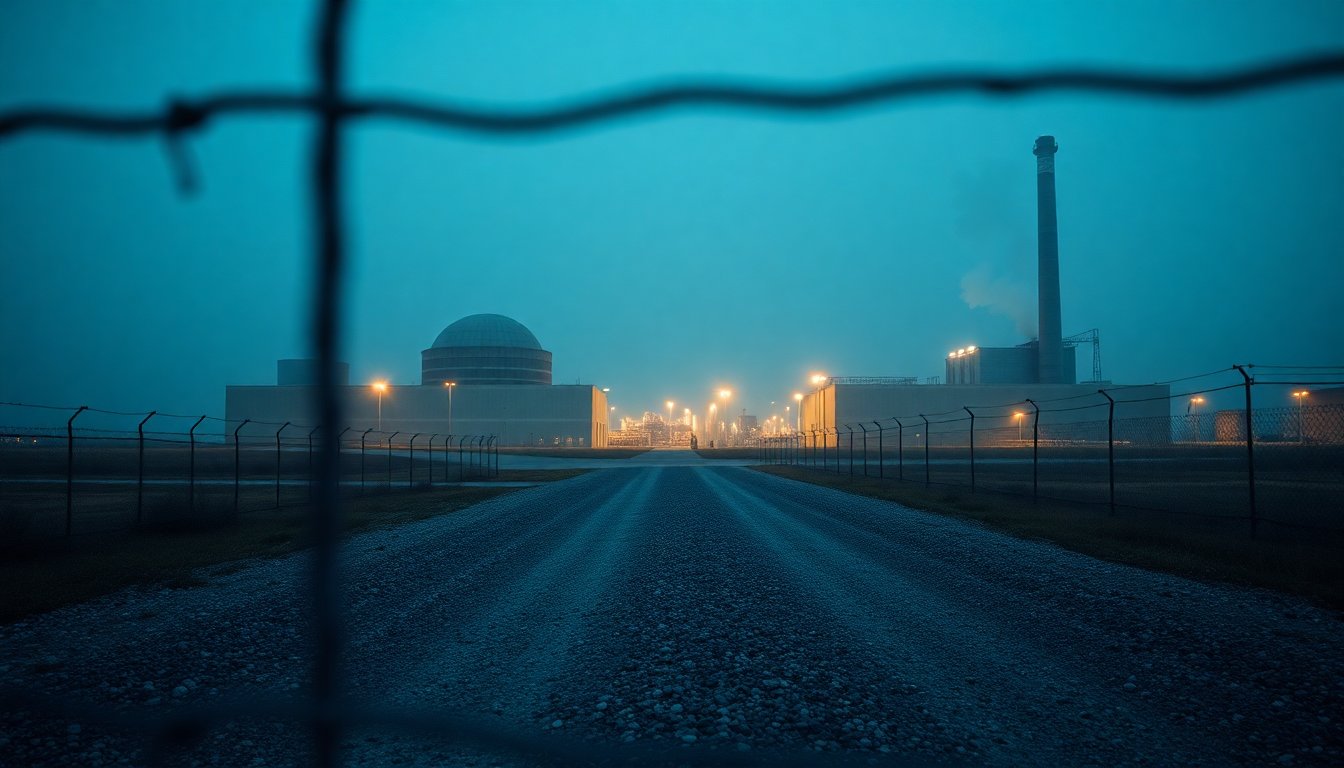
The international atomic energy community and outside analysts have reported a notable rise in activity linked to North Korea‘s nuclear effort. In public comments while visiting Seoul, Rafael Grossi, director general of the IAEA, described operations at the main complex of Yongbyon and other facilities as showing a marked increase in pace. Satellite imagery and monitoring suggest work at a 5MW reactor, reprocessing units and at least one apparent new enrichment plant. Observers interpret these changes as a push to grow the country’s stockpile of weapons-capable fissile material and to speed up production cycles, a development that complicates verification and diplomacy.
Experts estimate that Pyongyang already possesses on the order of a few dozen warheads, and independent research groups have flagged additional construction that could expand that total. The regime’s stated objective under Kim Jong Un, who succeeded his predecessors in 2011, has included a public drive for faster nuclearisation and more robust delivery capabilities. Since North Korea’s first nuclear test in 2006 and its most recent test-related activity through 2017, the program has evolved from proof-of-concept to something many analysts now consider an operational arsenal, even as questions remain about some technical milestones such as reliable warhead miniaturization.
IAEA observations and imagery analysis
The IAEA has signaled alarm after confirming increased work at key sites. Officials described intensified operations at the Yongbyon complex, including activity around a plutonium-production reactor and associated reprocessing capability, along with a separate facility whose layout resembles a uranium enrichment plant. These on-the-ground descriptions, supported by open-source satellite photos referenced by research centers, point toward growing throughput of fissile material. The agency has reiterated that such developments run counter to UN Security Council resolutions and emphasized its role in verification, even as it lacks routine access to sites in North Korea.
Yongbyon, Kangson and the new enrichment footprint
Analysts note that a recently observed structure at Yongbyon has dimensions and external features similar to other known enrichment facilities, including an unreported plant in the Kangson area near Pyongyang. Independent think tanks have concluded the building could be nearing operational readiness, which would allow diversion of more uranium into weapons-grade material. A move toward parallel enrichment streams would materially raise potential annual production of weapons fuel, shifting the math for how quickly North Korea could increase its stockpile. That scenario would also decrease the margin for error in international attempts to monitor and constrain the program.
Arsenal size, delivery systems and strategic intent
Estimates vary, but many assessments place North Korea’s inventory at roughly 50 warheads, a figure that signals a substantive change from earlier years. Coupled with advances in missile design and testing, including longer-range systems capable of intercontinental reach, the combination of more warheads and improved delivery vehicles alters regional and global threat calculations. Some experts remain cautious about claims of dependable miniaturization for long-range missiles, but the trend is unmistakable: technical progress has continued even without a declared nuclear test since 2017. The apparent objective under Pyongyang’s leadership appears to be securing a survivable nuclear deterrent to dissuade external intervention.
Strategic consequences and proliferation risks
If production capacity grows as imagery and IAEA remarks suggest, the regime could reach a point where it has a larger-than-needed domestic stockpile, with attendant concerns about transfer or sales abroad. Regional leaders, including Seoul, have voiced alarm about scenarios where North Korea could build material for the equivalent of 10 to 20 weapons per year, a scale that would prompt urgent policy responses. Such a trajectory would intensify calls for renewed diplomacy, tougher sanctions enforcement and enhanced monitoring, yet those tools face limits absent on-site verification and cooperative inspection arrangements.
Verification, diplomacy and next steps
International authorities say the path forward must balance pressure with avenues for negotiation. The IAEA has stated its readiness to assist verification if access is permitted, underscoring that technical teams are central to any durable solution. Diplomats and analysts note past summitry and stalled talks have left incentives for Pyongyang to continue unilateral expansion; conversely, offers that include security guarantees and phased relief would be needed to alter behavior. Any durable approach will require credible monitoring mechanisms to detect resumed or accelerated production early and to reduce the likelihood of further escalation.
In short, the combination of observed construction, increased plant activity and continued missile development points to a significant buildup in Pyongyang’s nuclear capability. The international community faces a narrow window to respond with calibrated measures that reinforce verification and open channels for diplomacy while guarding against further proliferation risks.


