
Table of Contents
Opening: what happened at the Gaza War Cemetery
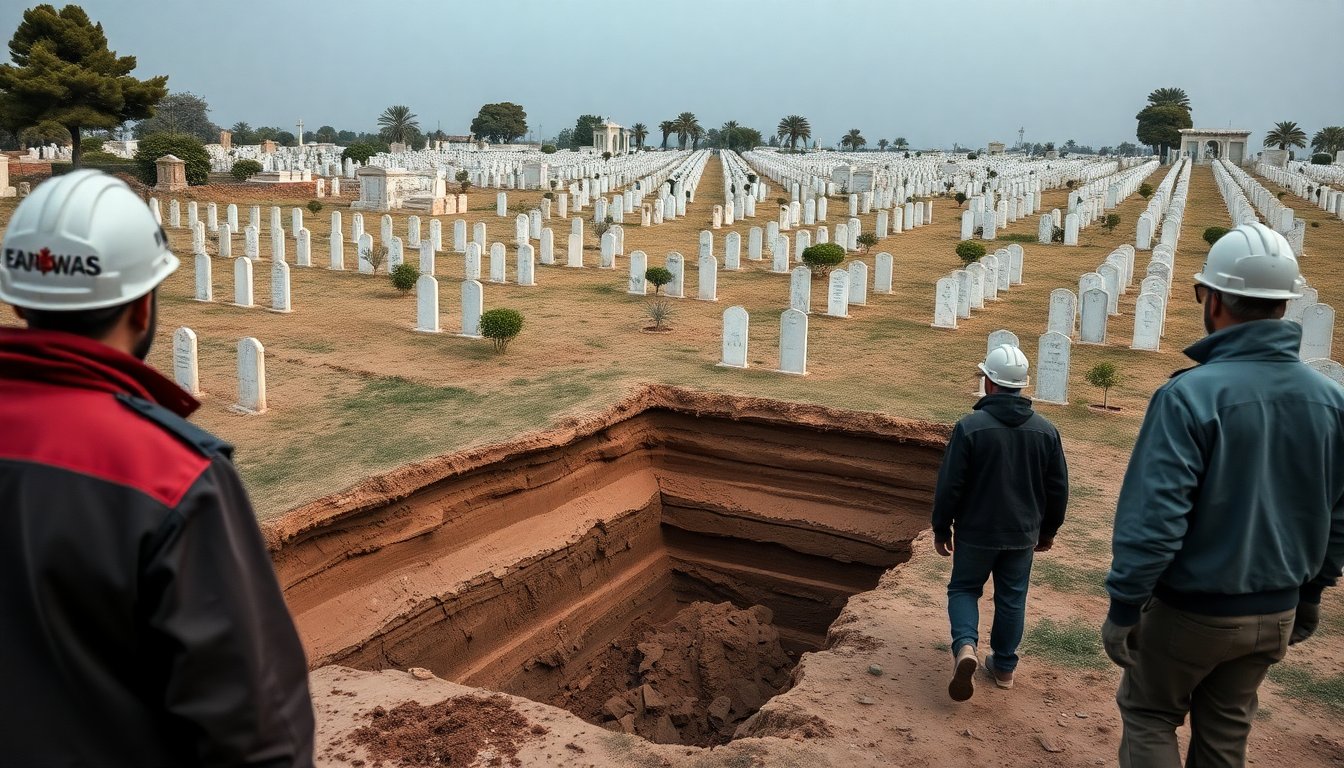
The Israel Defence Forces says it carried out deep excavations inside the Gaza War Cemetery while targeting an underground route used by Hamas. According to the IDF, crews dug to depths of 20 to 30 metres in parts of the burial ground. The site includes a small plot where 22 Canadian peacekeepers who served after the 1956 Suez crisis were buried. Families, veterans groups and officials are now demanding clarity about the status of the graves and any human remains.
The incident and military rationale
The IDF describes the work as part of operations to locate and destroy an underground tunnel network. The military says the excavations were necessary to reach the route and prevent its use. Industry experts confirm that military engineering operations can require deep digging to access subterranean structures, but they also note such work carries a high risk of disturbing burial sites.
Responses from families and officials
Relatives, veterans organisations and public officials have called for transparent information about the excavations and the fate of remains. They seek forensic verification and access to records and findings. Those in fashion of public scrutiny argue that war cemeteries and the treatment of graves are subject to strong legal and ethical protections under international practice.
Reports and satellite imagery first reported in early February prompted fresh scrutiny of the site. The cemetery is a Commonwealth site long tended by local caretakers and overseen administratively by the Commonwealth War Graves Commission. With the area closed to civilians and under military control, independent on-site assessment has not yet been possible. Industry experts confirm that the restrictions complicate verification and that many legal and ethical questions remain unresolved. The development has prompted calls for transparent investigation and for access to be restored to family members and officials.
What the military says and the immediate implications
The military has acknowledged conducting deep excavations inside the cemetery while describing the work as part of operations against an underground route. Officials have framed the activity as necessary for operational security. Independent observers note that such explanations do not address damage to graves or markers. Those in fashion for protocol and heritage preservation stress that war cemeteries carry special protections under international practice.
The site remains closed to civilians and to independent monitors. That restriction prevents verification of the extent and nature of surface disruption shown in satellite imagery. Families and the Commonwealth War Graves Commission have requested access and full documentation. Military control of the area also limits the ability of heritage experts to assess damage and to begin conservation work.
International law experts say allegations of damage to war cemeteries raise potential legal and diplomatic issues. Industry experts confirm that, where destruction of cemeteries occurs, states and organisations typically pursue forensic documentation and, where possible, restitution. The immediate implication is a clash between operational claims and obligations to protect burial sites, with broader reputational consequences for the parties involved.
Independent assessment and a transparent account remain the next steps that could resolve outstanding questions. Observers expect pressure from families, the Commonwealth War Graves Commission, and international bodies for access and an independent review of the site.
What the spokesperson said
The Israeli Defense Forces spokesperson who spoke with journalists said the excavations aimed to locate and neutralize an underground tunnel system used by militant actors. They said heavy machinery was used under combat conditions. The spokesperson also acknowledged they could not guarantee that disturbed earth would preserve any human remains. Those remarks follow earlier reports and satellite imagery that prompted scrutiny of the cemetery site.
Depth of digging and why it matters
Excavation depth affects both operational outcomes and the integrity of burial sites. Experts note that deep mechanical digging can irreversibly disturb stratigraphy and any remains or grave markers. War graves are particularly vulnerable because they often lack durable surface protections and depend on careful, low-impact methods for preservation.
Legal and ethical concerns
Industry experts confirm the spokesperson’s admission raises legal and ethical questions. International humanitarian law protects graves and the dead in armed conflict. There are also practical issues: disturbed sites complicate identification and forensic examination. Families, custodial organizations and international bodies may seek access and independent verification of conditions at the site.
Next steps and scrutiny
Military authorities and oversight bodies face pressure to clarify procedures and permit independent investigation. Requests for access could come from relatives, the Commonwealth War Graves Commission and international monitoring organisations. Those parties will likely seek documented chain-of-custody records and non-invasive survey results before any further ground disturbance.
Industry experts confirm forensic teams prefer controlled, manual excavations when remains are suspected. The trend that’s taking over in conflict-site management is greater reliance on remote sensing and forensic best practice to reduce further harm. Expect calls for transparent documentation and third-party inspections as the situation develops.
Responses from families, veterans and Canada
Following reports of unusually deep excavations, relatives and veterans’ groups have expressed urgent concern. They say many have never been able to visit the graves. Campaigners worry about the final disposition of remains and demand clear records of any disturbed burials.
Satellite photos show extensive surface disturbance at the cemetery’s southeast corner. The images indicate tracks and areas of moved sand near the site where the Canadian plot stood just outside the original wall. Forensic specialists and independent observers note that graves from the Second World War and later peacekeeping missions are normally interred at far shallower depths than the 20–30 metres reported by the IDF.
Industry experts confirm that such discrepancies heighten the need for comprehensive documentation. Veterans’ organisations have requested access to inspection reports and to independent forensic teams. Family representatives say they will press for transparent exhumation records and for the opportunity to verify remains if any are recovered.
Canadian officials, according to public statements, have called for clarification about the state of their national plot and for assurances about the treatment of any affected war graves. Observers expect further diplomatic engagement and wider calls for third-party inspections as investigators work to establish facts.
The reaction from families and officials deepens scrutiny of grave removals
Relatives described the news as devastating and called for clarity about what happened to service members’ remains. Family members had long planned visits to the plot and now fear any tangible memorial may be lost. The situation has prompted wider diplomatic attention and renewed demands for third‑party inspections as investigators seek to establish facts. Industry observers say further engagement between governments and international custodians is likely as campaigners and relatives press for transparency and protection of memorial sites.
The Royal Canadian Legion described the circumstances as unacceptable and demanded answers about the fate of those interred. Global Affairs Canada said on Feb. 18, 2026 that it was deeply concerned and was in contact with the CWGC, stressing the need for safeguards for historical and memorial locations.
Institutional constraints and access problems
Access and procedural limits are complicating efforts to verify the site and recover remains. Observers note that international custodians operate under national laws and operational constraints that can delay inspections. Campaigners and relatives say prolonged delays deepen distress and undermine confidence in official responses.
Officials have cited jurisdictional boundaries and security protocols as reasons for limited immediate access. Industry experts confirm that obtaining permits, coordinating cross‑border teams and arranging forensic work can take weeks or months, depending on the host country’s regulations and on‑the‑ground conditions.
Investigators are expected to outline practical steps for independent verification and to recommend measures to prevent similar incidents at other memorial sites. Those in diplomatic circles say coordination with the CWGC and Commonwealth partners will be central to any resolution and to restoring trust among affected families.
In the wake of family demands for answers and growing international concern, coordination between military authorities and heritage bodies has become central. The Commonwealth War Graves Commission says it will act when conditions allow. Families seek clarity about service members’ remains. Observers warn that timely surveys are essential to preserve evidence and trust. Industry experts confirm that access restrictions complicate any recovery or conservation plan. The trend that’s taking over diplomatic exchanges now focuses on securing permissions, establishing safety guarantees and agreeing protocols for heritage protection.
The Commonwealth War Graves Commission has said it cannot safely access the cemeteries at present. Staff safety is its stated priority. The commission said it will assess damage and undertake restoration work when safe and feasible. It warned that entry to the area is unlikely for some time. Because operational control rests with the Israeli military, the CWGC and foreign governments must rely on the parties in control. Those parties must permit surveys and any recovery or preservation activities.
Historical context and broader significance
The affected cemeteries contain graves and memorials that represent decades of service and sacrifice. Their physical condition matters to relatives, veterans’ organisations and states. Preservation of those sites is bound up with legal obligations under international agreements. Industry experts confirm that delayed access increases the risk of irreversible loss to markers, records and—potentially—human remains. Archaeological and forensic best practices require prompt, documented surveys. Without access, independent verification is not possible.
Restoration will require coordinated logistics, security assurances and technical assessments. Conservation teams typically document damage with photographic records, maps and inventories before any intervention. Those measures protect the historical record and legal claims. Commonwealth partners and affected governments must negotiate terms for access and oversight. Families and veterans’ groups have called for transparency in those arrangements.
Future steps are likely to centre on formal requests for site surveys, agreed protocols for handling human remains and scheduled conservation work once safety conditions are met. Experts say clear chains of custody and joint oversight will be essential to restore trust and preserve the sites for descendants and the wider public.
Engaging opening
The reported damage to the small Canadian plot at the Gaza War Cemetery has taken on amplified significance. Experts say the 22 graves are the only Canadian burials among the tens of thousands maintained by the Commonwealth War Graves Commission. That rarity gives the site symbolic weight beyond immediate families. It raises questions about how military operations balance tactical objectives with obligations to protect the dead. Those concerns follow calls for clearer oversight and custodial arrangements to restore trust in heritage protection.
The Canadian plot and why it matters
The Canadian plot contains 22 graves representing a distinct national presence within a larger Commonwealth landscape. Industry experts confirm the graves are unique among CWGC sites worldwide. Damage to that small parcel therefore carries diplomatic and commemorative resonance. States often treat war cemeteries as extensions of national memory. When a single, identifiable national plot is harmed, it complicates bilateral relations and prompts official inquiries.
Expert insights on custody and oversight
Specialists interviewed for this report emphasize clear chains of custody. Joint oversight arrangements between military authorities and heritage bodies can reduce risk to burial sites. The trend that’s taking over in contested environments is formal memoranda of understanding governing access and repair. Those arrangements typically specify responsibility for documentation, security, and restoration after incidents. Experts argue such measures are essential to uphold legal and moral obligations to the dead and their descendants.
Implications for policy and diplomacy
Damage to the plot is likely to prompt diplomatic notes and requests for investigations. Governments may press for reparations or formal assurances about site protection. The incident could also influence military doctrine on the protection of cultural and commemorative sites during operations. The most innovative policies focus on pre-emptive documentation, remote monitoring and rapid joint response protocols.
What comes next
Observers expect coordinated audits of cemetery conditions and transparent reporting on repair plans. Industry experts confirm that restoring physical damage will not alone restore confidence. Authorities must publish custodial agreements and timelines to satisfy families and international partners. The next phase will test whether technical fixes and policy reforms can prevent similar harms and preserve these sites for descendants and the wider public.
Unanswered questions deepen uncertainty for families and officials
Families, the Commonwealth War Graves Commission and Canadian officials continue to press for access and clarity after reported ground works at the Gaza War Cemetery. Observers note the operational difficulty of working in densely populated, contested terrain where underground networks affect movement and safety. Industry experts confirm that remote imagery and military statements can offer only limited insight. The immediate challenge is procedural: how to inspect graves without endangering personnel or further disturbing remains. For descendants, the absence of on-site verification prolongs emotional distress and blocks definitive answers.
The immediate concerns: extent, status and stewardship
The central questions are precise. What was the full extent of the excavation? What happened to remains that lay in the paths of heavy machinery? When will responsible authorities be able to confirm the condition of the graves? Without a physical assessment, families and officials must rely on remote methods and official statements. Those methods cannot replace direct observation, forensic examination and chain-of-custody assurances that veterans’ organisations and descendants insist upon.
Calls for transparency and remedial measures
Veterans’ organisations argue for clear procedures to avoid disturbing graves and to ensure respectful handling of any human remains. The CWGC and Canadian representatives have sought transparency, access and remedial measures once safety permits. Industry experts confirm that established protocols exist for recovery and reinterment in conflict zones, but they require secure access and documented oversight. The absence of independent on-site verification has prompted repeated appeals for third-party monitoring and timely public reporting.
What comes next: assessment and possible responses
Operational safety will determine the timeline for inspection. When conditions allow, forensic teams and cemetery officials will need to verify grave locations and the status of remains. Those in heritage conservation know that technical fixes and policy reforms can mitigate future risks. The trend that’s taking over in similar cases is formalising access agreements and embedding independent oversight into recovery plans. Families and officials expect clear, documented steps toward assessment and remediation.
Future outlook for stewardship and accountability
Until physical access is possible, painful uncertainty will persist. The most innovative approaches focus on combining robust field protocols with transparent communication to affected communities. Industry experts confirm that timely, independent verification is essential to restore trust. The next phase will test whether technical measures and policy reforms can prevent similar harms and preserve these sites for descendants and the wider public.