
Table of Contents
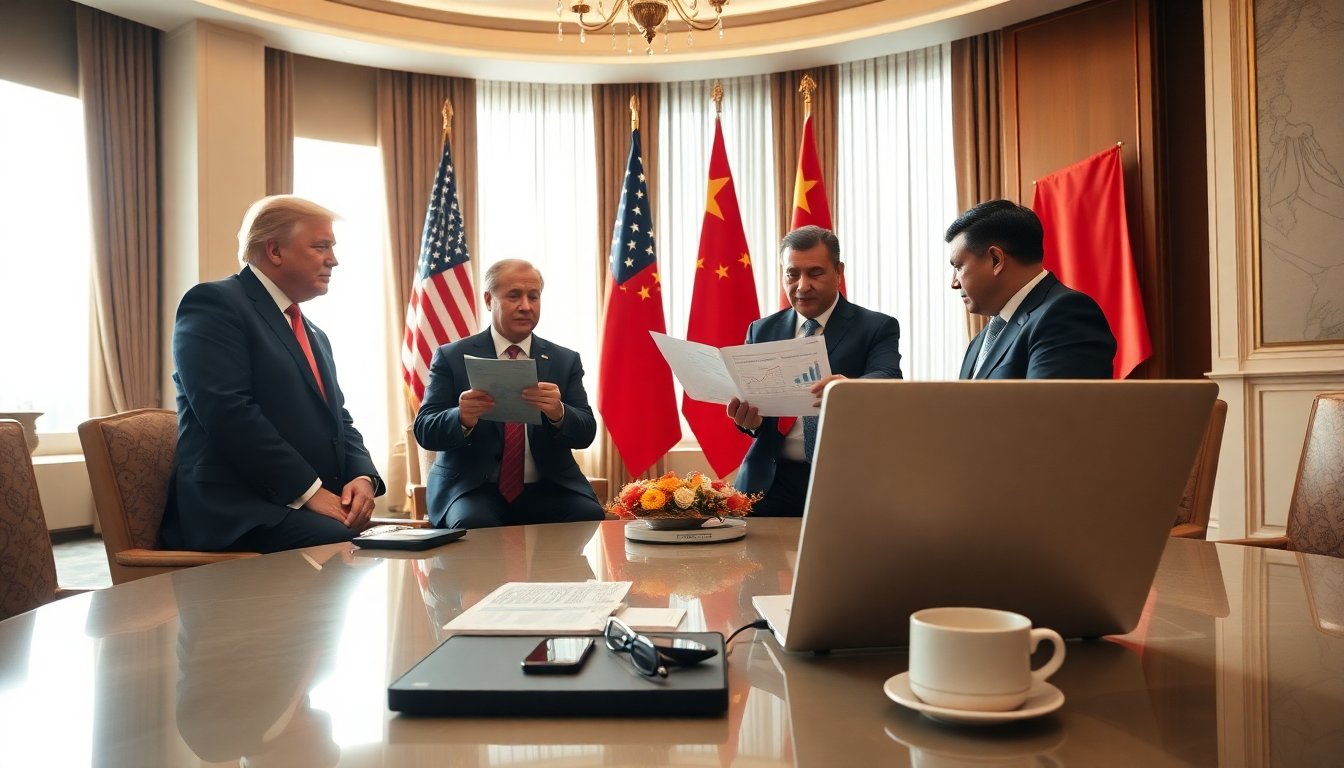
The recent meeting between President Donald Trump and Chinese President Xi Jinping marked a crucial development in the ongoing trade dialogue between the two superpowers. The implications of their discussions could have significant consequences for both nations and the global economy.
During their encounter, Trump announced a reduction in tariffs on fentanyl imports from China, demonstrating a willingness to negotiate in exchange for increased Chinese efforts to combat the illicit flow of opioid precursors. This decision highlights the urgency of addressing the opioid crisis in the United States and reflects the complex relationship between trade and health issues affecting both countries.
Tariff reductions and trade agreements
Trump revealed that the tariff on fentanyl-related imports would decrease from 20% to 10%, following Xi’s commitment to intensify efforts against the production of these dangerous substances. The president expressed optimism about the meeting, calling it “amazing” and rating it a “12” on a scale of 1 to 10, indicating his belief in the progress being made.
Additionally, the discussions included plans for Trump to visit China in April, with Xi expected to reciprocate with a visit to the U.S. later. Both leaders emphasized the necessity of maintaining open channels of communication to prevent a “vicious cycle of retaliation” that has characterized previous interactions. Xi stated that trade should act as a stabilizing force in U.S.-China relations rather than a source of conflict.
Addressing key issues
Despite the optimism surrounding the meeting, several critical topics were notably absent from the discussions. Issues regarding the status of Taiwan and the future of the popular app TikTok were not addressed, raising concerns among analysts about the effectiveness of the negotiations. The lack of dialogue surrounding Taiwan, a contentious point in U.S.-China relations, suggests that significant hurdles remain.
Leading up to the meeting, there were apprehensions that Trump might compromise longstanding U.S. positions regarding Taiwan in exchange for concessions from China. However, both leaders acknowledged the existing frictions between their nations, with Xi recognizing the differences in their national circumstances.
Framework for future cooperation
A framework was established that encompasses not only tariffs and trade but also critical areas such as rare earth minerals and agricultural products. Trump indicated that China would delay its restrictions on these essential materials, vital for producing various technologies, including computer chips. This temporary suspension is expected to facilitate smoother negotiations going forward.
Furthermore, Trump announced that China would begin purchasing significant quantities of American agricultural products, such as soybeans and sorghum, which had been affected by the ongoing trade tensions. This commitment is viewed as a crucial step towards alleviating the strain on U.S. farmers impacted by previous tariffs.
Challenges ahead
While both leaders expressed a desire for cooperation, experts caution against expecting immediate breakthroughs. Historical patterns of negotiations suggest that the complexities inherent in U.S.-China relations will require sustained effort from both sides. Analysts note that the past five rounds of talks have yielded little in terms of concrete agreements, often stalling due to a lack of actionable steps.
The administration’s strategy involves rallying regional allies to put pressure on China, a tactic that may or may not yield the desired outcomes. As the U.S. pushes for more substantive commitments from Beijing, the potential for future negotiations remains intertwined with broader geopolitical dynamics.
During their encounter, Trump announced a reduction in tariffs on fentanyl imports from China, demonstrating a willingness to negotiate in exchange for increased Chinese efforts to combat the illicit flow of opioid precursors. This decision highlights the urgency of addressing the opioid crisis in the United States and reflects the complex relationship between trade and health issues affecting both countries.0