
In a significant turn of events for Brazil, President Luiz Inacio Lula da Silva has addressed the recent conviction of former president Jair Bolsonaro. Bolsonaro received a 27-year prison sentence for attempted coup charges, prompting widespread reactions both domestically and internationally. Lula’s op-ed in a prominent media outlet highlights the tensions between Brazil and the United States, where he criticizes the US government’s tariffs imposed in response to Bolsonaro’s trial. This article examines the broader implications of these developments for Brazil’s political landscape, trade relationships, and the resilience of its democratic institutions.
The Context of Bolsonaro’s Conviction
The conviction of Jair Bolsonaro on coup charges marks a pivotal moment in Brazil’s political history. Lula’s administration views this decision as essential for reinforcing the democratic framework that Bolsonaro sought to undermine. The former president’s actions, particularly the incitement of riots on January 8, 2023, draw parallels to the January 6 Capitol riots in the United States, underscoring a concerning trend of political unrest driven by disinformation and populism.
In his commentary, Lula emphasizes that the judicial decision signifies more than just punishment for Bolsonaro; it represents a safeguard for Brazil’s democratic institutions. He presents the Brazilian Supreme Court’s decisive action as a historic moment, asserting that this conviction rejects any attempts to subvert the electoral process. The president’s strong stance reflects a commitment to uphold the rule of law amidst external pressures and internal challenges.
Impact on US-Brazil Relations
Lula’s op-ed also addresses the implications of the US tariffs, which he describes as “misguided” and politically motivated. The imposition of a hefty 50 percent tariff on Brazilian goods following Bolsonaro’s conviction raises questions about the future of bilateral trade relations. Lula points out that the US has enjoyed a substantial trade surplus with Brazil, casting doubt on the motivations behind these tariffs. He frames the situation as one where political agendas overshadow economic realities, urging a reassessment of a relationship that has developed over two centuries.
Furthermore, Lula advocates for dialogue with US President Donald Trump to mitigate the fallout from these tariffs. He stresses the importance of maintaining cooperation between the two nations, particularly in areas of mutual interest, while firmly asserting that Brazil’s democracy and sovereignty are non-negotiable. The president’s approach signals a desire to navigate a complex political landscape while safeguarding Brazil’s interests on the global stage.
Consequences for Brazil’s Economy and Society
The economic repercussions of Trump’s tariffs are expected to reverberate throughout Brazil, potentially resulting in significant job losses and economic downturns. However, analysts suggest that Brazil’s strong trade connections with other nations, particularly China, may cushion the blow. The Brazilian economy possesses a level of resilience, but the tariffs will nonetheless exert pressure on various sectors, including agriculture and manufacturing.
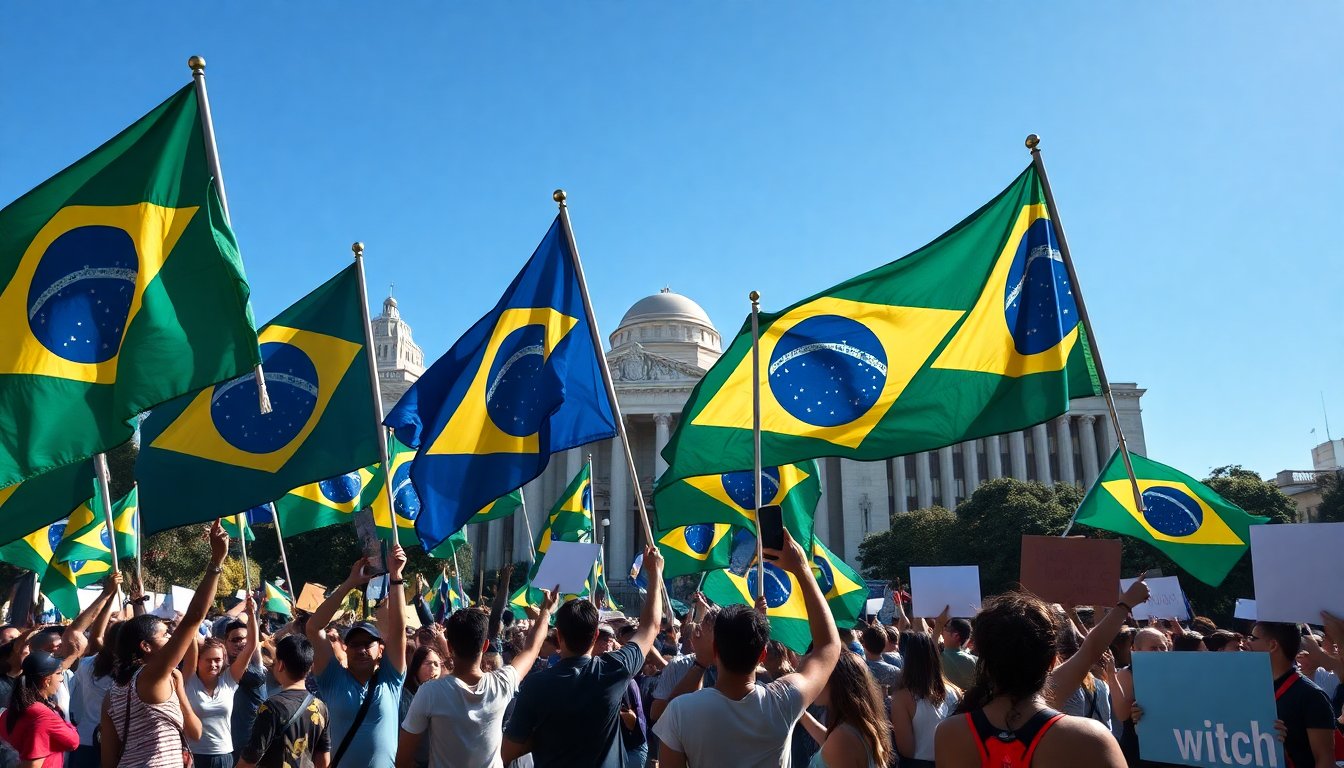
Moreover, the social landscape in Brazil is shifting as Bolsonaro’s supporters rally for his release, illustrating a polarized society grappling with the outcomes of political turmoil. The ongoing protests underscore the deep divides within the nation and the challenges Lula faces in fostering unity and stability.
As Bolsonaro navigates his legal challenges from house arrest, the legal proceedings will continue to unfold, with potential appeals likely shaping the future of Brazil’s political environment. The dialogue surrounding these events remains critical as the nation seeks to redefine its path forward, balancing the complexities of governance, public sentiment, and international relations.


