
The Gray House pulls a little-known chapter of Civil War history into sharp, often intimate focus: a Union spy network embedded inside Richmond, run largely by women whose public lives masked covert operations. The limited series, developed by Leslie Greif, Darrell Fetty and John Sayles and executive-produced by Kevin Costner and Morgan Freeman, treats espionage as social labor—an industry of manners, secrets and risk rather than a parade of derring-do.
A house of secrets
The story centers on the Van Lew household, where matriarch Eliza Van Lew and her daughter Elizabeth turn domestic respectability into a shield and a tool. Their parlor, maintained with the rituals of good breeding, doubles as a staging ground for resistance: a place to shelter escapees, pass messages and weave a network of informants. That dual life—polite society on the surface, sabotage and intelligence work underneath—becomes the series’ recurring motif.
The show threads two kinds of defiance together. On one hand there’s direct aid to people fleeing bondage, an act that feels urgent and moral. On the other, there’s a clandestine stream of information sent northward: observations of troop movements, whispered confidences extracted from unsuspecting officers, coded entries hidden in ledgers. The series treats both as parts of the same struggle, each demanding different kinds of courage and craft.
Characters and performances
Rather than centering on a single hero, Gray House builds an ensemble whose members specialize in particular forms of tradecraft. Eliza, played with stern compassion, exercises influence through example and social leverage. Elizabeth carries the emotional toll of duplicity—her sacrifices are quiet but accumulative. Mary Jane, a formerly enslaved woman who returns to the Van Lew household as a servant, is a standout: her position offers access and vulnerability in equal measure, and the show shows how she uses what little power she has to gather crucial intelligence. Clara, a sex worker recruited for the circles she can reach, complicates easy notions of respectability; a sympathetic baker and other tradespeople round out the network, each exploiting their ordinary roles to move messages and supplies.
The antagonists are less fleshed out, intentionally sketched as the looming Confederate apparatus the group is chipping away at. That choice keeps the focus on the protagonists’ day-to-day ingenuity, but it also invites questions about the limits of the show’s dramatic scope.
What the series does well
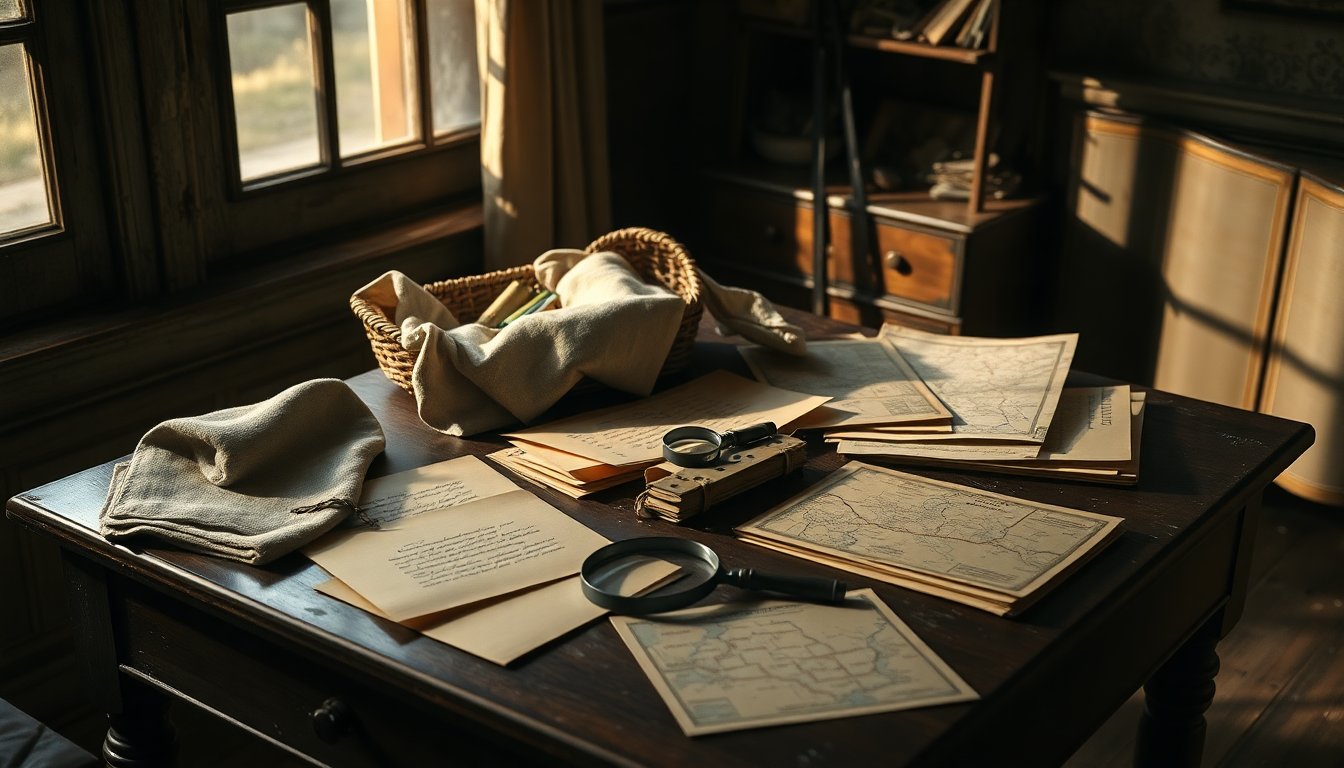
Gray House finds its strongest footing in small, contained scenes. The best moments are tense and domestic: a hushed conversation behind curtains, a ledger rewritten to hide a code, the handoff of a single letter that could change a life. Those sequences make the stakes feel immediate and human. The production design deserves credit—props and household objects are repurposed as instruments of secrecy, grounding the espionage in tactile, believable detail rather than glamorizing it.
Crucially, the show refuses to romanticize spying. Tradecraft is shown as repetitive, risky work that exacts an emotional toll. Codes, routines and social engineering are treated as labor—tedious, dangerous and morally fraught. By framing espionage this way, Gray House captures resistance as a messy, costly series of decisions rather than a tidy hero’s journey.
The series also interrogates how race and class shaped exposure to danger. White women from privileged backgrounds could sometimes “hide” within expectations of respectability, while Black participants and poorer collaborators faced far higher risk and fewer safety nets. This imbalance is handled with care; performances by the cast—especially those portraying the Van Lews and Mary Jane—anchor the show’s ethical center with restraint and nuance.
Where it falters
Gray House is uneven. At its best it hums with quiet intensity; at other times it loses momentum, meandering into episodes that feel padded. The pacing occasionally dilutes tension, and certain subplots don’t get the development they need to pay off emotionally. Some characters remain thinly sketched, and the show’s focus on procedure sometimes sidelines deeper interrogation of motivation or consequence.
Tone can wobble as well. The series mostly opts for a sober, intimate register, but the appetite for dramatic peaks occasionally introduces scenes that clash with the restrained realism that otherwise serves it well. When the show stretches for melodrama, it diminishes the smaller, sharper moments that are its strength.
A house of secrets
The story centers on the Van Lew household, where matriarch Eliza Van Lew and her daughter Elizabeth turn domestic respectability into a shield and a tool. Their parlor, maintained with the rituals of good breeding, doubles as a staging ground for resistance: a place to shelter escapees, pass messages and weave a network of informants. That dual life—polite society on the surface, sabotage and intelligence work underneath—becomes the series’ recurring motif.0
A house of secrets
The story centers on the Van Lew household, where matriarch Eliza Van Lew and her daughter Elizabeth turn domestic respectability into a shield and a tool. Their parlor, maintained with the rituals of good breeding, doubles as a staging ground for resistance: a place to shelter escapees, pass messages and weave a network of informants. That dual life—polite society on the surface, sabotage and intelligence work underneath—becomes the series’ recurring motif.1
A house of secrets
The story centers on the Van Lew household, where matriarch Eliza Van Lew and her daughter Elizabeth turn domestic respectability into a shield and a tool. Their parlor, maintained with the rituals of good breeding, doubles as a staging ground for resistance: a place to shelter escapees, pass messages and weave a network of informants. That dual life—polite society on the surface, sabotage and intelligence work underneath—becomes the series’ recurring motif.2