
Table of Contents
In the town of O’Smach, a site along the northern border of Cambodia with Thailand, lies a complex of derelict buildings that bears the scars of recent military conflict. This location, now under the control of Thai military personnel, was once infamous as a hub for fraudulent activities. Following a series of armed skirmishes in late, the Thai army has made significant discoveries within these abandoned structures, shedding light on a disturbing aspect of transnational crime.
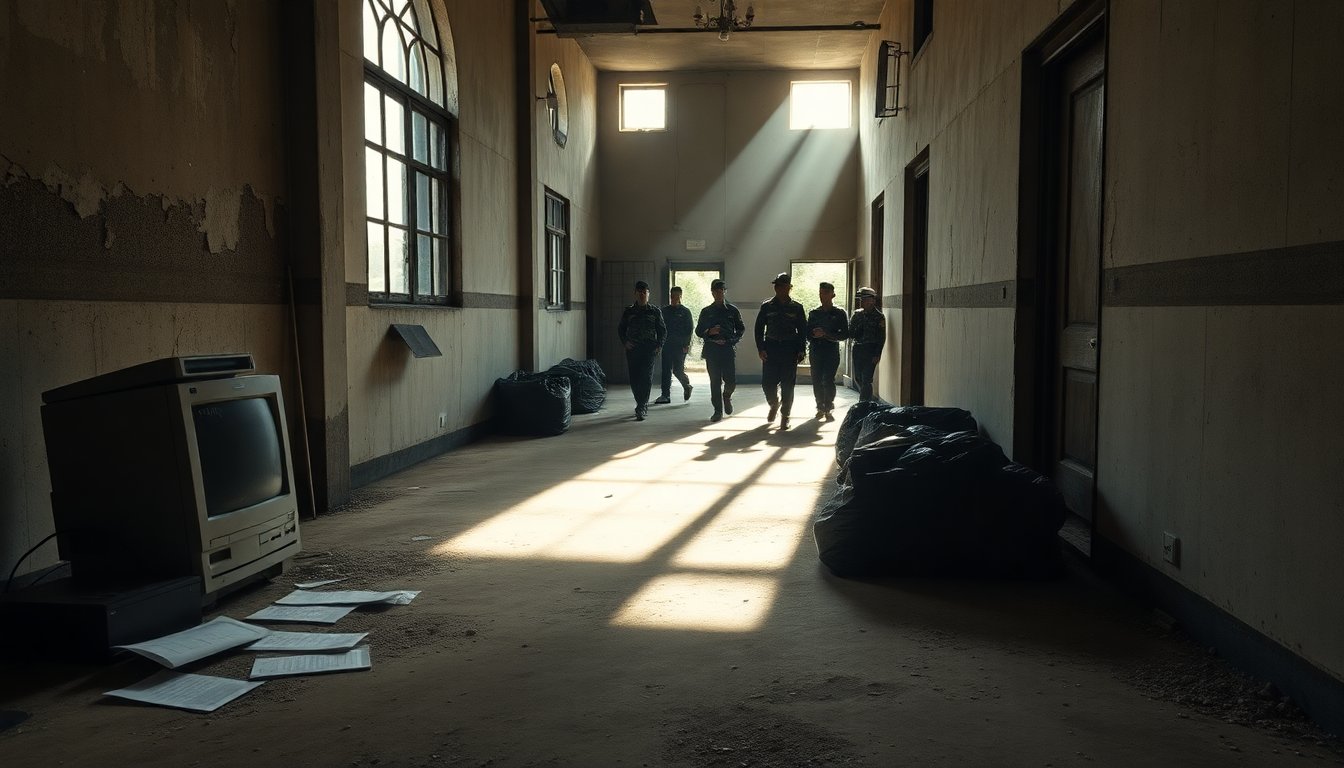
The six-storey edifice, which has captivated journalists and international observers alike, reveals a chaotic scene filled with discarded documents, various pieces of equipment, and personal items left behind. This compound has been linked to numerous reports of human trafficking, where individuals were coerced into committing scams or faced dire consequences.
The grim reality of human trafficking
During a press briefing held in Surin province, senior officials from the Thai military outlined the shocking revelations unearthed from the O’Smach complex. They disclosed that this site had been home to thousands of people, many of whom were victims of human trafficking. These individuals were often forced into a life of crime, perpetrating scams against unsuspecting victims worldwide.
Scam operations exposed
The Thai military showcased key findings from the compound, including extensive lists of potential targets, complete with contact information, alongside detailed scripts for scam dialogues. Such documentation indicates a well-organized operation designed to deceive and exploit victims. The military’s intention in revealing the scope of these findings was to illustrate how this compound functioned as a criminal base violating human rights.
Lieutenant General Teeranan Nandhakwang, director-general of the Royal Thai Army’s Directorate of Intelligence, emphasized the importance of showcasing this compound to the international community. He stated, “We want the world to see how it’s being used as a criminal base against humanity.” This stark revelation has raised concerns about the widespread nature of such operations across Southeast Asia.
Evidence of extensive fraud
As the military continues to investigate the site, they have reported uncovering a treasure trove of evidence linked to international fraud. Among the items seized were 871 SIM cards that facilitated anonymous communication across borders, numerous smartphones, and various counterfeit insignia, including police uniforms. These discoveries point to a sophisticated network capable of orchestrating elaborate scams.
Mock law enforcement offices
Intriguingly, while touring the compound, reporters noted the presence of several rooms specifically designed to mimic police offices from various countries, including Australia and Brazil. These setups were crucial for the scam operations, allowing perpetrators to present themselves as legitimate law enforcement officials. This tactic frequently involved scripted interactions that threatened victims with legal repercussions unless they complied with demands.
O’Smach has garnered attention in the past, with various reports, including those from the United States, labeling it a significant base for scam operations. As the military’s investigation unfolds, it is evident that the region has become a hotspot for online fraud, with billions of dollars generated from these illicit activities annually.
The geopolitical implications
The situation along the Thai-Cambodian border has been exacerbated by ongoing tensions and military clashes. In late December, a ceasefire was agreed upon after weeks of intense conflict, which had seen Thai military forces targeting several casino complexes believed to be linked to scam activities. This fragile truce highlighted the complexities of regional politics and the challenges faced in addressing cross-border crime.
In response to the growing concerns regarding these scam centers, Cambodia’s interior ministry, represented by spokesperson Touch Sokhak, has indicated a commitment to eradicating such illicit operations. He accused Thailand of using these scam centers as a pretext for military actions, complicating the diplomatic relationship between the two nations.
As Southeast Asia grapples with the rise of online fraud, the revelations from the O’Smach compound serve as a stark reminder of the human cost associated with these crimes. The region’s authorities are now tasked with addressing these issues while navigating the delicate balance of international relations.