
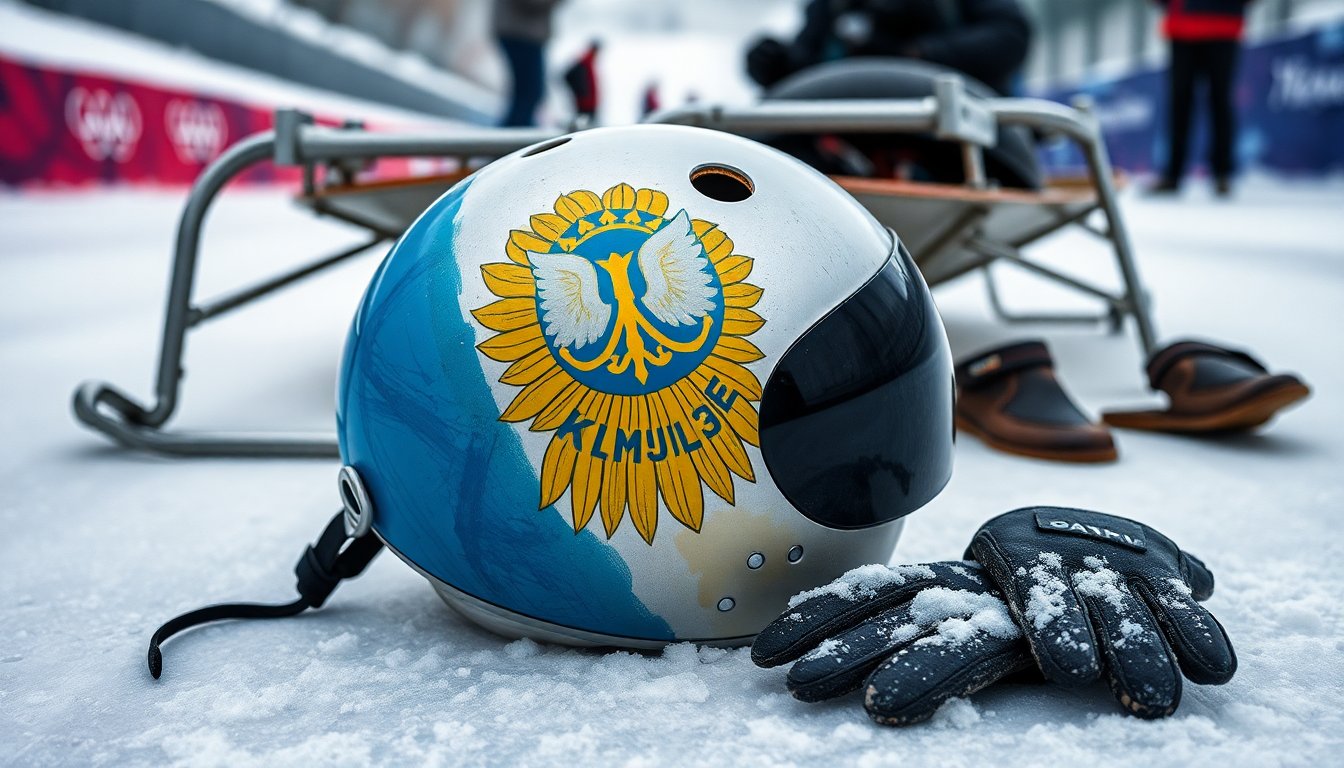
The decision to bar Vladyslav Heraskevych from competing at the Milano‑Cortina Winter Games has become one of the event’s most charged controversies. Heraskevych, a top Ukrainian skeleton rider, wanted to race wearing a helmet painted with the faces of Ukrainian athletes killed in the conflict with Russia. The International Olympic Committee and the sport’s governing body judged the helmet a prohibited political message and removed him from the start list.
A personal tribute, supporters say Heraskevych insists the helmet was neither a political statement nor a provocation but a personal and national act of remembrance. He used the helmet during training after initial warnings, saying he wanted to honor colleagues who never returned to international competition. His stance drew immediate public sympathy: teammates described the design as an intimate act of mourning, and Ukraine’s president praised the gesture as a way to remind the world of the human cost of war.
Why the IOC intervened The IOC and sledding authorities countered that the imagery was linked to an ongoing armed conflict and therefore violated Olympic rules that bar political declarations at the Games. Their argument rested on maintaining a consistent application of those rules and protecting the event’s declared neutrality. Spokespeople acknowledged the emotional intent behind the helmet but said the committee must prevent the Olympic platform from becoming a forum for statements tied to current geopolitical disputes.
Division and debate Reactions split quickly and sharply. Team officials called the disqualification disproportionate and urged a distinction between political campaigning and personal commemoration. Several Ukrainian athletes and competitors from related disciplines showed solidarity—one warmed up with a supportive glove to underline the view that remembrance should not be equated with politics. Critics pointed to apparent inconsistencies, noting earlier instances where athletes displayed symbols or images with no sanction; Heraskevych and his supporters used those cases to argue uneven enforcement.
Legal fight underway After being removed from the start list, Heraskevych lodged an urgent appeal with the Court of Arbitration for Sport (CAS), seeking reinstatement or at least an independent supervised run while the matter is resolved. His legal team argued the penalty was excessive, created a sporting injustice, and had no safety or technical justification—the helmet had already been used in training without incident. CAS accepted the request for expedited handling and appointed an arbitrator to review the claims. Possible outcomes range from restoring the athlete’s eligibility to ordering a supervised competition or upholding the disqualification.
What’s at stake beyond a single race The case is more than a dispute over one helmet. It forces sports administrators, lawyers and rights groups to grapple with a recurring tension: how to preserve the Olympic ideal of neutrality while recognizing that athletes are also citizens who may wish to mourn or bear witness to national tragedies. Any ruling from CAS could shape how federations write and enforce rules on visible gestures, and it will set expectations for what kinds of memorial practices are tolerated at elite competitions.
Experts say the matter could prompt clearer guidance on where to draw the line between permissible personal expression and disallowed political messaging. That will involve weighing the context, intent and impact of a gesture: was it an individual act of grief, or part of a wider campaign? How do you assess the evidence? These are the questions arbitrators and policy-makers will have to answer.
Broader consequences The outcome will reverberate through sport governance and athlete advocacy. If CAS finds the sanction excessive, federations may be pushed to carve out space for commemorative gestures; if the disqualification stands, organizers could feel empowered to apply neutrality rules more strictly. Either way, athletes and national bodies will look to the decision for operational guidance and precedent.
A final note on public memory Sporting events operate on a global stage, and athletes sometimes become inadvertent messengers of their country’s sorrows and struggles. This episode highlights how rules designed to keep competition apolitical can collide with the human impulse to remember and grieve. As the arbitration proceeds, the world will be watching not only to learn whether Heraskevych races, but also to see how international sport balances dignity, free expression and the quest for consistent, fair governance.