
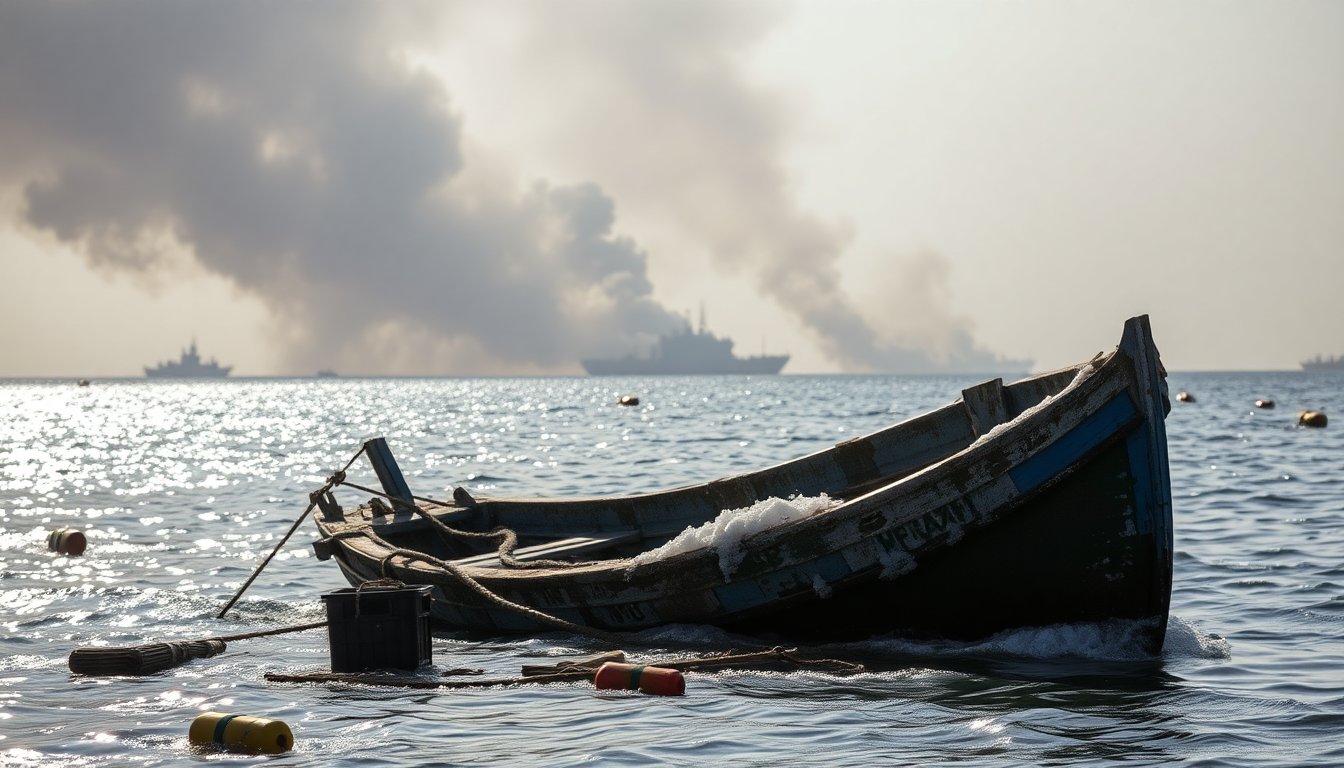
Tensions in the Middle East have surged after a new round of strikes that struck Israeli territory, U.S. facilities and targets in neighboring states. The immediate spark was a maritime clash in which a vessel identified as the Iranian frigate IRIS Dena was reportedly sunk by a U.S. submarine. Tehran called the loss an “atrocity at sea,” and hardline leaders answered with strong rhetoric and expanded attacks. Fighting across multiple fronts has already produced mounting civilian and military casualties and disrupted trade and air travel throughout the region.
How the campaign has played out
The operations to date have focused on high-value leadership targets, security units and sites tied to missile and nuclear programs. Several reports suggest strikes penetrated Iranian territory with the explicit aim of degrading Tehran’s ability to strike back. In turn, Iran and affiliated groups have retaliated against Israeli targets, U.S. bases in the Gulf and other regional locations, broadening the geographic scope of the confrontation and increasing the risk that neutral states and commercial routes will be drawn into the fighting.
The conflict has unfolded in a familiar but dangerous pattern: initial precision attacks against command-and-control nodes and infrastructure, followed by responses that push further in range and intensity. Rockets, drones and longer-range missiles are now being launched from areas well beyond the original front lines. That escalation makes de-escalation harder and raises the odds of miscalculation. Open-source imagery and signals intelligence have verified many strikes; still, attribution remains contested in several incidents as state actors and proxies make competing claims.
Maritime and energy fallout
The maritime consequences have been immediate. Repeated clashes and elevated threat warnings have disrupted shipping lanes, prompted vessel re-routing, delayed sailings and driven up insurance premiums. Those responses prolong transit times and add costs that ripple down the supply chain to shippers and consumers.
Energy markets have reacted as well: attacks near choke points or port facilities trigger short-term volatility in crude and refined product prices, and commercial operators are accelerating contingency moves for storage, pipelines and terminals. In response, regional partners have tightened naval escorts, expanded surveillance and improved coordination to protect critical shipping and energy infrastructure. Incidents reported in the Gulf of Oman, the Strait of Hormuz and off the coasts of Kuwait and Sri Lanka underscore how exposed key maritime routes remain. The alleged sinking of IRIS Dena—after participation in multinational exercises—and subsequent accounts of heavy crew losses have intensified worries about the security of a large share of the world’s hydrocarbon flows.
Domestic stability inside Iran
The crisis is also reshaping Iran’s internal politics. U.S. and Israeli strikes reportedly targeted units involved in internal security—forces that handle border control and domestic policing. Iranian authorities have responded by imposing nationwide internet disruptions, installing checkpoints, expanding surveillance and restricting public gatherings to limit mobilization and control information flows.
Tehran appears to be focusing on continuity: trusted clerical and political figures have been elevated into key roles after the reported loss of senior officials, a move aimed at preserving institutional resilience. Yet analysts warn that coordination among security units is strained. Communications blackouts complicate command-and-control, slowing crisis management for both state forces and nonstate actors. Observers also note fluctuating tempos in retaliatory strikes—days with noticeably fewer munitions launched—which could reflect logistical strain or the effects of targeted attacks on missile sites, launchers and drone production facilities.
Proxy dynamics and the risk of spillover
Hezbollah and various Iran-aligned militias in Iraq, Syria and elsewhere have stepped up activity intermittently. Their involvement adds tactical pressure on Israel and U.S. positions while muddying the question of who is responsible for specific strikes. That diffusion of violence across multiple theaters increases the likelihood of accidental escalation and makes diplomatic containment more complicated.
Humanitarian toll and wider disruptions
Civilians living near strike zones are paying the heaviest price. Hospitals and emergency services face surges in casualties even as supply chains for medical and relief goods are disrupted. Displacement is hitting local economies and schools, and evacuations around embassies or workplaces are increasingly common. Airspace restrictions and rerouted flights have stranded travelers and complicated logistics for humanitarian responders.
Maritime disruptions are feeding market volatility and higher shipping insurance costs, creating further uncertainty for producers and consumers. On the ground, priorities are clear: protect civilians, open secure humanitarian corridors and restore essential services. Independent monitoring will be vital to assess needs accurately and direct relief where it is most needed.
How the campaign has played out
The operations to date have focused on high-value leadership targets, security units and sites tied to missile and nuclear programs. Several reports suggest strikes penetrated Iranian territory with the explicit aim of degrading Tehran’s ability to strike back. In turn, Iran and affiliated groups have retaliated against Israeli targets, U.S. bases in the Gulf and other regional locations, broadening the geographic scope of the confrontation and increasing the risk that neutral states and commercial routes will be drawn into the fighting.0