
Table of Contents
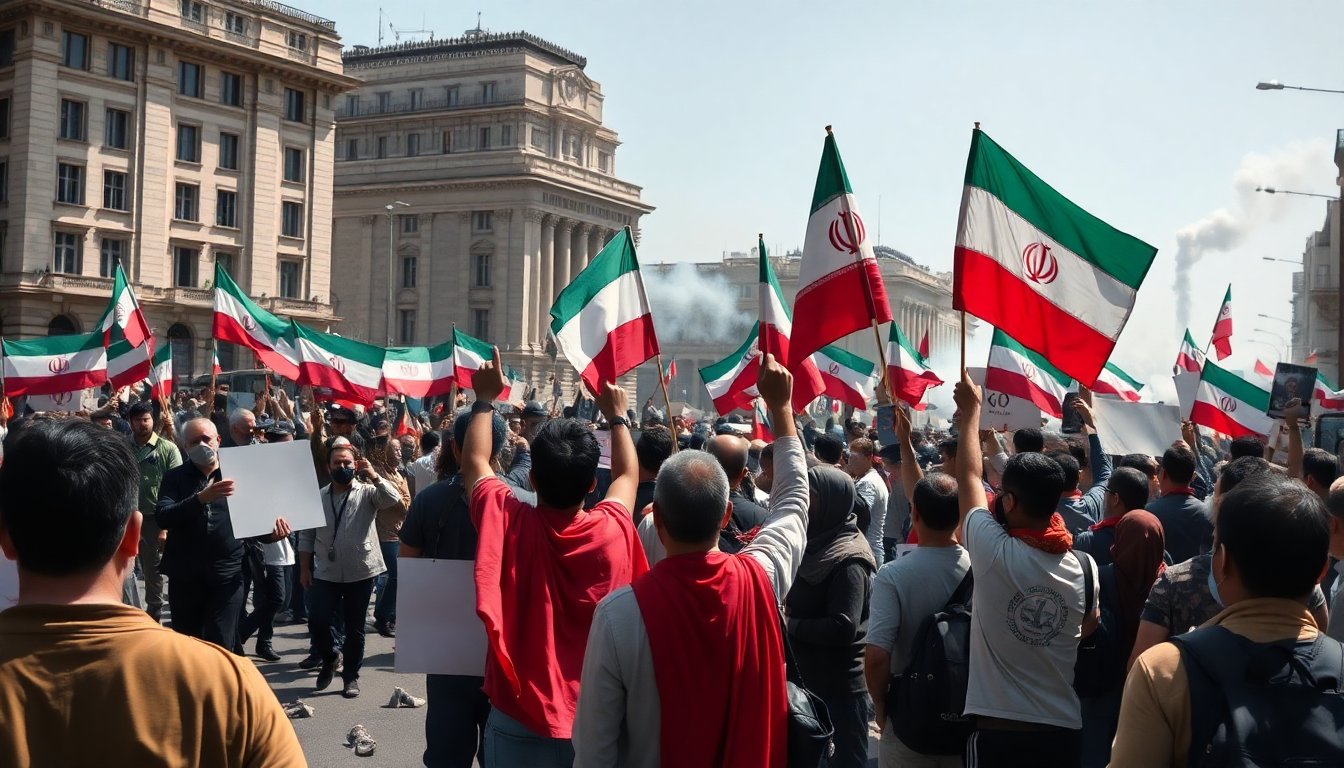
The situation in Iran has escalated significantly as demonstrations spread nationwide. Protests are now entering a second week, prompting the Iranian government to issue severe threats against participants, labeling them as enemies of God. This accusation carries the risk of a death penalty, underscoring the regime’s resolve to stifle dissent.
Reports indicate that at least 65 individuals have died, and over 2,300 people have been detained amid ongoing anti-government protests. The intensifying violence and government crackdown have attracted international attention, especially from the United States, which has warned Iran of potential consequences for its actions against peaceful demonstrators.
Government’s crackdown on dissent
As unrest persists, Iranian attorney general Mohammad Movahedi Azad has issued alarming statements suggesting that anyone participating in the protests will be prosecuted as an enemy of God. This declaration raises concerns about the possibility of widespread executions as the government seeks to maintain control. The attorney general emphasized that even those who assist protestors could face similar charges, calling for swift legal action against individuals perceived as betraying the nation.
International response and support for protestors
In response to these developments, U.S. President Donald Trump has expressed support for the demonstrators, stating that the United States stands ready to assist those seeking freedom in Iran. He has warned the Iranian regime that any violence against peaceful protestors would result in significant repercussions. This support reflects growing international concern regarding the Iranian leadership’s handling of dissent.
Other nations have also condemned the Iranian regime. Canada’s Foreign Affairs Minister, Anita Anand, along with officials from Australia and the European Union, has expressed solidarity with the Iranian people, praising their courage in demanding their rights. In a joint statement, they condemned the violent suppression of protests and urged Iranian authorities to respect the right to peaceful assembly.
Impact of internet blackout on protests
The Iranian government has imposed an internet blackout, disrupting communications to hinder the flow of information about the protests. This decision complicates efforts to assess the situation on the ground. However, videos circulating online contradict state media reports, showing large gatherings of protestors chanting anti-government slogans in cities such as Tehran and Mashhad.
Symbolism and the call for change
Many demonstrators are invoking historical symbols, including the old lion-and-sun flag, as they seek to reclaim public spaces and express their desire for change. Initially sparked by economic grievances, the protests have evolved into a broader movement challenging the legitimacy of the Iranian theocracy. As the situation unfolds, the Iranian army has pledged to protect national interests and public property, framing the protests as part of a foreign plot against the nation.
This narrative has been echoed by the Islamic Revolutionary Guard Corps (IRGC), which has characterized demonstrators as vandals and saboteurs. The IRGC’s involvement highlights the serious threat the government perceives from these protests, fearing that widespread unrest could undermine their authority.
Future implications of the protests
The ongoing protests represent the most significant challenge to the Iranian regime since the unrest following the death of Mahsa Amini, which instigated a wave of demonstrations against the government. As protests gain momentum, Iranian authorities face a critical decision: address the people’s grievances or intensify their crackdown, risking further violence and bloodshed.
As international support for the protestors increases, the Iranian government’s response to mounting pressure remains uncertain. Human rights organizations have called for the regime to halt its violent tactics and respect the rights of citizens to protest peacefully. The world is closely monitoring the situation as the potential for significant change hangs in the balance.