
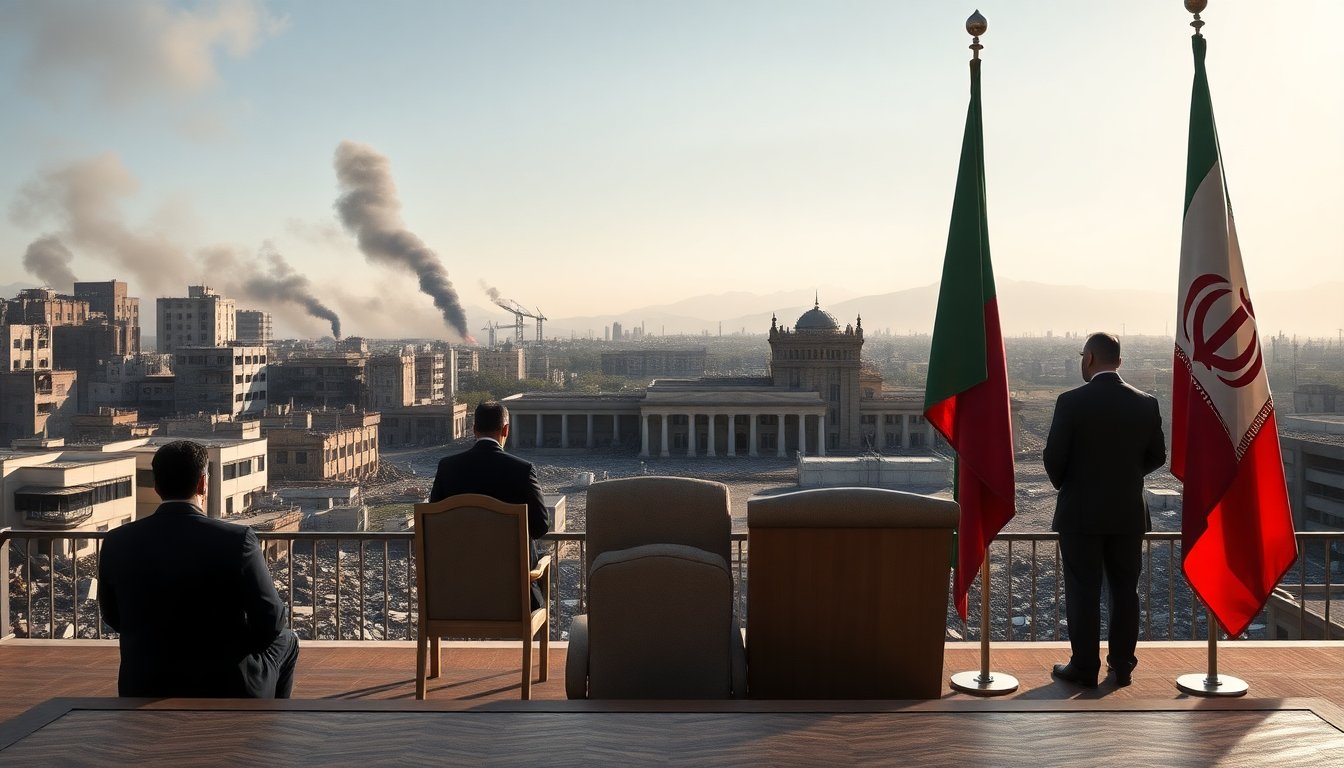
A sudden wave of air strikes by the United States and Israel has killed several senior Iranian figures, including the supreme leader and top military commanders. In the wake of that blow, Tehran has installed a three-person leadership council as a temporary measure to keep the state functioning and to reassure domestic institutions and international partners while the constitutional succession process proceeds.
President Masoud Pezeshkian addressed the nation, rejecting calls for unconditional surrender but signalling a desire to avoid further escalation. His administration framed the new council not as a power grab but as an interim, legally justified mechanism to preserve continuity. According to officials, the council’s remit covers security, foreign relations and emergency services until constitutional procedures—chiefly the Assembly of Experts—can restore normal governance.
State media pointed to specific constitutional clauses to defend the move, and public briefings outlined the council’s duties: coordinating defence and crisis response, authorising military operations where necessary, and representing Iran on the diplomatic stage. Legal scholars say the path is unusual but arguable under the cited provisions; they caution, however, that legal cover may not prevent disputes over the council’s authority or its exact limits.
Practically, the council is operating from secure facilities and maintaining contact lines with military commanders and provincial authorities. It has pledged to work with foreign embassies and international organisations to secure humanitarian access and protect civilians. Emergency services in several cities report receiving centralized directives; still, critics both inside and outside Iran demand greater transparency, clear timetables and parliamentary oversight.
Senior civilian and military leaders have publicly backed the interim body, a coordinated show intended to project unity and steady nerves at home. Regular army units, the IRGC and other security services issued statements reaffirming their roles and readiness. Authorities organised nationwide mourning and official commemorations—moves designed to channel public grief, shore up social cohesion and buttress the state’s legitimacy.
Operational priorities are pragmatic and immediate: safeguard critical infrastructure, keep public services running and preserve intelligence and law-enforcement coordination. Officials stress these measures are temporary, intended to maintain the conditions necessary for the constitutional succession rather than to entrench the council indefinitely.
At the same time, military tensions across the region have intensified. Iranian forces report missile and drone strikes on sites they identify as U.S. and Israeli military targets and describe these actions as punitive. The United States and Israel say they have carried out sustained strikes on Tehran and other urban centres, targeting command hubs and military infrastructure. Both sides insist they want to reduce the other’s capabilities while avoiding an uncontrollable escalation—an aim that looks increasingly fragile as attacks continue.
Analysts warn that the current tit-for-tat pattern raises the risk of miscalculation. Each new strike increases the possibility that a single error or misinterpretation could widen the confrontation unless diplomatic channels or third parties succeed in cooling the situation.
Verifying events on the ground remains difficult. Widespread internet blackouts and communication restrictions have hampered independent confirmation of casualty figures and damage assessments. Multiple reports point to civilian deaths, damaged schools and residential neighbourhoods, and hospitals overwhelmed with wounded. Aid groups and foreign missions say humanitarian access is severely constrained, complicating efforts to assess needs and deliver assistance.
The social and economic fallout may be long-lasting: disrupted education, strained public services and the loss of experienced commanders all threaten the coherence of future governance and military operations. For now, the interim council faces the twin challenges of stabilising the country and persuading both domestic audiences and foreign actors that it is a temporary, legitimate steward until a constitutional successor is named.