
Table of Contents
The Strait of Hormuz, a narrow but vital passage between the Persian Gulf and the Gulf of Oman, is once again at the center of escalating tensions. Iran has announced plans to conduct a military drill over the weekend, which may include live-fire exercises in a region critical for global shipping. As about one-fifth of the world’s oil passes through this strait, any military activity poses significant risks to international trade and regional stability.
In response to these developments, the U.S. Central Command has issued a stern warning to Iran. Military officials expressed concerns that any unsafe actions around U.S. forces or commercial vessels could lead to potential collisions and further destabilization of the area. This situation reflects a broader context of heightened hostilities between Tehran and Washington, with implications extending beyond the immediate region.
The evidence
Geographically, the Strait of Hormuz is only 33 kilometers wide at its narrowest point and serves as a gateway for vessels traveling to and from the Persian Gulf. Ships navigating through this vital waterway connect to global markets, making it an essential route for oil and gas exports, particularly to Asian markets.
Historical importance in trade
This strait has historically been significant for trade, facilitating the exchange of goods such as ceramics and silk from as far away as China. In contemporary times, it has evolved into a critical transit route for oil tankers. Despite the existence of alternative pipelines in regions like Saudi Arabia and the UAE, many shipments lack other viable exit routes, emphasizing the strait’s importance in global energy supply.
Given that most oil and gas exports from the region head towards Asia, any threats to this route can lead to fluctuations in global energy prices. Past tensions, including conflicts like the brief war between Israel and Iran in June, have demonstrated how military actions can ripple through international markets.
The reconstruction
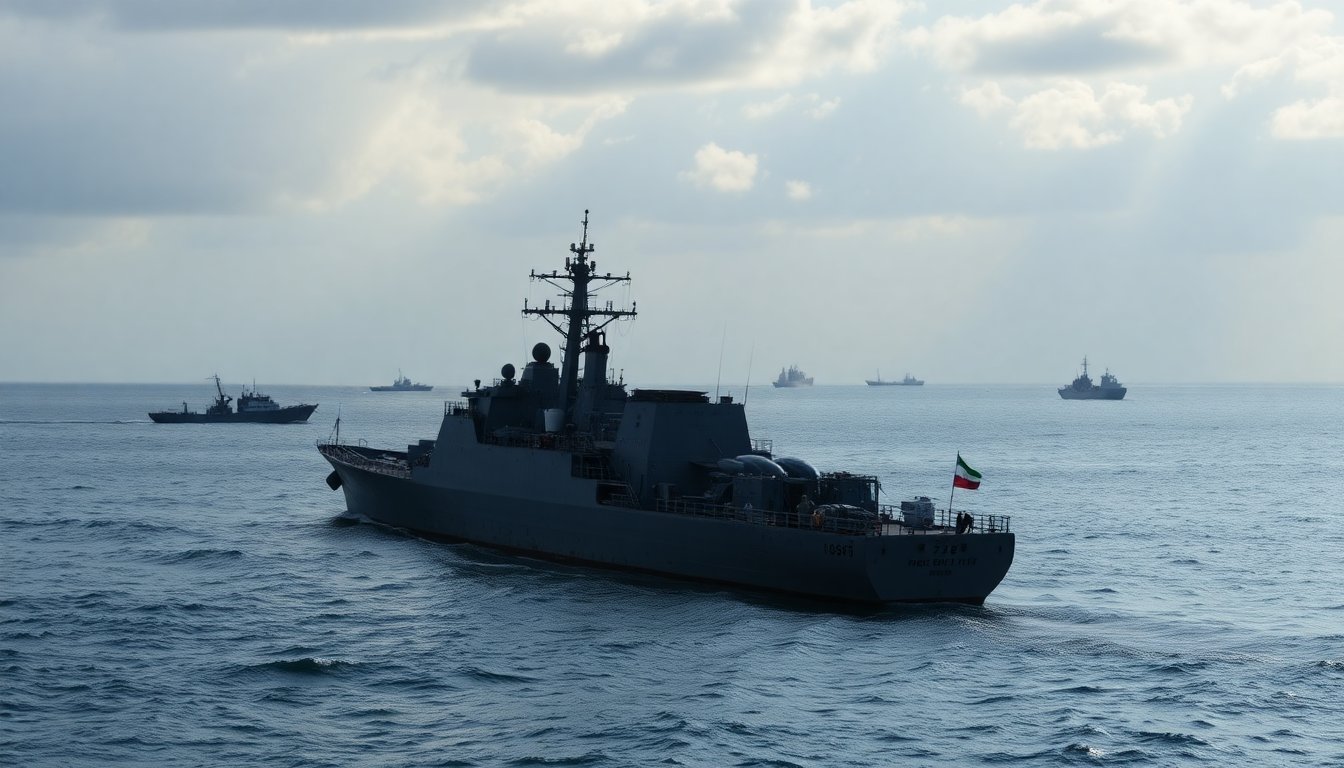
Iran’s recent announcement regarding a military exercise has raised alarms among international observers. The drill, scheduled for Sunday and Monday, is expected to include live-fire activities that could encroach upon established shipping lanes. A notice sent to mariners hinted that these activities might intersect with the Traffic Separation Scheme, a designated safe passage for vessels navigating through the strait.
U.S. military response and regional dynamics
In response, the U.S. military has reiterated its commitment to protecting freedom of navigation in international waters. While acknowledging Iran’s right to conduct exercises in international airspace and waters, U.S. officials have emphasized that any actions deemed unsafe or provocative will not be tolerated. They have underscored the capability of the U.S. military, regarded as one of the most advanced forces globally, to address any threats that may arise during these drills.
Furthermore, the geopolitical landscape has developed additional layers of complexity. Following Iran’s military activities, the situation has been compounded by ongoing protests within Iran and the regime’s crackdowns on dissent. The U.S. administration has expressed readiness to respond to the evolving situation, which has included military assets being positioned in the region. This adds to a precarious atmosphere where any miscalculation could have dire consequences.
The implications
The upcoming military drill by Iran in the Strait of Hormuz serves as a stark reminder of the delicate balance in this crucial region. With the strait functioning as a pivotal artery for global oil trade, the potential for military confrontation raises concerns among international stakeholders. As tensions between Iran and the U.S. continue to simmer, the implications of these military exercises could extend far beyond the immediate vicinity, affecting global energy markets and geopolitical stability.
What happens next
As the situation develops, it will be crucial to monitor both U.S. military responses and Iran’s actions during the upcoming military drill. Analysts will be watching closely for any signs of escalation, which could significantly impact international shipping and energy markets. Continued diplomatic efforts may be necessary to de-escalate tensions and ensure safe passage through this vital waterway.