
Table of Contents
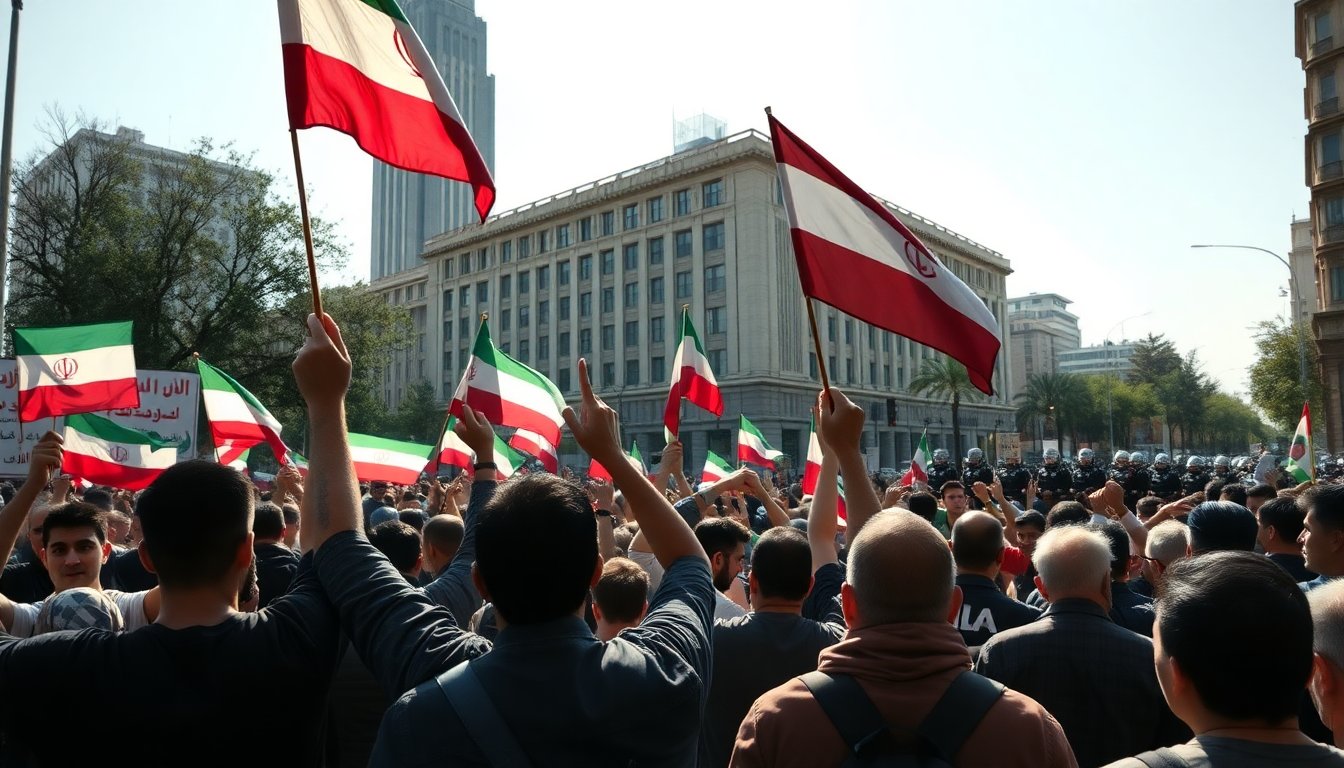
The political landscape in Iran is turbulent, marked by mass protests that have drawn attention from both national and international observers. Amid this unrest, Iran’s supreme leader, Ali Khamenei, has asserted that the government will not yield to pressure from demonstrators. His statements reflect a strong determination to maintain control despite rising dissent.
Khamenei has referred to the protesters as “vandals”, a term that illustrates his contempt for their actions and motivations. The protests, which have intensified in recent weeks, have elicited various responses, including threats from U.S. President Donald Trump, who has suggested potential intervention if violence escalates.
Khamenei’s response to dissent
In a recent address, Khamenei criticized the demonstrators without reservation. He characterized them as a disruptive force within society, undermining the nation’s fabric. His use of language indicates a broader strategy to delegitimize the protests and depict them as a threat to national security, consistent with a theme in Iranian politics where external actors are often blamed for unrest.
Labeling the protesters
By labeling the protesters as vandals, Khamenei seeks to alter public perception. This approach aims to foster a sense of loyalty to the regime, suggesting that participants in the protests are acting against the collective interests of the nation. Such rhetoric is common in authoritarian regimes, where leaders frequently portray dissenters as enemies of the state.
International ramifications of Trump’s threats
Trump’s remarks about potential U.S. intervention add complexity to the situation. His warnings heighten tensions both within Iran and internationally. Khamenei’s dismissal of Trump’s threats is not just personal; it is a calculated move to reassure the Iranian populace that their government remains resolute in the face of foreign pressure. By presenting themselves as resistant to outside influence, Iranian leaders aim to enhance their legitimacy.
Reinforcing national sovereignty
Khamenei often stresses the importance of national sovereignty, positioning the Iranian government as a defender against Western intervention. This narrative is particularly powerful given historical grievances related to foreign interference in Iranian affairs. The supreme leader’s scorn for Trump’s threats can be viewed as an effort to rally support among his base, framing the protests as a manipulation by foreign powers rather than a genuine expression of discontent.
The enduring struggle for power
The ongoing protests underscore a significant struggle within Iran’s socio-political landscape. While Khamenei’s rhetoric may resonate with certain segments of the population, it also risks alienating those who feel marginalized by the government. The challenge for Iranian authorities will be to address this dissent without further alienating additional segments of society.
The future of these protests remains uncertain, but Khamenei’s firm stance indicates that the government is prepared to adopt a hardline approach to maintain order. As tensions rise, the interaction between internal dissent and external pressures will shape Iran’s trajectory in the months ahead.
Khamenei’s defiance in the face of protests and Trump’s threats marks a pivotal moment for Iran. His characterization of demonstrators as vandals and his derisive response to foreign intervention reflect a determination to uphold the regime’s authority. The outcomes of these protests will not only influence Iran’s domestic landscape but could also have repercussions throughout the region and beyond.