
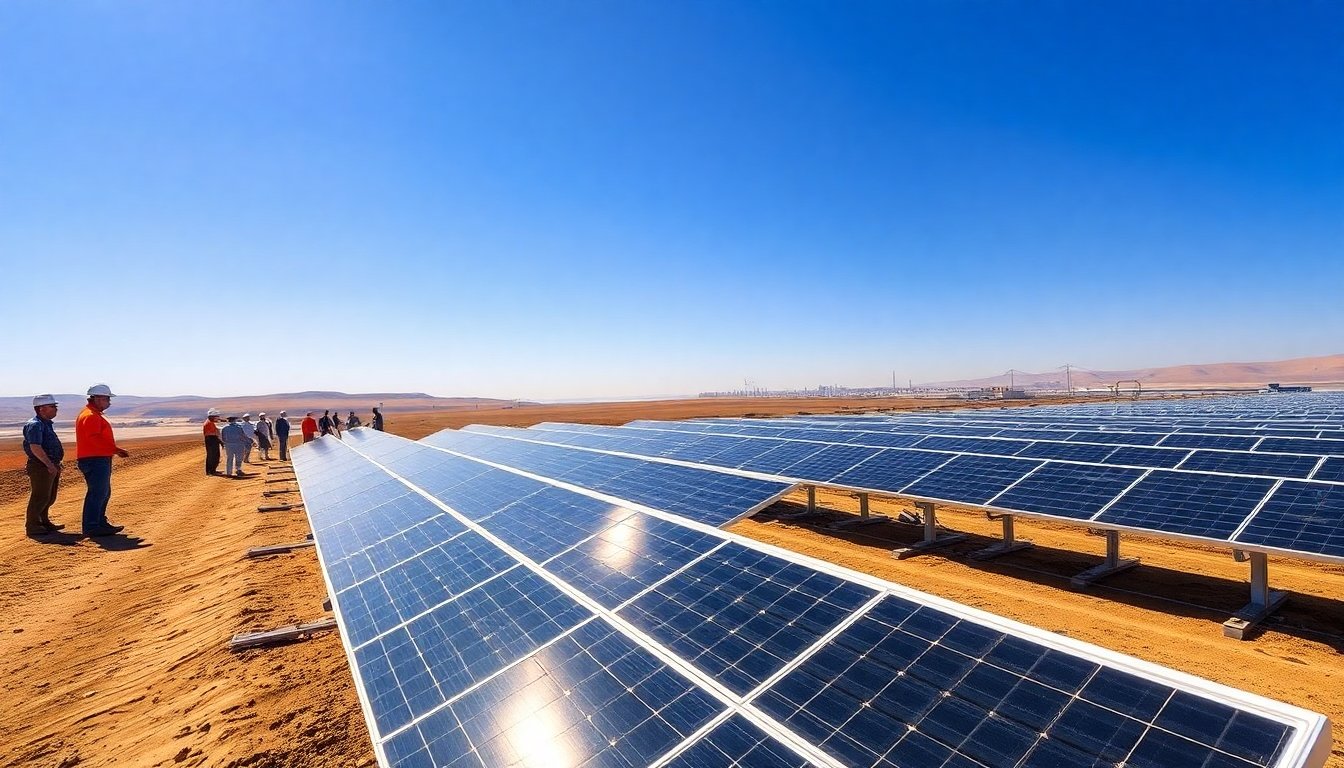
Iraq Advances in Solar Energy Amid Electricity Crisis
Iraq is taking significant steps toward sustainable energy by launching solar power projects. The nation is facing an ongoing electricity shortage, prompting the government to prioritize solar energy development. The first industrial-scale solar power plant will begin operations in Karbala, aiming to address the electricity crisis.
Located about 100 kilometers southwest of Baghdad, this facility will be Iraq’s largest solar plant, capable of generating up to 300 megawatts of electricity under optimal conditions. The plant is set to officially open on Sunday, heralding a new chapter in Iraq’s energy sector.
The Karbala Solar Plant: An Overview
The Karbala solar plant spans approximately 4,000 dunams (around 1,000 acres or 400 hectares) in the al-Hur region. The site features tens of thousands of solar panels, strategically positioned to capture sunlight. Nasser Karim al-Sudani, who leads national solar energy initiatives from the Prime Minister’s office, is optimistic about the project’s potential to enhance Iraq’s energy supply.
Future Solar Projects on the Horizon
Alongside the Karbala initiative, additional solar projects are in development. A solar facility under construction in Babil province is expected to add 225 megawatts of capacity. Furthermore, plans are in motion for a sizable 1,000-megawatt solar plant in Basra, which would further bolster Iraq’s renewable energy resources.
The rationale behind these projects aligns with a broader vision to integrate solar energy into Iraq’s power supply, potentially meeting up to 20 percent of the nation’s electricity demand. According to Deputy Minister of Electricity, Adel Karim, the country is pursuing solar projects that could provide up to 12,500 megawatts of energy, whether in implementation, awaiting approval, or under negotiation.
Addressing the Electricity Crisis
Iraq, despite its abundant oil and gas resources, has historically faced electricity shortages due to war, corruption, and inefficient management. This summer, electricity demand surged, reaching approximately 55,000 megawatts as temperatures exceeded 50 degrees Celsius (122 degrees Fahrenheit) in some regions.
Currently, Iraq generates around 28,000 megawatts of electricity, with some sourced from natural gas imported from neighboring Iran. However, this supply chain has encountered challenges, particularly due to U.S. sanctions on Iran, complicating Iraq’s ability to maintain consistent energy supplies.
The Impact of Sanctions and Regional Dynamics
In March, the United States announced the cessation of a sanctions waiver that previously permitted Iraq to purchase electricity directly from Iran. This waiver required renewal every 120 days, creating uncertainty in Iraq’s energy strategy. Although one waiver remains, allowing the import of Iranian natural gas for power generation, the situation remains tenuous.
Moreover, Iran is facing its own energy shortages, affecting its ability to export resources to Iraq. While Iraq’s solar energy projects hold promise, the path toward energy independence and stability is laden with challenges.
As Iraq forges ahead with its solar energy agenda, the success of these initiatives will be critical in shaping the nation’s energy future. The government’s commitment to renewable energy reflects not only a response to current crises but also a strategic approach to sustainable development.


