
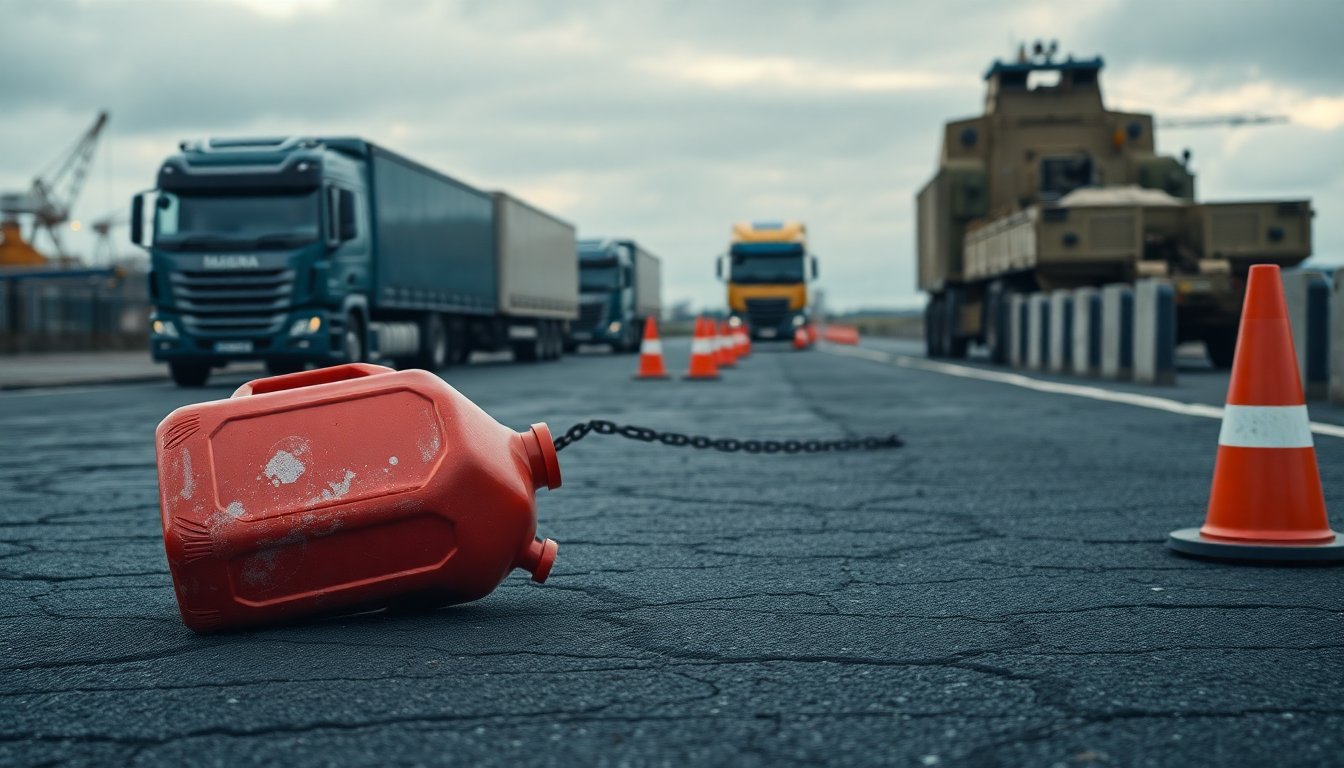
On April 9, 2026, the Irish government ordered the Defence Forces onto the streets to dismantle vehicle blockades that have choked key transport routes and port access. The move followed several days of rolling actions by hauliers and farmers, who organized online and used large vehicles to obstruct traffic at major junctions, central Dublin and, crucially, at the entrances to important maritime hubs. Officials warned that those blockades were not mere demonstrations but were endangering the steady arrival of fuel and vital industrial chemicals.
The protesters describe themselves as a leaderless grassroots movement pressing for steeper reductions in fuel taxes after global energy shocks pushed retail prices higher. They demand an increase to emergency cuts already enacted by the government, and they have resisted calls to disperse. In response, ministers framed the action as a threat to national supplies and public health, arguing that leaving ports like Foynes and Whitegate closed was unsustainable.
Why the army was mobilized
Senior officials said the decision to deploy soldiers was driven by an immediate risk to what they called critical infrastructure. The government emphasized that prolonged blockades of port facilities would interrupt imports of petrol, diesel and specialised chemicals used for water treatment. Justice Minister Jim O’Callaghan announced the deployment, and the Taoiseach, Micheál Martin, expressed reluctance to militarize streets but insisted action was required once port access was cut. Authorities said military heavy-lift vehicles—part of the Defence Forces’ mixed Swedish and Italian fleet—would be used to remove the large trailers and tractors should drivers refuse to move them.
Locations and services under pressure
Foynes in County Limerick and Whitegate in County Cork were singled out as immediate priorities for clearance. Foynes is a deep-water facility at the mouth of the River Shannon that supports much commercial shipping, while Whitegate hosts Ireland’s only oil refinery and accounts for roughly a third of the nation’s fuel throughput. Officials warned that many petrol stations were beginning to run low and that the refinery blockade could quickly ripple through supply chains, affecting deliveries and raising the prospect of localized shortages.
Ports and refinery
Blocking port gates does more than delay shipments: it can break supply chains for both households and industries. The government pointed to the potential for outbound exports to be disrupted as well—an acute issue for an economy that exports a high share of its output. Military crews were dispatched with the aim of restoring access first at port and refinery sites, reflecting a prioritisation of facilities that sustain national logistics and fuel distribution networks.
Water and road networks
Aside from fuel, the water utility Uisce Éireann reported concerns about access to imported chemicals needed for purification processes, with officials warning of material risks to the continuity of clean water supplies. Meanwhile, urban arteries such as O’Connell Street in Dublin and sections of the M50 motorway were heavily affected, adding commuter chaos to the broader logistical strain. Law enforcement officials described a graduated response that moved into an enforcement phase for actions that targeted vital services.
Political fallout and public reaction
The government’s hard line drew criticism from opposition quarters even as many leaders called for an end to the blockades. Sinn Féin urged the recall of parliament from its Easter recess and called for measures to reduce fuel costs, while a grouping of rural independents aligned with the demonstrators urged immediate talks. The administration argued that acceding to demands under the pressure of blockades would set a dangerous precedent and stressed that it had recently cut pump taxes—by 15 cents per liter for petrol and 20 cents for diesel—as part of emergency relief measures.
Voices from the ground
Protesters said their livelihoods are at stake. One driver quoted in local press described a steep rise in diesel bills—reporting monthly costs near €8,500—and displayed a symbolic coffin on his parked truck bearing the message “RIP Ireland” to dramatize the threat to small businesses. Gardaí, including Deputy Commissioner Shawna Coxon, warned demonstrators that blockades of infrastructure would face legal consequences and urged immediate cessation to prevent harm to food, water and other essentials.
What happens next
With military and police resources now engaged, authorities say they will focus first on reopening ports and critical routes, then on broader traffic corridors. Ministers insist the goal is to restore normal supplies while preserving democratic channels for grievances. Protest organisers say they will continue unless tax relief is increased, setting up a tense standoff between enforcement priorities and social pressure that could shape political debate in the weeks ahead.


