
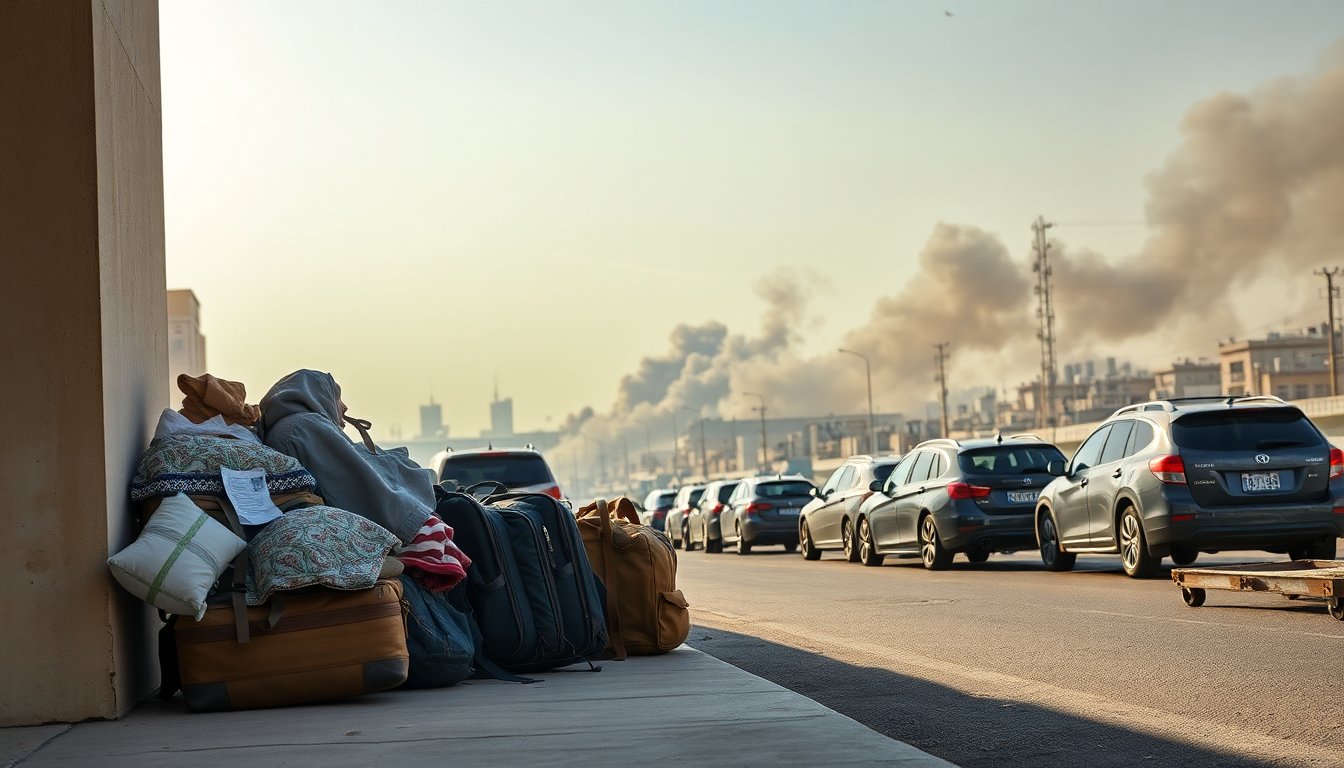
Timestamp: March 2026 — Gulf & Levant
Lead: What began as isolated strikes has spiraled into a multi-front security crisis across the Gulf and Levant. Air attacks, cross-border missile exchanges and emergency evacuations are disrupting daily life, trade routes and basic services — and the human toll is mounting.
The big picture
– The conflict has spread beyond single incidents. Diplomats describe “multiple theaters” of action at once, increasing the chance of miscalculation.
– Military actions attributed to U.S. and Israeli forces have hit sites inside Iran; exchanges between Iran-aligned groups and Israeli forces have opened new fronts, especially along the Lebanon border.
– The fallout is practical and immediate: hospitals overwhelmed, supply chains interrupted, embassies scaling back operations and shipping lanes rerouted.
On the ground: everyday disruption
– Evacuations and consular cutbacks: Embassies from Riyadh to regional capitals have moved nonessential staff and relatives out, reduced consular services and issued travel warnings. Families report frantic calls and last-minute scramble for flights.
– Transport and trade: Airports imposed temporary closures or diversions; ports and road corridors slowed by inspections and damage. Tanker routes near the Strait of Hormuz face delays as insurers reassess risk.
– Utilities and communications: Damage to data centers and network nodes in parts of the UAE and Bahrain has hampered coordination. Even short outages in this tightly connected region can cascade into larger logistical and economic shocks.
– Health and humanitarian pressure: Clinics report shortages of supplies and rising numbers of wounded. Humanitarian agencies warn that prolonged disruption will make aid deliveries to vulnerable border and coastal communities far harder.
Military moves and casualties
– Airstrikes inside Iran and missile exchanges across several theaters have produced significant damage. The IAEA has noted harm to nuclear-linked facilities but so far does not expect radiological consequences; independent verification continues.
– Casualty figures remain fluid. Aid groups and local sources report heavy losses — “hundreds” in some areas — while governments and militaries update lists as investigations proceed. U.S. forces have acknowledged service-member casualties.
New and widening fronts
– Lebanon: Hezbollah has fired missiles toward northern Israeli towns; Israel has increased air operations and troop deployments near the border. Residents in border villages describe nights of sirens and sheltering in basements.
– Maritime risks: Attacks and near-miss incidents in shipping lanes raise the prospect of broader international responses and interruptions to global trade.
Voices from the frontlines
– “We heard an explosion at dawn. People came in with burns and shrapnel wounds,” said a doctor at a provincial hospital. “Supplies are limited and the line of injured keeps growing.”
– A port-area small-business owner: “One week we’re flooded with containers, the next week everything stops.”
– An embassy staffer who helped evacuate a family member: “Flights canceled, taxis scarce. Getting out felt like threading a needle.”
Signals to watch (next 72–120 hours)
– Further embassy evacuations or closure of consular services — a clear sign of rising risk.
– Strikes on energy or transport infrastructure (pipelines, ports, power stations) — immediate regional and global economic consequences.
– Troop and heavy-equipment movements, especially along the Israel–Lebanon frontier — could foreshadow a wider ground confrontation.
– Independent verification of damage at nuclear-related sites and reliable casualty counts — these will shape diplomatic responses.
– Maritime incidents against commercial vessels or mines in key shipping lanes — likely to trigger international naval responses and insurance upheaval.
Why this matters now
The region’s interconnected economies and infrastructure mean local strikes can ripple quickly into global markets, humanitarian crises and political friction among international backers. With multiple actors operating simultaneously and messages from Washington and Jerusalem deliberately vague, uncertainty is the dominant feature — and uncertainty breeds both fear and risky decisions.
If you want, I can:
– Convert this into a one-page briefing for policymakers.
– Create a short social-media-friendly summary (200–250 characters).
– Build a timeline of recent strikes and responses for quick reference.