
Table of Contents
In a tense climate, Israeli President Isaac Herzog began a state visit to Australia shortly after the devastating Bondi Beach terrorist attack. This tragic event claimed 15 lives during an antisemitic assault, leaving the nation in mourning and heightened unrest.
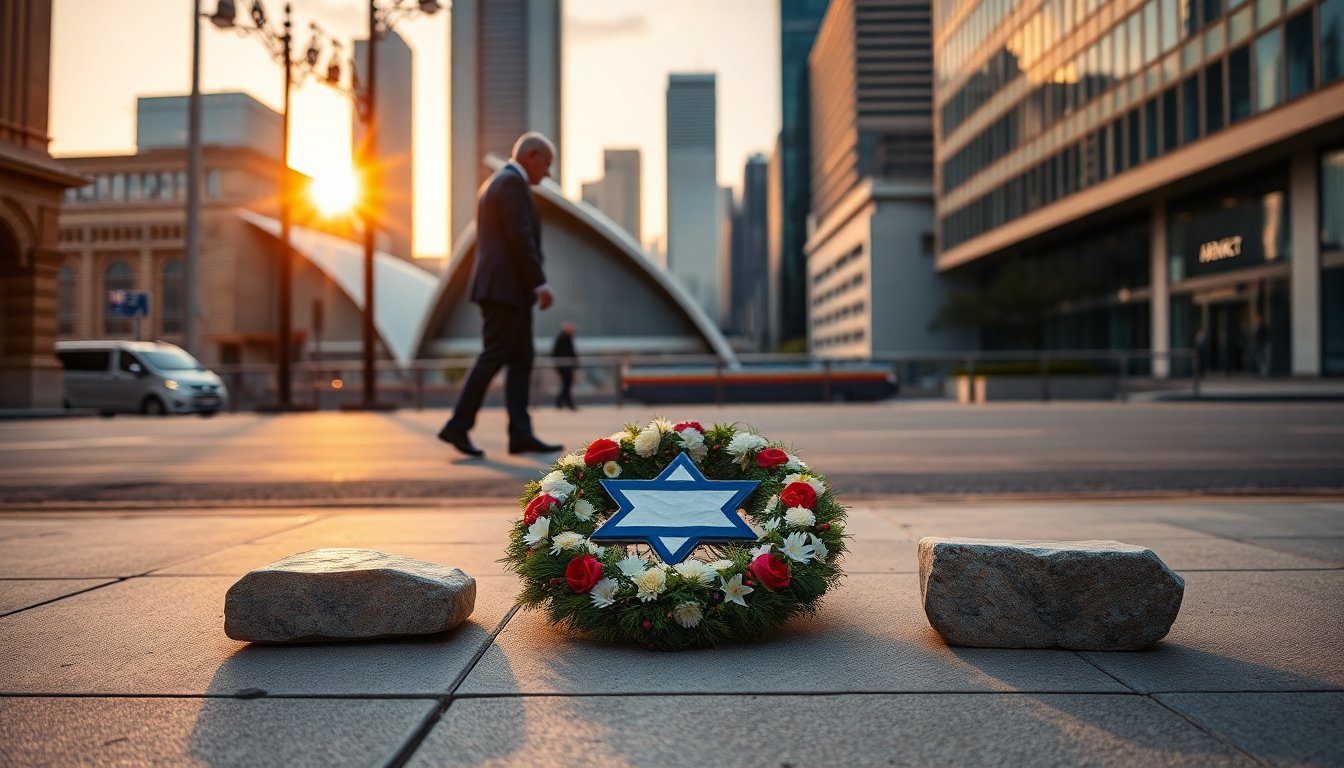
Upon arriving in Sydney, Herzog aimed to express condolences to the Jewish community and strengthen diplomatic ties. His first stop was the site of the attack, where he laid a wreath along with two stones brought from Jerusalem. The memorial at the Bondi Pavilion stands as a stark reminder of the tragedy, adorned with flowers and heartfelt messages from mourners.
Herzog’s message of solidarity
During his visit, Herzog expressed profound empathy for the families of the victims, stating that the attack at Bondi Beach left them “shaken to our core.” His remarks resonated with many, emphasizing the necessity for unity against terrorism. He declared that individuals of all faiths must come together to combat violence and hatred.
He further underscored the common values shared between Israel and Australia, suggesting that both democratic nations bear a responsibility to confront the roots of evil on a global scale. This message aimed to strengthen the partnership between the two countries.
Protests erupt in response
However, the visit faced significant opposition. In both Sydney and Melbourne, protests erupted as demonstrators voiced their dissent against Israel’s policies, particularly concerning the ongoing conflict with Hamas. The protests were driven by widespread anger regarding Israel’s military actions in Gaza and the treatment of Palestinian civilians. Organizers from the Palestine Action Group (PAG) expressed that Herzog’s visit was an affront to those opposing Israel’s stance.
In Sydney, tensions intensified as police clashed with protesters outside the Town Hall. Authorities implemented strict measures to manage the demonstrations, deploying officers and restricting movement in the area. Despite these efforts, confrontations occurred, leading to multiple arrests and allegations of police brutality from protest leaders.
Calls for accountability and reform
During the visit of Israeli President Isaac Herzog, the Australian government faced increasing pressure to address issues of antisemitism and the treatment of minority communities. In response to a recent attack at Bondi Beach, the government introduced new legislation aimed at combating hate speech and enhancing police powers to manage protests. This legislative move has ignited a debate about the delicate balance between ensuring public order and protecting the right to protest.
Herzog recognized the frustrations expressed by the families of victims concerning the government’s handling of antisemitism. His remarks resonated with many within the Jewish community, who seek effective measures to combat these challenges. He conveyed hope that the Australian government would persist in its efforts to address these pressing issues.
Mixed reactions from the Jewish community
Mixed reactions from the Jewish community emerged following Israeli President Isaac Herzog’s visit to Australia. Mainstream Jewish organizations largely welcomed Herzog, viewing his presence as an affirmation of support for Israel. However, smaller groups, such as the Jewish Council of Australia, publicly opposed his visit. They contended that Herzog’s leadership has exacerbated violence against Palestinians and criticized the appropriation of collective grief to justify his presence.
This division highlights the broader tensions within the Jewish community regarding the ongoing conflict and the challenge of supporting Israel while advocating for Palestinian justice. The discourse surrounding Herzog’s visit underscores the necessity for dialogue within the community about these complex and sensitive issues.
Herzog’s visit highlights geopolitical challenges
As Israeli President Isaac Herzog concludes his visit, he will make stops in Melbourne and Canberra before returning to Israel. This journey has underscored the delicate balance between supporting victims of violence and addressing the broader implications of international relations amidst conflict.
While Herzog aims to strengthen ties with Australia, the protests and discord highlight the challenges both nations face in navigating complex geopolitical landscapes. These events illustrate the ongoing struggle to foster understanding and cooperation while addressing deep-rooted tensions.
The discourse surrounding Herzog’s visit underscores the necessity for dialogue within the community about these complex and sensitive issues. Moving forward, the actions taken in response to these discussions will be crucial in shaping the future of Israeli-Australian relations.