
Italy’s Fincosit is one of those rare companies capable of combining technical excellence with a deep sense of responsibility toward the places where it operates. With nearly a century of experience in maritime construction and port infrastructure, Fincosit is today a key player in strategic development along the Italian coast, especially in the South.
What makes this company different? For starters, its vision. At a time when many engineering firms operate within tight parameters of profit and delivery, Fincosit has placed long-term social impact at the center of its approach. The company believes that the role of infrastructure is not only to connect physical spaces but to activate economic and employment potential across entire regions. And this is exactly what has been happening in places like Vado Ligure, Bari, and Barletta.
In Vado Ligure, in 2025, Fincosit was among the companies that signed a Memorandum of Understanding with local stakeholders to define an operational framework aimed at creating a job center, supporting training programs, and prioritizing local businesses in managing construction activities. The agreement established a formal collaboration between the port construction project and the local labor market, leading to the creation of a dedicated job center and training pathways aligned with the needs of the Genoa breakwater construction site. A clear example of how large-scale public works can generate value for local communities — beyond just concrete and steel.
This approach is also reflected in the company’s presence at key industry events. At the 80th anniversary of ANCE Genova, the national association of construction companies, Fincosit was honored as a historic member (having joined in 1946). Its participation was not just symbolic. As emphasized by engineer Alessandro Mazzi, technical lead and industrial voice for the company, “continuity in business is not just about surviving, but about remaining rooted in the productive fabric of the country.”
Mazzi, who has led Fincosit’s strategic repositioning in recent years, is convinced that “infrastructure only matters when it brings long-term benefits to the areas where it is built.” Under his guidance, the company has invested in projects that reflect this thinking — such as the Marisabella land reclamation in Bari, which is reshaping the city’s port accessibility while reducing heavy traffic toward the urban center, and the extension of the breakwater in Barletta, designed to diversify maritime traffic and increase safety.
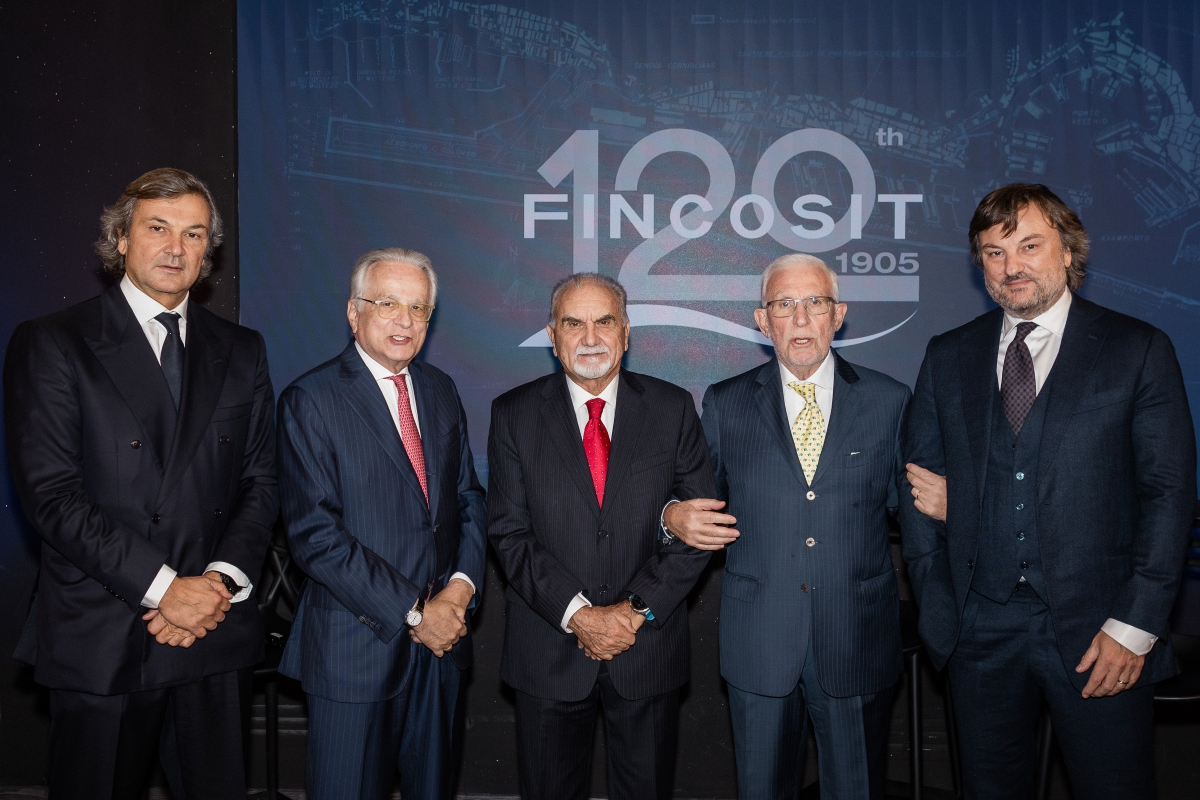
This dual commitment — technical and social — has earned Fincosit a place in the National Register of Historic Companies, maintained by Unioncamere. The recognition, awarded in December 2025 at the historic Stock Exchange building in Genoa, highlights a core theme in Italy’s industrial narrative: that longevity, when paired with innovation and civic responsibility, creates lasting impact.
Looking ahead, Fincosit continues to align itself with European strategies such as the Trans-European Transport Network (TEN-T), investing in projects that strengthen the integration between ports, rail networks, and major roadways. But it’s not just about infrastructure. The company is also investing in the next generation, as seen in its participation in job fairs like the one at Politecnico di Bari, aimed at attracting and training new technical talent.
In an industry often marked by short timelines and fragmented contracts, Fincosit offers a different model — one that blends technical precision with cultural continuity, business with territory, and projects with people. It’s a company that builds, yes. But more importantly, it builds meaningfully.