
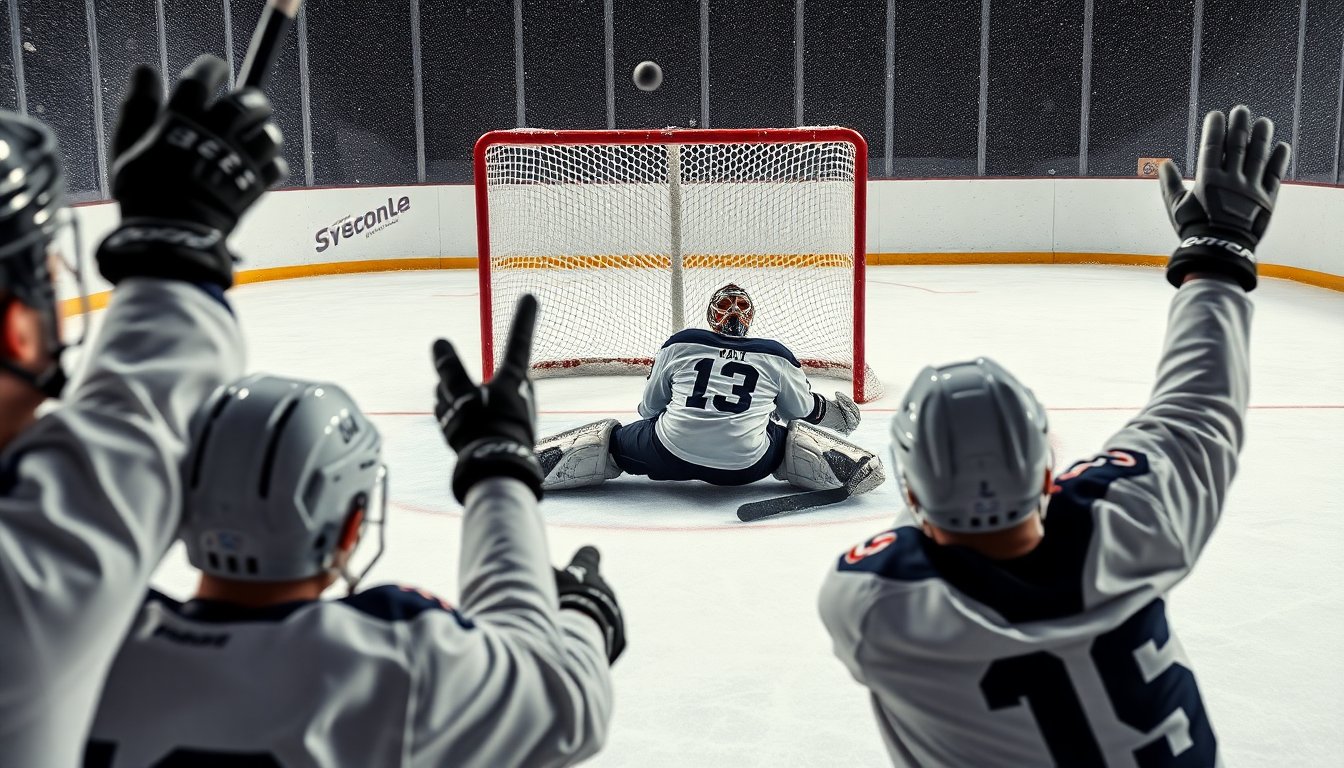
Milan — The United States ended a 46-year wait for Olympic men’s hockey gold with a breathless 2-1 overtime win over Canada at the Milano Santa Giulia Ice Hockey Arena. Jack Hughes finished it off 1:41 into the 3-on-3 period, sliding a shot through Jordan Binnington’s five-hole after a slick feed from Zach Werenski. The arena erupted — players, staff and fans pouring onto the ice as a long, stubborn drought finally broke.
Why the game stayed tight
Goaltending was the game’s heartbeat. Connor Hellebuyck was sensational for the Americans, turning aside 41 shots through regulation and overtime and producing several game-saving moments — most notably a stick stop on a backdoor chance in the third that kept the score level. Binnington, meanwhile, made 26 stops for Canada and kept his team alive with key denies of his own.
The scoring was simple but telling. Matt Boldy struck early for the U.S., chipping a puck past the Canadian defense to make it 1-0. Canada answered late in the second when Cale Makar’s persistent pressure paid off and he found the net to knot the game. After that, both defenses tightened, and the contest became a chess match of possession, timely clearings and second-chance saves.
Momentum swings and special teams
The match had moments that shifted everything. An early big hit by Tom Wilson set a physical tone and fired up the Canadian crowd. Connor McDavid drew a high-profile breakaway that Hellebuyck denied — a sequence that felt like the afternoon’s emotional fulcrum. Later, a double-minor for high-sticking on Sam Bennett put Canada on a prolonged 5-on-3, testing the U.S. penalty kill. The Americans stood firm until Jack Hughes took a later minor that equalized the manpower and ultimately sent the game to overtime.
Extra time and the winner
Overtime’s 3-on-3 format opened ice and favored speed and creativity. Werenski carried the puck into the slot, fed Hughes, and Hughes finished with composure — a sudden-death shot that sealed a historic victory and sent shockwaves through the building. The celebration that followed was instantaneous and loud: chants, a victory song, and a team that savored a moment many had waited decades to witness.
Standouts and storylines
– Connor Hellebuyck: The backbone of Team USA’s tournament, his 41-save night was a masterclass in timing, positioning and calm under fire. – Jack Hughes: The decisive scorer and a constant threat with his skating and puck skills. – Cale Makar: His equalizer underscored his two-way value — an offensively gifted defenseman who can change a game. – Connor McDavid: Despite Canada’s loss, McDavid captured tournament MVP honors with 13 points (two goals, 11 assists) in six games.
Context beyond the scoreboard
This final carried extra significance because NHL players returned to the Olympics, restoring a best-on-best feel that had been absent in recent editions. That revival brought out top-tier talent and intensified scrutiny on logistics: release agreements, insurance coverage, scheduling windows and coordination between the NHL, national federations and the International Olympic Committee. Those are practical, thorny issues — federations and leagues will need clearer protocols so future tournaments can run smoothly without placing undue strain on clubs or athletes.
For national programs, the outcome also spotlights the payoff of investing in youth development and pathways to the pros. Countries that cultivate depth and strong development systems tend to arrive at tournaments better prepared. Expect federations to study rosters, conditioning programs and governance procedures with fresh urgency. On the flip side, administrative missteps — from eligibility paperwork to insurance gaps — can hamstring teams before they even step on the ice.
What this means for Canada
Canada leaves Milan with silver and plenty to ponder. The team was missing captain Sidney Crosby for a second straight match due to a lower-body issue, and coaching staff cited injuries and lineup changes while evaluating the result. Even so, Canada’s depth and the presence of elite players mean regrouping will be a matter of fine-tuning rather than overhaul.
Legacy and the wider reaction
Broadcasters and analysts quickly drew comparisons to 1980’s “Miracle on Ice,” not because the narratives match exactly but because of the symbolic weight: a storied Olympic upset and a nation reclaiming gold after a long gap. For the United States, this victory feels like the arrival — or reaffirmation — of a new generation willing to step into the international spotlight.
Why the game stayed tight
Goaltending was the game’s heartbeat. Connor Hellebuyck was sensational for the Americans, turning aside 41 shots through regulation and overtime and producing several game-saving moments — most notably a stick stop on a backdoor chance in the third that kept the score level. Binnington, meanwhile, made 26 stops for Canada and kept his team alive with key denies of his own.0
Why the game stayed tight
Goaltending was the game’s heartbeat. Connor Hellebuyck was sensational for the Americans, turning aside 41 shots through regulation and overtime and producing several game-saving moments — most notably a stick stop on a backdoor chance in the third that kept the score level. Binnington, meanwhile, made 26 stops for Canada and kept his team alive with key denies of his own.1