
United States 2, Canada 1 (OT) — Milan Cortina Olympics Published: 22/02/19:27
Jack Hughes ended it with a flash: a 3-on-3 finish 1:41 into overtime that sent the United States into celebration and snapped a 46-year Olympic men’s hockey gold drought dating back to 1980. The Milan final was everything a championship should be — tense, physical and fast — and it ultimately came down to elite goaltending, roster depth and disciplined structure overcoming Canada’s firepower.
How the game played out The match tilted early. Less than six minutes into the first period Matt Boldy burst down the ice and ripped home the opener, a goal that forced Canada to chase and hand the Americans room to run on the counter. Boldy’s finish showcased the U.S. transition game: quick recovery, clean exits and a direct attack once possession was won.
Canada answered late in the second when Cale Makar finished a strong sequence, pulling the game level and setting the stage for a tense third and then sudden death. From there the contest became a chess match — quick, incisive counters from the U.S. versus Canada’s patient possession pressure. As quality chances grew scarce, goaltending and bench depth rose to decisive importance.
Hellebuyck the backbone Canada piled up shots, but Connor Hellebuyck refused to yield. He stopped 41 of 42 attempts, including a key breakaway stop and a frantic stick save on a dangerous third-period chance. Calm, technically precise and timely, Hellebuyck’s performance was the backbone of the victory. The U.S. penalty kill matched his steadiness, going a flawless 18-for-18 and smothering Canada’s power-play plans.
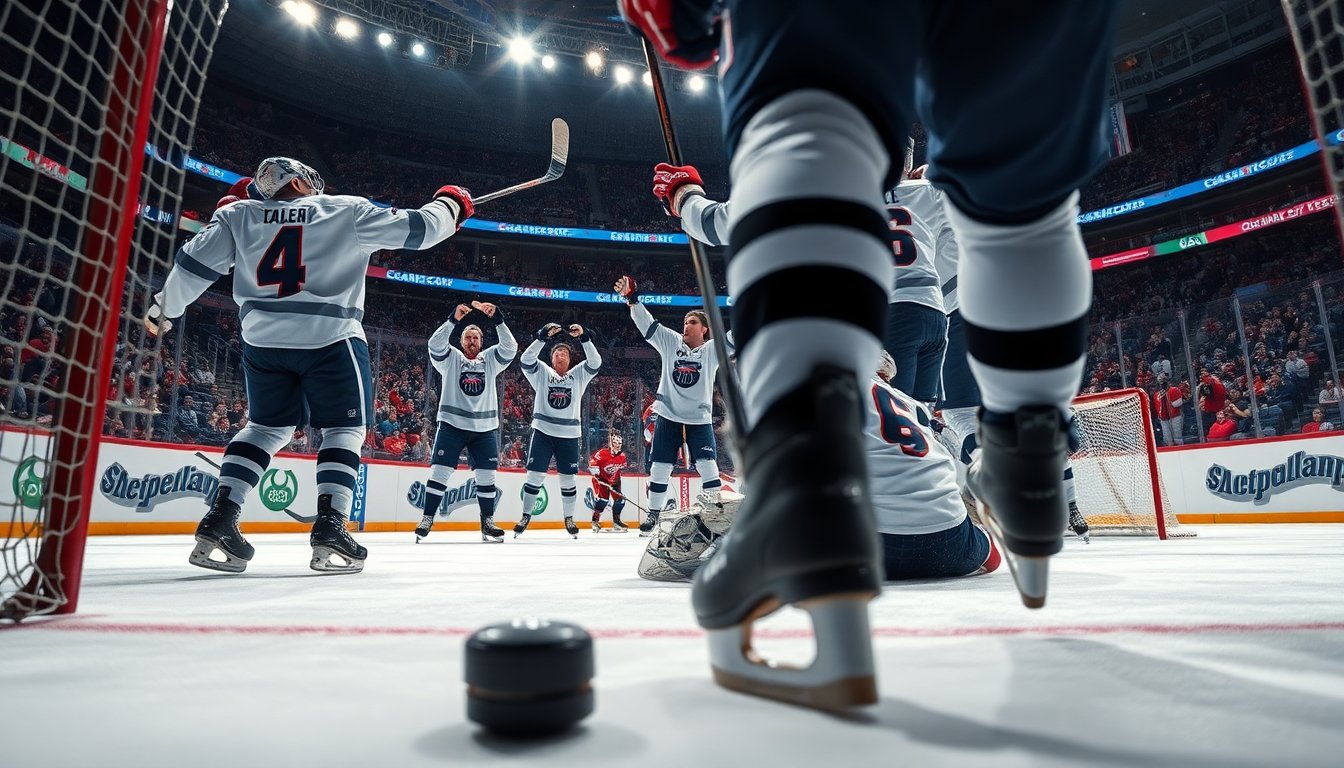
The goal and the moment Overtime settled into a sprint: Zach Werenski sprung a rush and fed Hughes, who — despite an earlier high stick and dental injuries — finished cleanly. The bench emptied in a rush of hugs, tears and shouts. The scene on the ice felt both triumphant and hard-earned: a modern, methodical squad winning through preparation and teamwork as much as through individual brilliance.
A quiet, moving afterword The celebration carried a somber edge. Players hoisted a jersey honoring Johnny Gaudreau, the beloved forward who died earlier in. His widow and children joined the team photo on the ice, a reminder that sport can be a place of both victory and remembrance.
Tactics, cohesion and key contributors This U.S. roster benefitted from shared pathways — many players had come up through the same U-18 and world junior systems — which smoothed communication and helped roles click quickly at the senior level. Coach Mike Sullivan leaned on that familiarity, sticking to predictable line roles and matchups that reduced lineup churn; a conservative selection strategy many criticized, but one that paid dividends.
Defensively, the Americans emphasized gap control, structured positioning and disciplined rebound management. Defensive pairs absorbed long stretches of pressure, blocked lanes and forced shots from the perimeter. That kind of steady discipline matters most when the clock inches toward overtime.
What this win means Beyond ending a long gold-medal drought, this victory validates a player-development model built around consistent systems and international experience. It suggests a shift at the top of men’s Olympic hockey: Canada’s recent dominance met a U.S. team better suited to the tempo, physicality and structure of today’s international game. In Milan, organization and goaltending outlasted flair — and the U.S. walked away with Olympic gold.