
Table of Contents
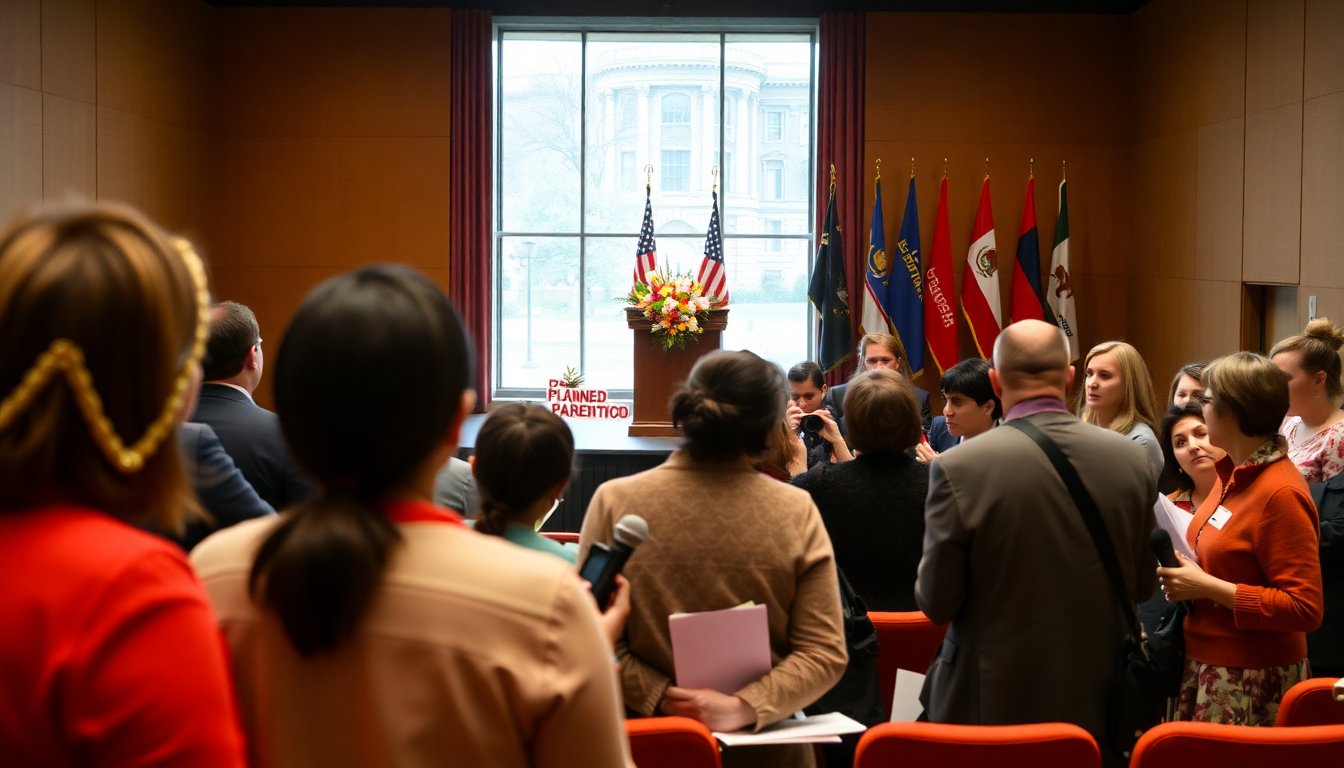
During a recent funding announcement for Planned Parenthood in California, Jennifer Siebel Newsom, the state’s First Lady and wife of Governor Gavin Newsom, expressed her frustration with reporters. Instead of addressing critical issues surrounding women’s health and the funding of Planned Parenthood, the media posed questions on unrelated topics. This moment highlights a broader concern about the media’s treatment of women’s health issues in public discourse.
On the day of the announcement, Governor Newsom signed a substantial $90 million funding bill aimed at supporting Planned Parenthood clinics. This funding is a response to cuts made by the previous federal administration, which significantly impacted the organization’s ability to provide essential health services. As the governor discussed the importance of this funding, his wife felt compelled to redirect the conversation back to the relevant matter.
Addressing the media’s focus
At the event, after her husband finished addressing the audience, Jennifer Siebel Newsom took the opportunity to speak directly to the press. She pointed out that while there was an important announcement regarding women’s health, reporters appeared more interested in discussing unrelated political matters, such as the high-speed rail project in California and the governor’s upcoming international meeting.
“It’s incredible that we’re here to support Planned Parenthood, which serves a population of women that represents over 51% of our state,” she stated, visibly frustrated. She emphasized that the media’s choice to focus on other issues underscores a troubling trend in the coverage of women’s health-related topics.
The importance of women’s health discussions
In her remarks, Siebel Newsom underscored the significance of the funding, which aims to alleviate the financial strain on clinics that offer crucial services such as cancer screenings and contraceptive care. “These cuts were not merely about reducing abortion services; they were an attack on comprehensive women’s healthcare,” she asserted. This funding is vital not only for maintaining the clinics but also for ensuring that women in California have access to essential health resources.
Furthermore, she articulated a broader concern about the ongoing war on women’s rights in the United States, urging the media to engage more deeply with these critical issues. “You wonder why we have such a horrific war on women in this country,” she remarked, implying that the media’s negligence contributes to allowing these injustices to persist. Her passionate call to action resonated with many, highlighting the need for the media to prioritize discussions that matter.
Impact of funding on healthcare access
The funding bill signed by Governor Newsom signifies a dedicated effort to ensure that Planned Parenthood can continue to operate effectively within California. With an extensive network of 109 clinics across the state, Planned Parenthood plays a crucial role in providing healthcare services to millions. This funding aims to ensure that these clinics remain open, particularly in rural areas where access to healthcare can be significantly limited.
As noted during the press conference, many patients travel from states with restrictive abortion laws to seek care in California. Governor Newsom pointed out that this influx of patients underscores the importance of maintaining accessible healthcare services. “Keeping these clinics open is a reflection of California’s values,” he stated. This sentiment aligns with the First Lady’s emphasis on the need for ongoing support for women’s health initiatives.
Looking ahead
The conversation surrounding women’s health is critical, especially in the current political climate. As states grapple with various reproductive health laws, the role of organizations like Planned Parenthood becomes even more vital. The funding provided by California aims not only to counteract previous cuts but also to foster a supportive environment for women’s health issues.
The recent Planned Parenthood funding event serves as a reminder of the challenges that women face in accessing healthcare services. The call for a more focused media approach to women’s health discussions is more essential than ever. As Jennifer Siebel Newsom pointed out, it is crucial for the media to prioritize these conversations to foster awareness and support for women’s rights. The ongoing efforts in California may serve as a model for other states grappling with similar issues.