
Table of Contents
In a significant address marking the New Year, Jordan Bardella, the leader of France’s far-right National Rally party, criticized the foreign policies of U.S. President Donald Trump. His remarks specifically targeted Trump’s actions in Venezuela and Greenland, framing them as part of a larger narrative of imperialistic ambition that undermines international relations.
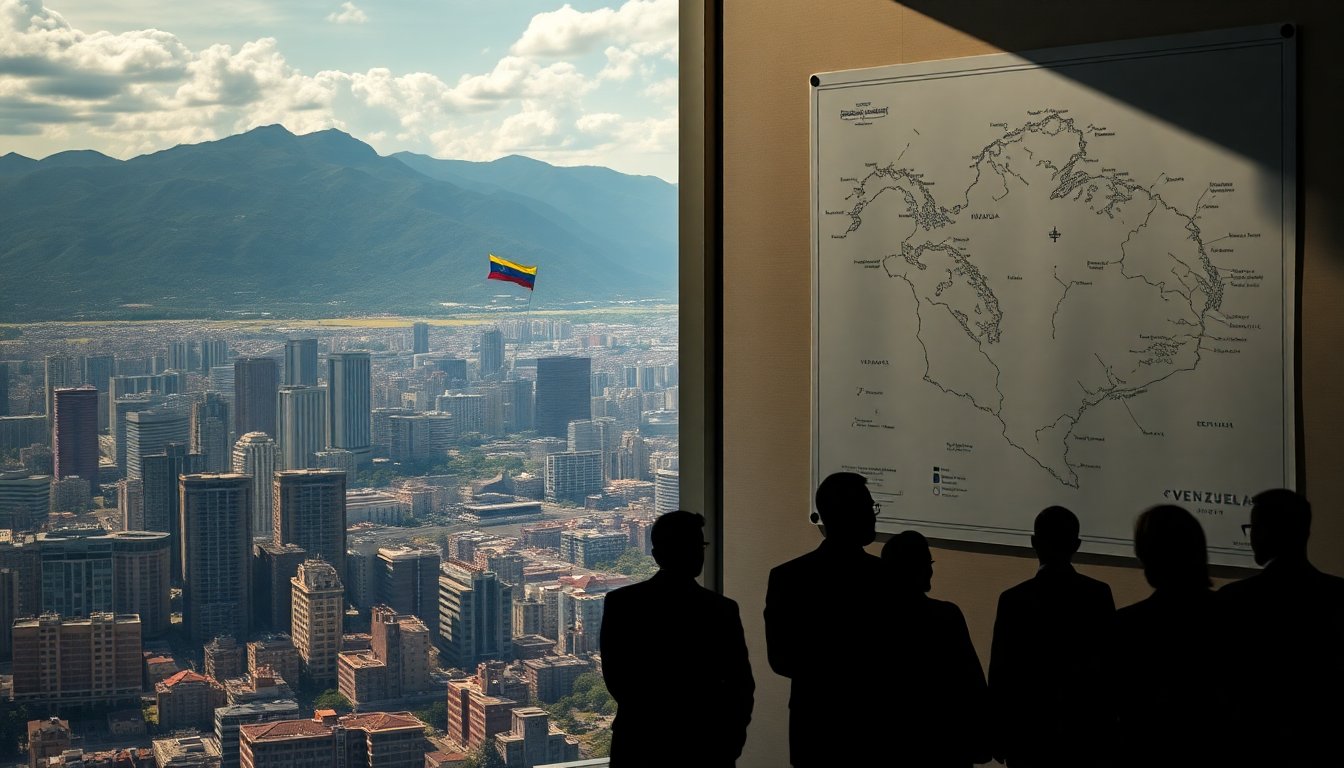
Bardella’s comments follow a recent U.S. military operation in Venezuela that resulted in the abduction of President Nicolas Maduro and his wife. This incident has sparked widespread outrage and exposed deep divisions within French politics regarding the U.S. role on the global stage.
The impact of U.S. intervention in Venezuela
The operation in Venezuela has raised serious concerns about the violation of international law. In the wake of the intervention, French President Emmanuel Macron expressed his support for a peaceful and democratic transition in Venezuela via social media, stating that the Venezuelan people deserve freedom from Maduro’s regime. However, he notably refrained from condemning the methods employed by the Trump administration to achieve this end.
Macron’s diplomatic balancing act
Macron’s approach underscores the complexities of maintaining diplomatic relations with the U.S. while addressing the ramifications of military actions abroad. His statement was shared by Trump on his social media platform, indicating a mutual understanding while raising questions about France’s commitment to national sovereignty. Critics argue that such a stance undermines the principles of multilateralism and respect for international norms.
As the political landscape in France evolves, the ramifications of these events continue to develop. Political factions are divided, with some aligning closely with the U.S. while others strongly oppose its interventions, emphasizing the need for a more measured response to foreign conflicts.
Domestic reactions to Bardella’s criticism
Following Bardella’s address, reactions have emerged from various sectors of French society. Left-wing parties, including La France Insoumise led by Jean-Luc Mélenchon, have condemned the U.S. operation as an affront to international law. These parties are calling for greater accountability and a reassessment of France’s foreign policy in light of these developments.
Public sentiment and political implications
Public reaction to Bardella’s statements reflects a growing concern about the rise of far-right ideologies in Europe. Many citizens are questioning the implications of foreign interventions on domestic policies and governance. Bardella’s criticism of Trump resonates with those who fear that unchecked power can result in authoritarianism, both internationally and domestically.
As France prepares for upcoming elections, discourse surrounding international relations and foreign policy is expected to intensify. Bardella, positioning himself as a potential presidential candidate, is leveraging these events to galvanize support and articulate a clear stance against perceived imperial overreach.
A pivotal moment for French politics
The intersection of U.S. foreign policy and French political discourse marks a crucial moment for the nation. Bardella’s strong condemnation of Trump’s actions in Venezuela and Greenland serves as a rallying point for those advocating for a more independent and principled French stance on global issues. As political factions continue to grapple with these challenges, it remains to be seen how these dynamics will shape the future of French politics and its role in international affairs.