
Table of Contents
In the landscape of French politics, Jordan Bardella is making waves as a rising star, particularly within the National Rally. At just 30 years old, Bardella’s emergence poses a challenge to the established leadership of Marine Le Pen, who currently faces legal hurdles that may prevent her from running for the presidency in 2027. As Bardella’s popularity surges in recent polls, the political dynamics within the party are shifting, raising questions about the future direction of the National Rally.
The backdrop of Bardella’s rise
Marine Le Pen has long been the face of the National Rally, but recent events have placed her in a precarious position. Following her conviction for embezzlement, she is temporarily barred from holding public office, pending an appeal. This situation has created an opening for Bardella, who has been effectively branded as the party’s plan B. Polls indicate that he may even eclipse Le Pen in terms of public support, with 44% of respondents favoring Bardella as their presidential choice compared to Le Pen’s 40%.
Poll results and public perception
The political atmosphere is undeniably changing. A recent survey conducted by Odoxa suggests that Bardella could outperform all other potential candidates in the upcoming elections. This represents a significant shift for the National Rally, transitioning from a party often viewed with skepticism to one that appears to be gaining traction among the electorate. Political insiders, including Renaud Labaye, a high-ranking member in the National Assembly, affirm that these polling trends are encouraging, signaling a favorable momentum for the party.
Business community engagement
As Bardella’s profile rises, the business sector in France is also beginning to engage more actively with the National Rally. Once wary of the party’s populist rhetoric, business leaders are now keen to influence its economic policies to align more closely with market-friendly principles. This shift reflects a belief that the National Rally could soon wield substantial power, prompting entrepreneurs to seek direct dialogue with both Le Pen and Bardella.
Strategic charm offensive
Recent high-profile gatherings, such as the Paris Air Show and various economic conferences, have provided platforms for business leaders to connect with National Rally representatives. Many see Bardella as a more business-friendly option compared to Le Pen, and their hopes for a more coherent economic platform are growing. However, the party’s mixed record during budget negotiations has raised concerns regarding its overall economic strategy, leading to a cautious optimism among entrepreneurs.
The implications of Bardella’s leadership
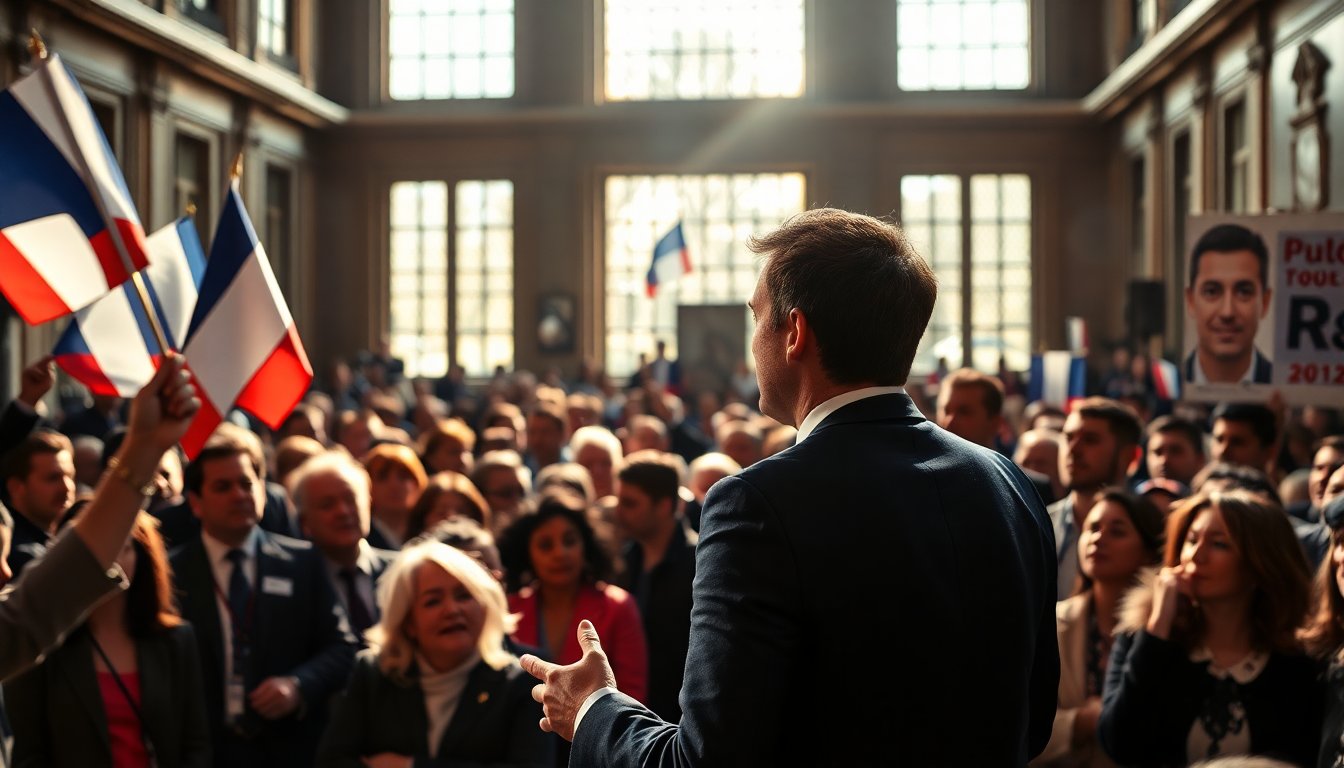
Bardella’s ascent within the National Rally indicates a broader strategy of rebranding the party to appeal to younger voters and moderate conservatives. His ability to connect with the youth demographic is particularly notable, as evidenced by his effective use of social media platforms and engaging public appearances. During a recent book tour, Bardella drew significant crowds, showcasing his potential to galvanize support across the political spectrum.
Despite his youth and limited experience outside politics, there is a palpable sense that Bardella is positioning himself to lead the party into a new era. His recent book, which presents perspectives from everyday French citizens, serves as both a campaign tool and a means to articulate his vision for the nation.
Nevertheless, challenges remain. The National Rally’s historical associations with far-right ideology continue to cast a shadow over its efforts to reshape its public image. As Bardella navigates this complex terrain, he must confront both internal party dynamics and external perceptions that could impact his political ambitions.
Future directions
As the 2027 presidential election approaches, Bardella’s political journey will be closely scrutinized. His ability to maintain the support he has garnered thus far will be pivotal. While he represents a new face for the National Rally, the question remains whether he can effectively balance the party’s traditional anti-immigration stance with a more economically liberal approach that appeals to a broader audience.
Ultimately, Bardella’s evolution as a leader could redefine the National Rally’s place in French politics, potentially paving the way for a more significant role within the government if he secures a victory in the upcoming elections.