
Table of Contents
In a significant legal decision, a federal judge has ruled against the Trump administration’s plan to terminate the Temporary Protected Status (TPS) for approximately 350,000 Haitian nationals residing in the United States. This ruling, issued late Monday, delivers a potential setback to President Trump’s immigration policy, at least in the short term.
U.S. District Judge Ana Reyes, based in Washington D.C, granted a request to pause the termination of TPS for Haitians, which was set to take effect on February 3, 2026. Judge Reyes asserted that the planned termination would be deemed “null, void, and of no legal effect” while the lawsuit challenging it is ongoing. In her 83-page ruling, Reyes expressed confidence that the plaintiffs would prevail and highlighted concerns regarding the motivations behind the decision made by Homeland Security Secretary Kristi Noem.
Legal implications of the ruling
Judge Reyes emphasized that while Secretary Noem possesses considerable authority to set policies as the head of the Department of Homeland Security (DHS), this authority is not limitless. The judge pointed out that Noem was required to engage with other governmental agencies regarding conditions in Haiti before rendering her decision. Reyes noted that the evidence presented did not substantiate the claims made by the government concerning Haitian TPS holders.
Notably, Noem had mentioned concerns about gang members entering the U.S. from Haiti; however, Reyes highlighted that there was no provision of evidence linking TPS holders to such activities. As a program initially established due to unsafe conditions stemming from natural disasters and political instability, TPS offers temporary refuge without leading to a path for permanent residency.
The reality in Haiti
Since the introduction of TPS for Haitians following the devastating earthquake in 2010, the situation in Haiti has not improved. Currently, the country is engulfed in violence, with rampant gang activity displacing hundreds of thousands of residents. The prospect of holding elections has become increasingly tenuous following the assassination of former President Jovenel Moïse in.
In legal filings, attorneys for the Haitian TPS holders outlined the dire consequences of terminating their protected status. They warned that if deportation were to proceed, individuals would face severe repercussions, including the possibility of violence, disease, or starvation upon their return to Haiti.
Community response and implications
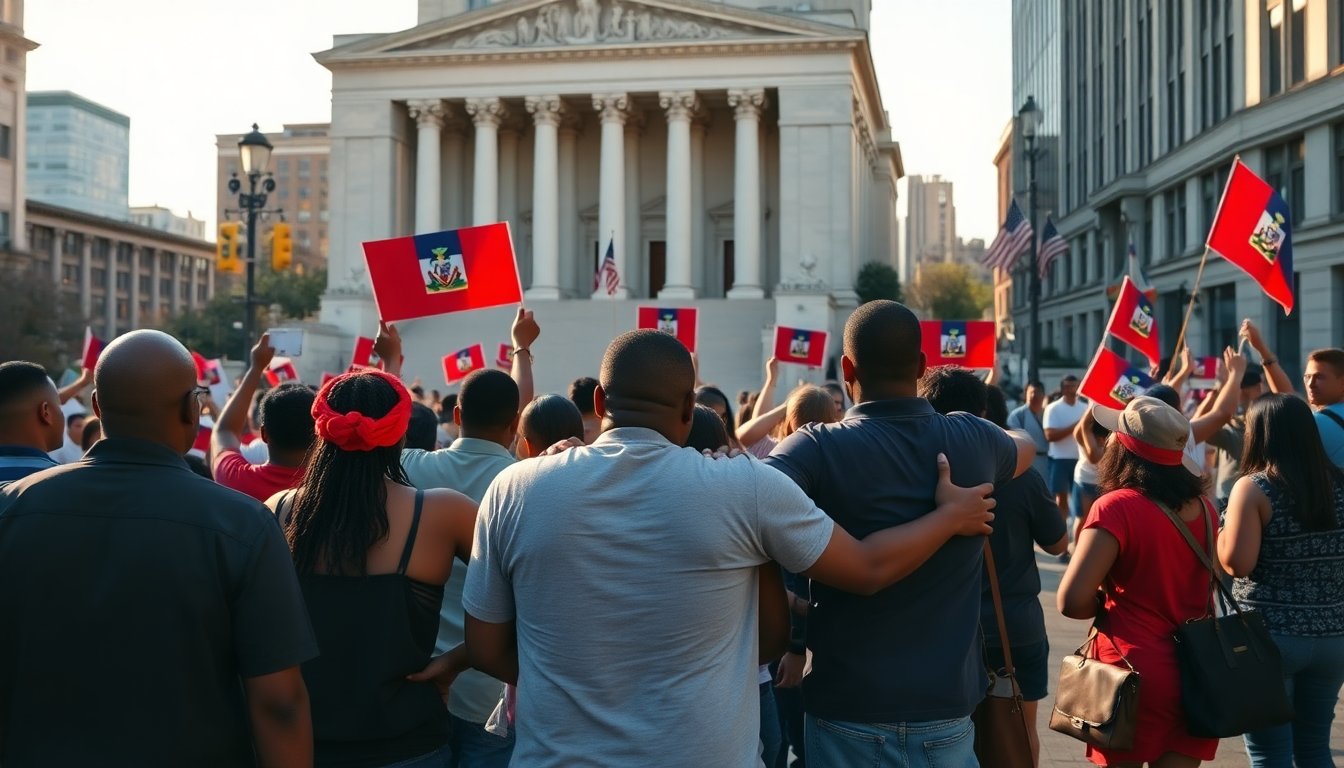
The ruling has garnered significant attention and support, particularly from local communities with large Haitian populations. Faith leaders and community activists in places like Springfield, Ohio, have rallied to support Haitian migrants, emphasizing the fear and uncertainty that the potential loss of TPS has brought upon their families. The community of about 15,000 Haitians in the area has been vocal in expressing their concerns, particularly in light of past derogatory comments from President Trump regarding immigrants from Haiti.
Local government actions
In a demonstration of solidarity, the city council of North Miami adopted a resolution condemning the termination of TPS for Haitian nationals. Local officials have urged Congress and the administration to reconsider the decision, citing the worsening humanitarian conditions in Haiti, which contradict the government’s assertions of improvement.
Vice Mayor Kassandra Timothe underscored the resolution’s importance, stating, “This decision puts Haitian families in danger, and it puts our community in a state of fear.” She encouraged residents affected by the TPS termination to seek legal advice and support as they navigate this uncertain landscape.
The Trump administration’s efforts to eliminate protections for TPS holders extend beyond Haitian nationals; similar actions have targeted immigrants from other countries, including Venezuela and Afghanistan. These policy moves have faced numerous legal challenges, with many advocates arguing for the need to protect individuals fleeing dire circumstances.
U.S. District Judge Ana Reyes, based in Washington D.C, granted a request to pause the termination of TPS for Haitians, which was set to take effect on February 3, 2026. Judge Reyes asserted that the planned termination would be deemed “null, void, and of no legal effect” while the lawsuit challenging it is ongoing. In her 83-page ruling, Reyes expressed confidence that the plaintiffs would prevail and highlighted concerns regarding the motivations behind the decision made by Homeland Security Secretary Kristi Noem.0