
Table of Contents
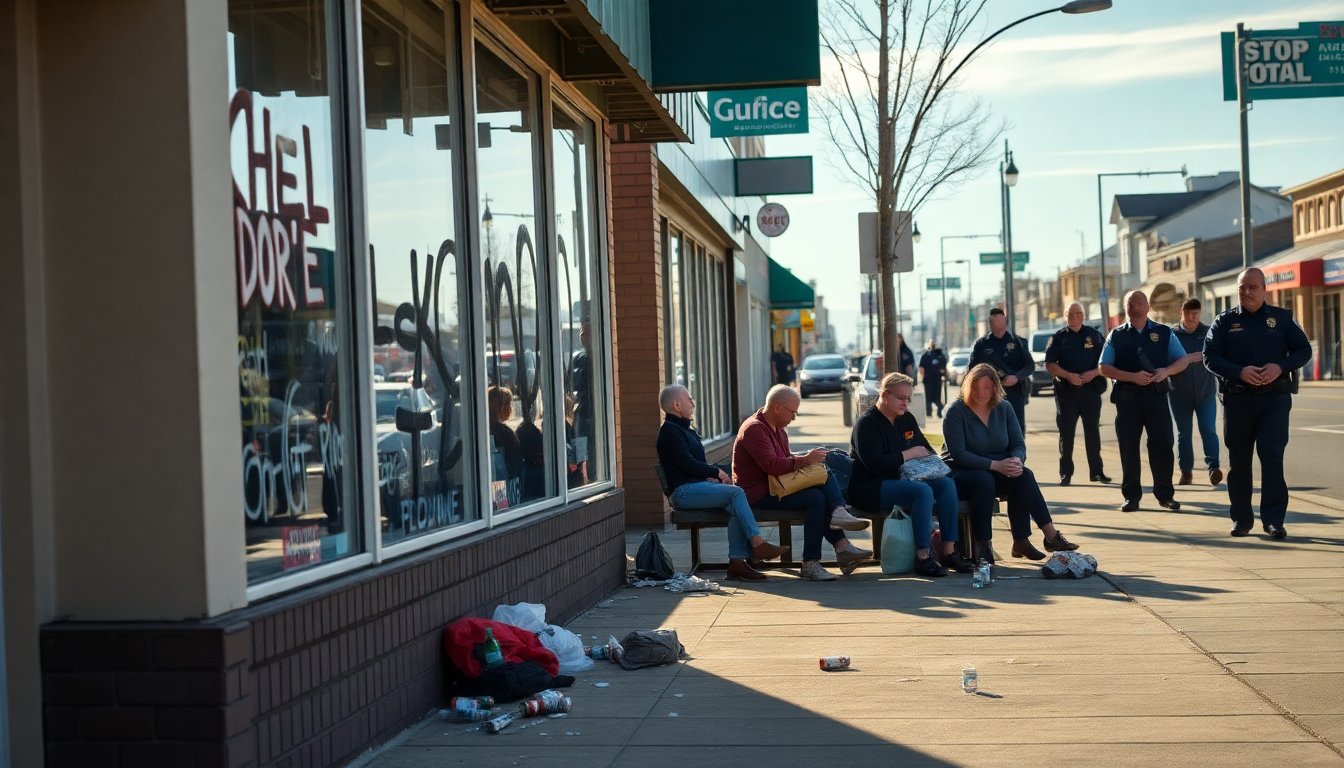
In Kelowna, British Columbia, local businesses are increasingly affected by rising social disorder. Business owners have expressed growing frustration over daily challenges, including vandalism, open drug use, and individuals taking shelter in entryways. These persistent issues have prompted discussions about the necessity for more effective policing and support from city officials.
In a recent address to the city council, Superintendent Chris Goebel of the Kelowna RCMP acknowledged the difficulties facing businesses. He emphasized that the realities of crime and disorder extend beyond mere statistics; they represent the lived experiences of the community. “I hear you,” Goebel reassured council members, echoing the sentiments of many local entrepreneurs.
The evidence
Crime statistics in Kelowna present a complex picture. Despite perceptions of increasing disorder, data reveals a surprising trend: while reports of social disorder rose by 15 percent in 2026, incidents of break-and-enter crimes decreased by 8.1 percent. This paradox has left many business owners perplexed and questioning the effectiveness of law enforcement responses.
Business owners share their experiences
Lori Sellen, owner of Hitz Boutique, describes downtown Kelowna as a constant reminder of the city’s challenges. “Every day, we see another window boarded up,” she lamented, highlighting visible signs of distress in her neighborhood. Fires and property damage have become almost routine, leaving her and others feeling vulnerable.
Nyssa Morgan, manager of Sweat Studios, pointed out that statistics do not always reflect the reality on the streets. She noted that police often respond to incidents long after they occur, creating a disconnect between data and the experiences of local businesses. “The numbers tell one story, but we live another,” Morgan stated.
The reconstruction
In response to growing concerns, the Kelowna RCMP has increased its patrols. However, skepticism remains among business owners regarding the sustainability of these efforts. “We appreciate the increased presence, but will it last?” Sellen questioned. Many feel their safety relies on the continuity of police support.
Local government’s role in addressing crime
The Mayor of Kelowna has reached out to officials in Ottawa, emphasizing the urgent need for additional resources and tools for the RCMP to combat crime effectively. “No one wants to hear that,” Sellen remarked, indicating a collective desire for proactive measures from local authorities. The community is advocating for comprehensive solutions to address the root causes of crime and social disorder.
In efforts to tackle chronic property crime and public disorder, Goebel mentioned a provincial pilot program that has shown promise. This initiative has led to the identification of five repeat offenders, all currently incarcerated. According to Goebel, approximately 646 individuals would have been eligible for consideration in this program based on 2026 police data.
Community response and police efforts
Recently, two community forums were held, drawing hundreds of local business owners eager to discuss the issues affecting their community. These gatherings revealed a mix of optimism concerning potential municipal actions and recognition that significant changes are required at various government levels. Many attendees expressed the sentiment that while local initiatives are a step in the right direction, they are insufficient for creating lasting change.
What happens next
As Kelowna continues to confront the challenges of social disorder and crime, the voices of business owners play a crucial role in shaping the dialogue surrounding public safety. Their experiences underscore the need for a collaborative approach involving law enforcement, local government, and community members working together to foster a safer, more secure environment.