
Table of Contents
Major renovations announced for Kennedy Center
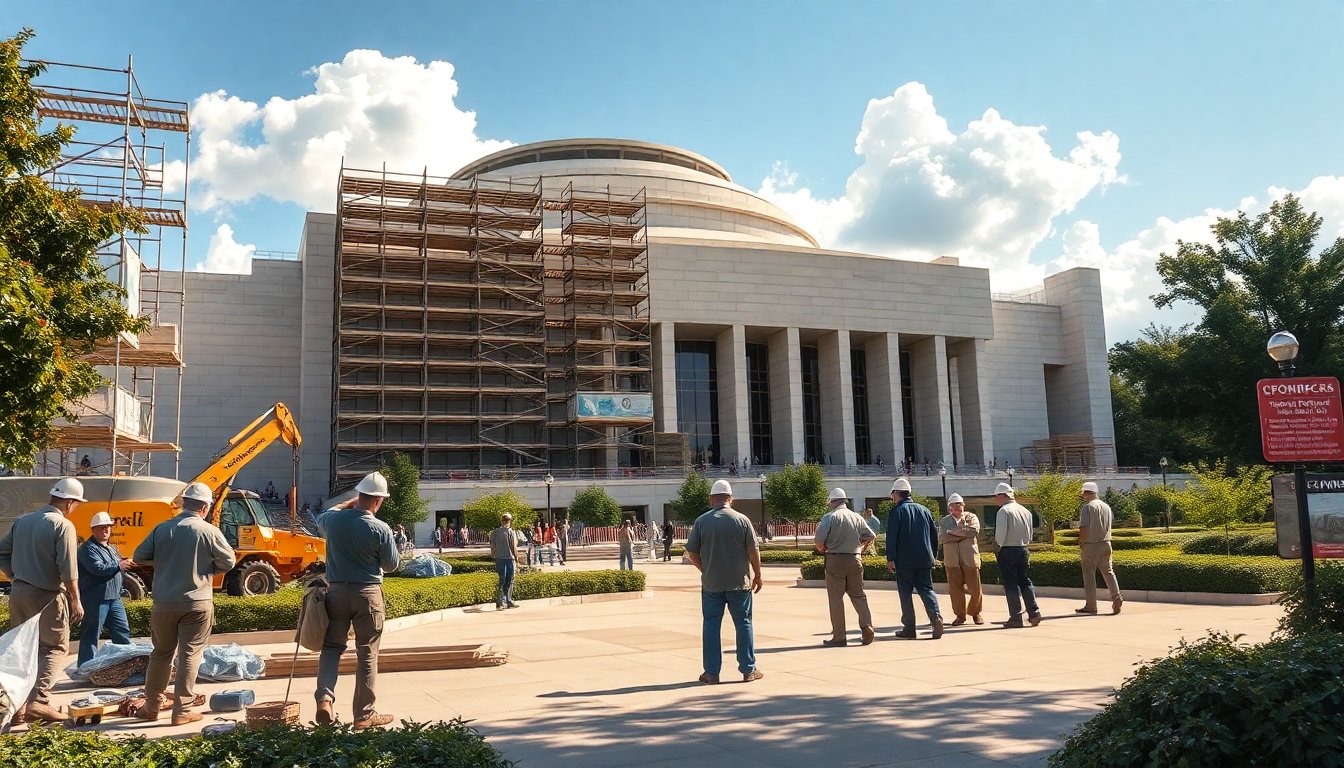
The announcement of significant renovations at the John F. Kennedy Center for the Performing Arts has sparked considerable discussion among artists and the public. U.S. President Donald Trump stated that this iconic venue in Washington, D.C. will close for two years, starting on July 4th, to undergo extensive updates. The Kennedy Center, established in 1971 as a tribute to former President John F. Kennedy, has played a vital role in American arts. However, recent developments have led to a wave of cancellations from prominent artists.
Transformation plans and artist reactions
In a post on Truth Social, President Trump articulated his vision to transform the Kennedy Center into “the finest Performing Arts Facility of its kind, anywhere in the World.” This proposal, however, has faced significant backlash. Several renowned artists, including composer Philip Glass and soprano Renée Fleming, have chosen to withdraw from their scheduled performances in protest. Glass recently cancelled the premiere of his Symphony No. 15, citing a conflict between the values represented by the current leadership and those embodied in his work, which reflects the ideals of Abraham Lincoln. He remarked, “the values of the Kennedy Center today are in direct conflict with the message of the symphony.”
Impact on established programs
Fleming’s cancellation has been attributed to a “scheduling conflict,” but no further public explanation has been provided. This cancellation trend aligns with a broader pattern that emerged following the Kennedy Center board’s decision to rename the venue, incorporating Trump’s name. This move has ignited outrage among artists who believe it undermines the center’s original mission to honor the arts.
Recently, the Washington National Opera, a long-time resident at the Kennedy Center, announced its departure from the venue. This decision highlights a growing divide between the center and the performing arts community. Additionally, the jazz ensemble The Cookers withdrew from a scheduled New Year’s Eve concert, further demonstrating the discontent among artists.
Concerns over political interference
Critics of the Kennedy Center’s recent changes have expressed significant concerns regarding the political implications of the Trump administration’s involvement. Following Trump’s election, the board underwent a substantial overhaul, resulting in the replacement of many original members with individuals aligned with the administration. This shift has alarmed advocates for the arts, who argue that it jeopardizes the independence and integrity of artistic expression. Producer Jeffrey Seller publicly criticized the administration’s actions, asserting that the recent cancellations and staff changes contradict the core values the national center represents.
The future of the Kennedy Center
Despite ongoing controversy, former President Donald Trump asserts that a temporary closure of the Kennedy Center is essential for a successful renovation. He stated that maintaining operations during the renovation would extend the timeline and compromise the quality of the outcome. According to Trump, “the temporary closure will produce a much faster and higher quality result.” However, the lack of transparency surrounding the financing for these renovations has prompted additional scrutiny from various stakeholders.
The Kennedy Center’s last major renovation occurred in 2019, involving a significant $250 million expansion. As the center gears up for another major project, questions remain regarding its legacy and its role in the cultural landscape of the nation. Maria Shriver, the niece of John F. Kennedy, has publicly criticized the board’s decision to consider renaming the center, underscoring the importance of preserving its identity as a prominent institution for the arts.
As the Kennedy Center pursues this ambitious renovation project in anticipation of the 250th anniversary of the United States, the future remains uncertain. The outcomes of these renovations, along with their implications for the center’s relationships with artists and the wider community, will be monitored closely.