
Table of Contents
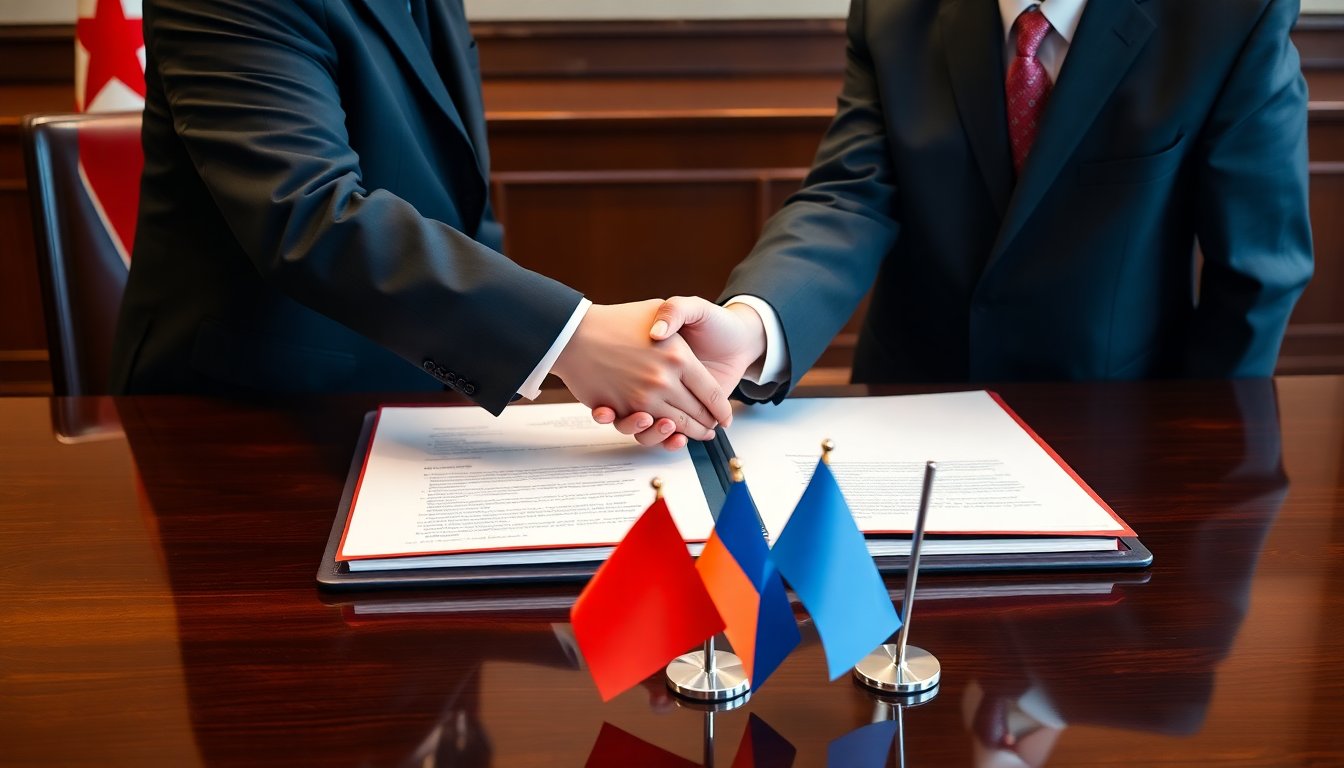
The leaders of North Korea and Belarus formalized a new friendship and cooperation treaty following a high-profile welcome in Pyongyang. The visit, described by state outlets as a first for President Alexander Lukashenko, featured public ceremonies that projected unity and mutual support. Observers noted that the agreement is both symbolic and practical: it cements diplomatic warmth while opening avenues for expanded collaboration in several sectors.
Both capitals are under pressure from the West, facing sanctions and accusations of serious human rights abuses, and they have aligned over backing for Russia in its conflict with Ukraine. Intelligence reports and open-source estimates indicate that thousands of North Korean personnel and significant materiel have been directed to Russia; around 2,000 North Korean soldiers are believed to have died in that deployment. These realities frame the treaty as an element of broader strategic networking among pariah states.
Ceremony, symbolism and public stagecraft
The reception in Pyongyang included an artillery salute, disciplined troop displays and a massed crowd at a central square, all broadcast to emphasize a narrative of close ties. President Lukashenko visited the Kumsusan Palace of the Sun to pay respects at the mausoleum of Kim Il Sung and Kim Jong Il, a gesture heavy with historical resonance. Such acts serve as a diplomatic shorthand: they are ceremonial signals that underline continuity and mutual recognition between two regimes seeking international legitimacy.
Military and strategic implications
Support for Russia and security ties
The treaty arrives against a backdrop of deepening military cooperation in the region. Analysts point to deliveries of artillery, rockets and other systems from North Korea to Russia, and to the deployment of North Korean troops to regions including the Kursk area. A 2026 strategic partnership between Moscow and Pyongyang includes commitments for military and other assistance, and the new pact with Belarus could broaden operational linkages and logistics support, complicating efforts to isolate combat support networks tied to the war in Ukraine.
Diplomatic signalling: multipolar ambitions
Observers describe the ceremony and treaty as part of a push by leaders such as Xi Jinping and Vladimir Putin toward a more multipolar world — an international order in which Western influence is contested. For Pyongyang and Minsk, visible ties bolster narrative claims of independent foreign policy and mutual deterrence against what they portray as Western interference. The pact is likely to be used domestically to portray both governments as resilient actors on a changing global stage.
Economic and diplomatic cooperation
Official comments accompanying the agreement emphasized more than security alone: Belarusian officials flagged cooperation in areas from agriculture to information technology and health products. Trade remains small in absolute terms, but Minsk has identified potential exports such as pharmaceuticals and foodstuffs to Pyongyang as areas for expansion. The agreement also formalizes channels for bureaucratic collaboration, which could ease transactions that currently face hurdles because of international sanctions.
Regional repercussions and final analysis
The new treaty is both a diplomatic score for the signatories and a signal to external powers. It strengthens a network of cooperation among states that have resisted Western pressure and underscores the risks of further militarization, especially given prior reports that Russia has stationed tactical nuclear assets in Belarus and used Belarusian territory as a staging area. For analysts, the visit and the pact will be measured for tangible shifts: whether they translate into sustained logistical support, deeper economic exchange, or merely serve as a public relations victory for two embattled governments.
In short, the friendship and cooperation treaty binds North Korea and Belarus more tightly at a moment of regional tension. While much of its immediate impact is diplomatic and symbolic, the agreement should be watched closely for any operational follow-through that could affect the course of the conflict in Ukraine and the broader balance of influence in Eurasia. The ceremony in Pyongyang may have been ornate, but its implications reach into security, economics and the evolving architecture of international alliances.