
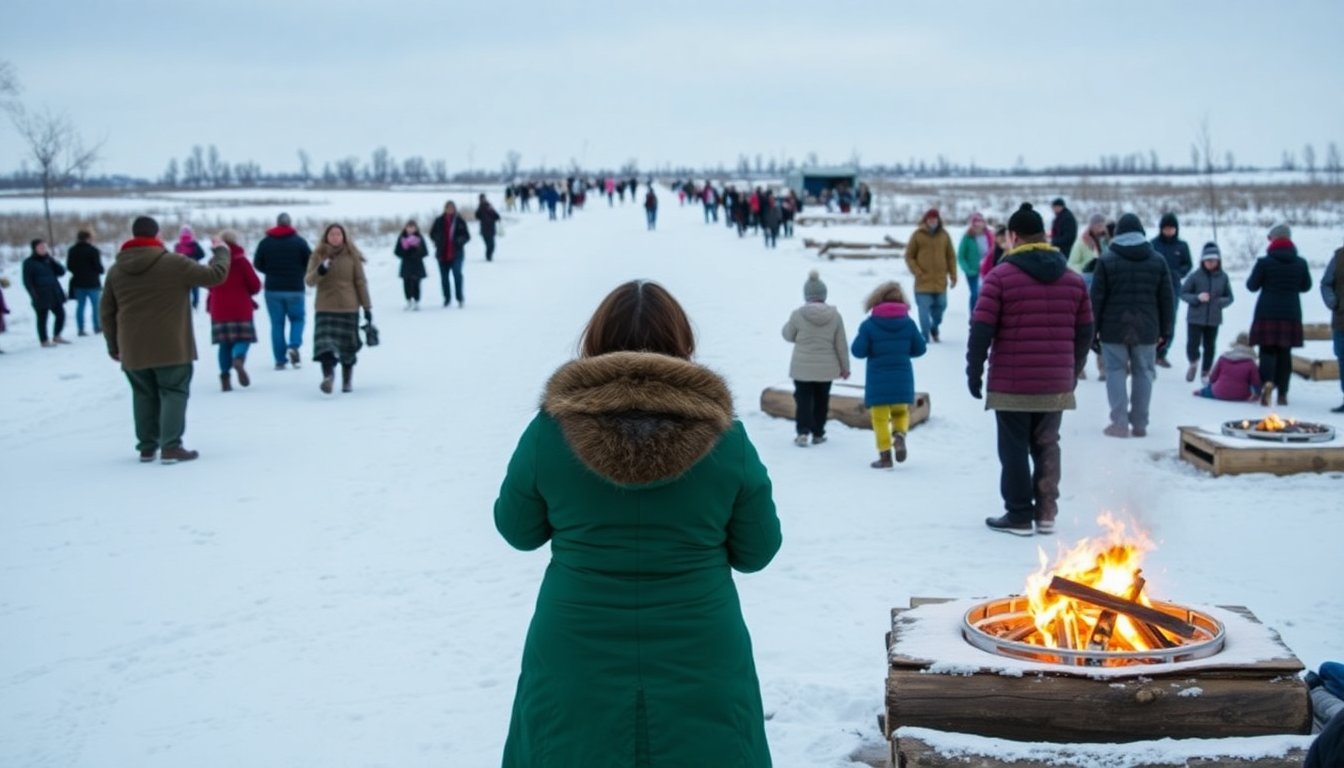
kôna winter festival brings community together around Indigenous culture and cold‑weather fun
The sixth kôna Winter Festival at Wanuskewin turned a chilly day into a warm, bustling celebration. Thousands of people strolled between outdoor demonstrations and indoor exhibits, sharing stories, trying new activities and reconnecting with the land and its living traditions.
Accessible by design
Organizers built the day so anyone could join in. If you wanted fresh air and movement, there were snowshoe and kicksled tryouts, guided tours and a lively dog‑sled demonstration. If you preferred to stay warm, indoor sessions unpacked the park’s history, cultural practices and ecological knowledge. Short performances, storytelling circles and hands‑on workshops gave people multiple ways to engage — whether they came for sport, learning or community.
Hands‑on experiences that stick
Many sessions repeated throughout the day so visitors could drop in without long waits. Beginner snowshoe tours covered basic technique and trail etiquette, and stations handled equipment checks and safety briefings. A musher’s demonstration introduced visitors to dog‑sled harnessing, team care and how weather shapes a run. Dance groups performed at staggered times so crowds could get close and watch regalia and movement that tell seasonal stories; presenters added brief context before each piece so people could appreciate what they were seeing.
Workshops led by volunteers let younger visitors try practical skills: knot tying, basic drum rhythms, and handling replica tools under supervision. Accessibility volunteers helped guests with mobility needs join low‑impact activities, so the event felt welcoming across ages and abilities.
Elders and cultural leaders took center stage for hands‑on teachings. Demonstrations of hide‑tanning and bison‑meat smoking provided tangible connections to traditional foodways and resource stewardship, while craft displays and guided practice linked attendees to ancestral knowledge in a respectful, tactile way.
Storytelling, dance and deep listening
Indoor spaces acted as quieter hubs, where facilitated conversations let people ask deeper questions about meaning, technique and context. Storytellers and local authors moved from short children’s tales to layered oral histories, offering the backstories that give demonstrations their full significance. Moderated Q&As and designated quiet zones helped the festival balance open curiosity with respect for ceremonial space.
Tech that broadens access — without replacing presence
A standout addition was a virtual‑reality trail tour developed by Saskatchewan Polytechnic students. Housed in a sheltered pavilion, the VR gave narrated, immersive views of trails and cultural sites that some visitors can’t reach in a single day. It included captioning and adjustable audio, so it served as a real accessibility tool as well as an educational supplement. The VR didn’t replace in‑person interpretation; it offered another route for people to engage while easing pressure on high‑demand sessions and sensitive sites.
The project involved ongoing consultation with Indigenous knowledge holders. Students paired technical skills with cultural guidance to make sure the experience respected and amplified Indigenous voices rather than substituting for them.
A festival that keeps community at its heart
Beyond scheduled events, spontaneous conversations around food, displays and demonstrations were a big part of the day. Those informal moments — sharing a warm drink, asking a question of an elder, watching kids try a new skill — kept the festival feeling like a living gathering rather than a series of shows. For many, the one‑day format concentrated energy and attendance in a way that strengthened social ties and passed on seasonal knowledge.
The sixth kôna Winter Festival at Wanuskewin turned a chilly day into a warm, bustling celebration. Thousands of people strolled between outdoor demonstrations and indoor exhibits, sharing stories, trying new activities and reconnecting with the land and its living traditions.0
The sixth kôna Winter Festival at Wanuskewin turned a chilly day into a warm, bustling celebration. Thousands of people strolled between outdoor demonstrations and indoor exhibits, sharing stories, trying new activities and reconnecting with the land and its living traditions.1