
Table of Contents
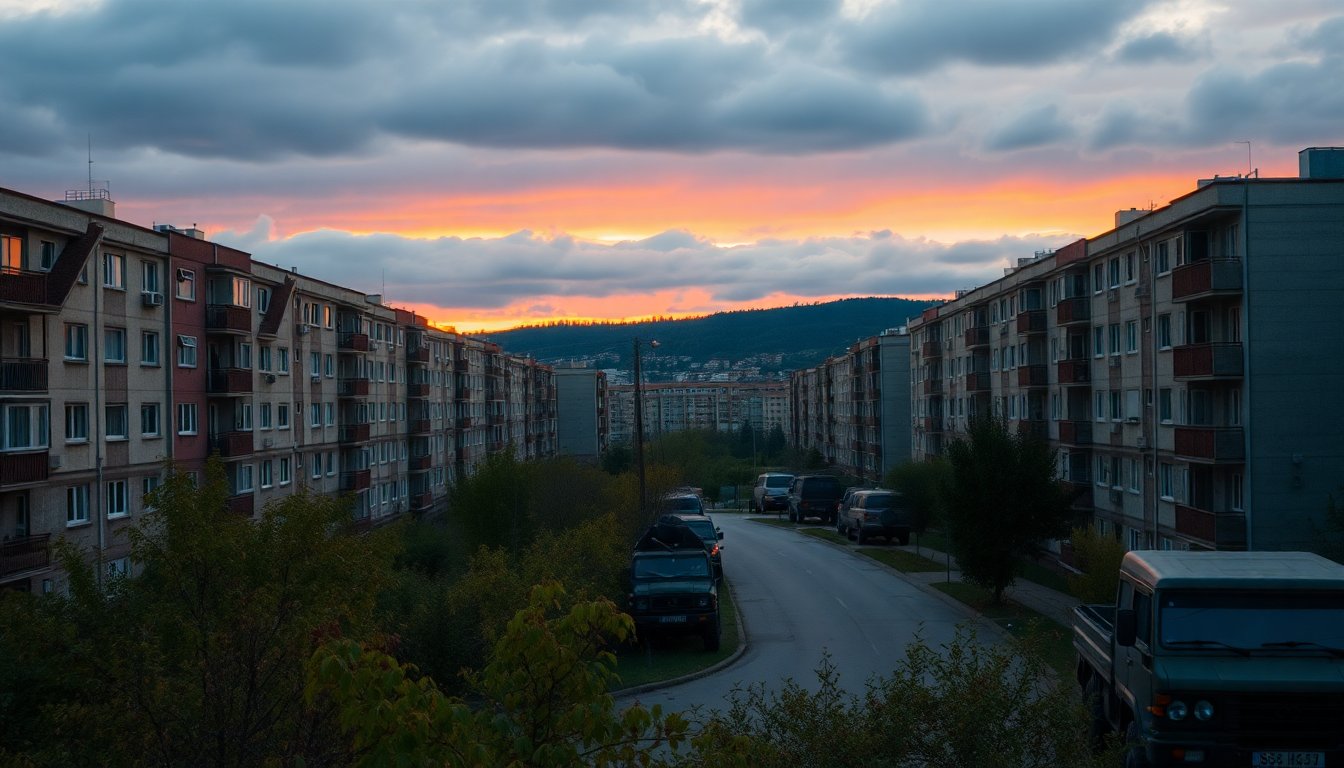
Kramatorsk, situated in eastern Donetsk, has become a pivotal location over the past four years. This city serves as a logistical hub for military operations and a stronghold against advancing Russian forces from the south and east. As Ukraine navigates peace negotiations, the future of Kramatorsk remains uncertain.
Recent proposals suggest that Ukraine should withdraw its troops from Kramatorsk as part of a broader peace plan, which includes transforming the region into a special economic zone. This idea has sparked outrage among local residents, who believe they should not bear the consequences of a conflict that has already taken numerous lives.
Public sentiment and the idea of a referendum
Maksym Lysenko, a local entrepreneur from the war-affected city of Pokrovsk, opened a shop in Kramatorsk selling patriotic merchandise. He expressed disbelief at the notion of conceding territory, stating, “People were dying, shedding their blood, and then what, just give up the territory?” His sentiment reflects widespread frustration among the populace, confronted with the potential loss of their homeland.
In recent discussions, Ukrainian President Volodymyr Zelenskyy proposed the possibility of a referendum to gauge public opinion on potential concessions. However, Lysenko interprets this move as an attempt to appease U.S. President Donald Trump, who has criticized Zelenskyy for perceived ingratitude. According to Lysenko, the suggestion of a referendum appears more as a political gesture than a genuine effort to consult the public.
The ongoing threat and difficult choices
As Russian forces approach within 20 kilometers of Kramatorsk, the threat of drone strikes and missile attacks remains significant. This constant danger has led many of the tens of thousands of residents who remain to consider leaving the city. The ongoing conflict has disrupted daily life, with essential services such as rail transport suspended due to security concerns, complicating the situation for those who wish to stay.
In response to U.S. pressure, Zelenskyy has indicated that Ukraine is open to holding elections if security can be guaranteed by allies. This statement reflects a desire to transfer the responsibility for any territorial concessions onto the Ukrainian public, who largely oppose the idea of ceding land.
Surveying public opinion
Recent polling data indicates that while many Ukrainians support a ceasefire to end the ongoing war, approximately three-quarters are against any plans that involve significant concessions, such as withdrawing military forces from the Donbas region. Anton Hrushetskyi, executive director of the Kyiv International Institute for Sociology, highlights that the Ukrainian populace is fatigued by the conflict, seeking peace but resolutely opposed to surrendering their territory.
Hrushetskyi’s organization frequently conducts surveys to measure public sentiment, indicating that many Ukrainians are willing to endure the war if it leads to favorable conditions for peace. Trust in U.S. leadership has notably declined, with only 21% of Ukrainians expressing confidence in Washington, down from 41% the previous year. This shift reflects a growing skepticism towards international support.
The complexities of a potential referendum
Zelenskyy’s proposal for a referendum has drawn criticism as a performance aimed at satisfying U.S. expectations. However, executing such a vote would require a ceasefire, which Russia has consistently rejected. Additionally, Russian officials have dismissed the idea of a referendum, asserting that the territories in question are already part of Russia. Political science expert Mikhail Alexseev suggests that a referendum could be feasible through remote means, yet he believes the public would overwhelmingly reject any terms involving the transfer of Donbas territory to Russia.
Despite the contentious nature of these negotiations, there are indications that some Ukrainians might consider partial concessions. Alexseev notes that Zelenskyy may be more open to compromises than the general public, who view any capitulation as unacceptable. The desire for resolution remains strong, but many consider the parameters around territorial integrity to be non-negotiable.
The future of Kramatorsk and its residents
Recent proposals suggest that Ukraine should withdraw its troops from Kramatorsk as part of a broader peace plan, which includes transforming the region into a special economic zone. This idea has sparked outrage among local residents, who believe they should not bear the consequences of a conflict that has already taken numerous lives.0