
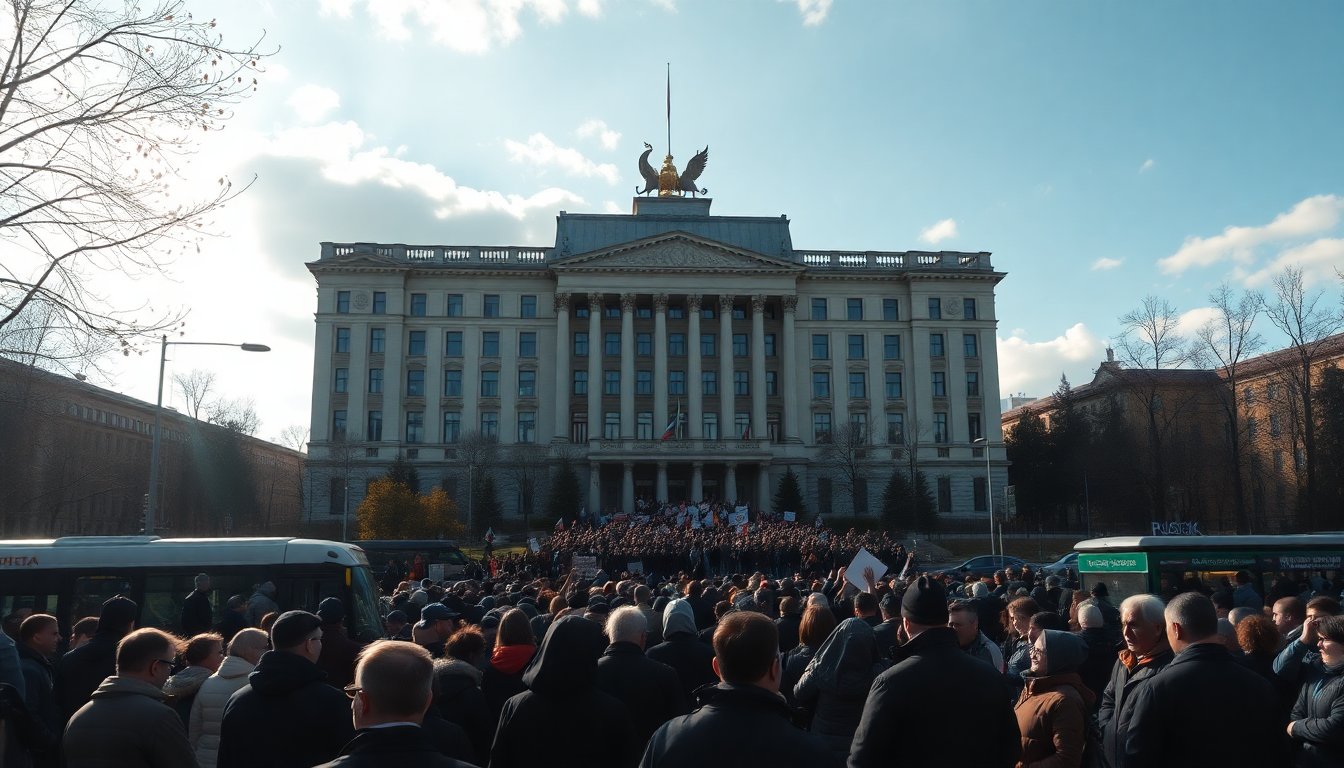
In response to rising public discontent over increasing taxes and the ongoing conflict in Ukraine, the Kremlin is developing a strategy to replace unpopular regional governors. This initiative aims to divert public attention and create an impression of change as parliamentary elections approach in 2026.
Insiders within the Kremlin indicate that the administration recognizes regional leaders often become targets of local frustrations. Governors typically face public anger, making them convenient scapegoats for the central government, which seeks to exploit this dynamic.
The motivation behind the reshuffle
Reports suggest that Kremlin officials are contemplating a significant reshuffle of governors to address growing discontent regarding unpopular policies, such as increasing the value-added tax from 20% to 22% and imposing stricter regulations on small businesses. A political strategist noted that the public is fatigued from the ongoing war and is seeking a resolution, indicating this reshuffle could distract from these pressing concerns.
The role of local governance
Local officials are often more susceptible to public ire than their federal counterparts. A source close to the Kremlin explained that criticizing regional governors is relatively safe, as many citizens lack awareness of federal ministers. The governor, being more accessible, typically represents local governance.
Recent changes in local self-governance laws have intensified this trend. Governors now bear significant responsibility for conditions within their territories. They often lead the local branch of the ruling party, United Russia, and have the authority to appoint mayors and nominate candidates for regional capitals. Consequently, local dissatisfaction regarding infrastructure or public services is likely to be directed at the governor.
Public reactions to dismissals
The removal of a widely disliked governor can prompt public celebrations in the affected region. The political strategist indicated that such an event might be viewed as a fresh start, especially if the outgoing governor was an outsider. There have been instances where residents celebrated a governor’s departure with fireworks, suggesting that the Kremlin can benefit, at least temporarily, from these dismissals.
Typically, these changes occur in either spring or fall. The strategist noted that timing them closer to election season could yield better results. This strategy allows for a brief surge of positive sentiment among the electorate just before elections, while also affording incoming governors adequate time to acclimate to their new roles and understand the electoral landscape.
Potential candidates for dismissal
Insiders have identified several governors as likely candidates for replacement, including Georgy Filimonov in Vologda, Vyacheslav Fedorishchev in Samara, and Artur Parfyonchikov in Karelia. Filimonov, currently leading the regional United Russia branch, reportedly has an approval rating around 25-30%, a figure confirmed by sources from the Northwestern Federal District.
His unpopularity arises from a series of contentious policies, including a ban on alcohol sales and efforts to outlaw abortions. Additionally, his public support for far-right groups and a controversial monument to Joseph Stalin have further alienated constituents. A source from the plenipotentiary envoy’s office stated that Filimonov’s frequent public missteps have made him a prime target for dismissal, as many in the region would likely welcome a change.
Samara’s Governor Fedorishchev is also under scrutiny due to his tumultuous relationship with the local business community and high turnover within his administration. He has drawn negative attention for his theatrical antics, such as releasing a rap song and inviting a pop star to discuss a public feud, which have not resonated well with the electorate.
Insiders within the Kremlin indicate that the administration recognizes regional leaders often become targets of local frustrations. Governors typically face public anger, making them convenient scapegoats for the central government, which seeks to exploit this dynamic.0
Future implications
Insiders within the Kremlin indicate that the administration recognizes regional leaders often become targets of local frustrations. Governors typically face public anger, making them convenient scapegoats for the central government, which seeks to exploit this dynamic.1
Insiders within the Kremlin indicate that the administration recognizes regional leaders often become targets of local frustrations. Governors typically face public anger, making them convenient scapegoats for the central government, which seeks to exploit this dynamic.2


