
Table of Contents
The ongoing investigation into the LaGuardia runway collision has been complicated by knock-on effects from a partial U.S. government shutdown. Officials from the NTSB said on March 25, 2026 that team members experienced extended waits at airport security checkpoints before they could reach New York to examine the crash site. One investigator reportedly spent three hours in a TSA queue, prompting calls to operations centers to accelerate passage. At the same time, the federal funding lapse has left many Department of Homeland Security (DHS) employees working without pay and resulted in staffing gaps at major hubs.
The collision itself — in which an Air Canada Express aircraft struck a Port Authority emergency vehicle — has left investigators examining multiple layers of system and human factors. The NTSB described findings on March 24, 2026 that a runway surface-detection tool, ASDE-X, did not generate an alert because the responding vehicle lacked a transponder. The agency also recovered the cockpit voice recorder and summarized the final three minutes of audio, noting overlapping radio transmissions, a directive to emergency responders to stop, and uncertainty about whether the flight crew saw the truck ahead of impact.
How the shutdown slowed investigator access
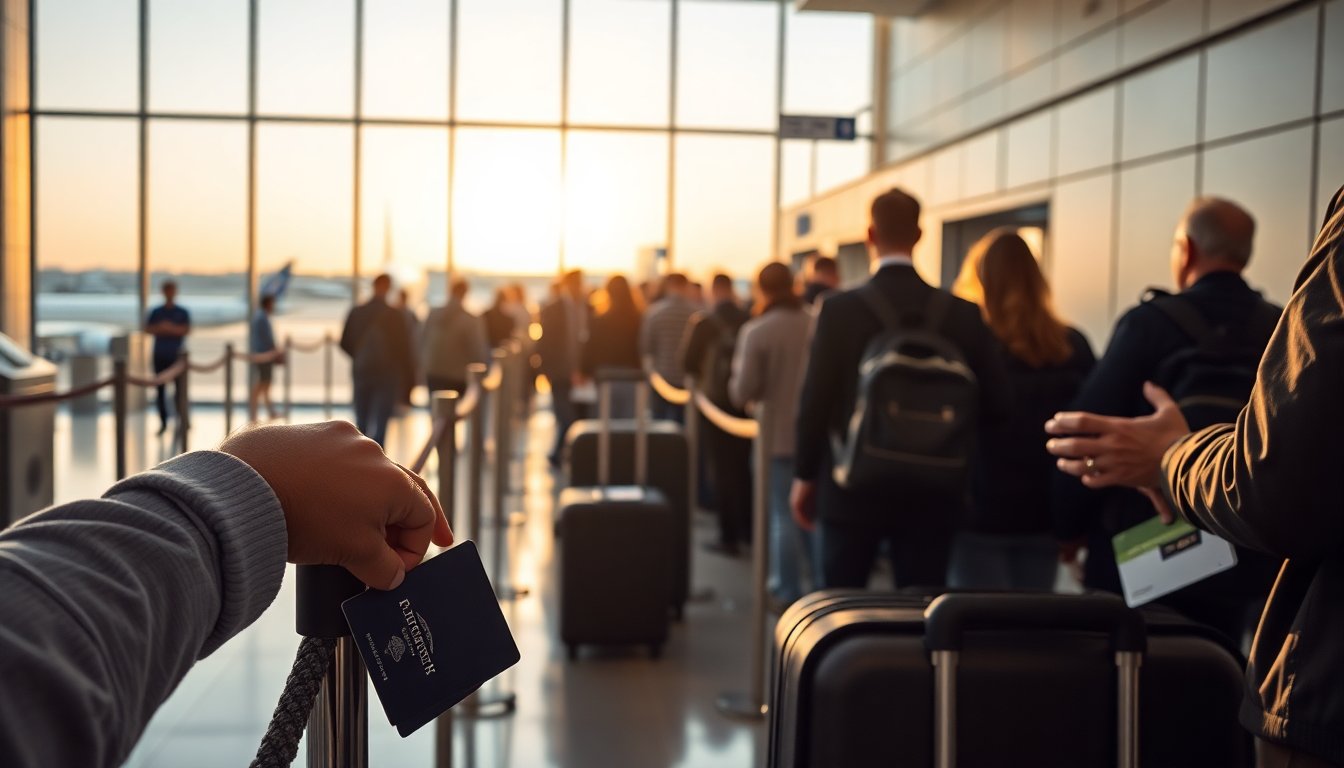
Across airports, the partial shutdown has translated into higher no-show and sick-call rates for security screeners, increasing traveler lineups and, in at least one case, delaying the arrival of crash investigators. DHS figures cited by reporters showed roughly 11 per cent of scheduled TSA officers missed shifts nationwide, with locally larger impacts — for example, nearly 40 per cent at William P. Hobby International Airport in Houston and 37 per cent at Hartsfield-Jackson in Atlanta. Those absences have forced temporary checkpoint closures at times, slowing movement through terminals. Officials also reported that more than 450 officers resigned during the funding gap, and rehiring and retraining will be required to restore normal operations.
What the NTSB has identified so far
The NTSB has highlighted operational practices in the LaGuardia tower that merit scrutiny rather than assigning immediate blame to individuals. Investigators found two controllers in the cab during the midnight shift — the local controller who manages active runways and the controller in charge who oversees safety — but one of those controllers was reportedly juggling additional duties, including acting as the clearance delivery position. The agency emphasized that the midnight timeframe is a known period of concern because of potential fatigue, though so far there is no evidence that fatigue caused the collision. The NTSB has said it will examine whether staffing patterns and task assignment are appropriate for LaGuardia’s busy airspace.
Flight recordings, radio transmissions and surface tracking
Preliminary analysis of the cockpit voice recorder and tower audio revealed that a transmission from an airport vehicle was “stepped on” by other radio traffic shortly before impact, and tower controllers told the responding firefighters to stop seconds before the recording ends. The ASDE-X surface monitoring tool did not trigger an alert because it could not create a reliable track where vehicles were merging and unmerging near the runway, a problem compounded by the fact that the fire truck had no transponder. Flight-tracking services reported the aircraft’s touchdown speed in a range that investigators will verify; dozens of passengers and crew were treated for injuries and the two pilots were killed.
Policy, airport operations and traveler implications
The staffing shortage has prompted the administration to deploy ICE officers to some airports to assist with crowd control — a move that has generated criticism and raised safety concerns among observers and some travelers. Political disagreement in Congress, ongoing since Feb. 14, centers on whether and how to fund certain law enforcement components of DHS, including ICE and CBP. Analysts describe the deployment as a temporary fix to an operational problem rooted in the funding stalemate, and some travel advisers have recommended avoiding discretionary flights to the United States while lines and uncertainty persist. Restoring a robust screening workforce and reassessing surface-vehicle tracking and tower staffing protocols will be central to preventing similar incidents going forward.
What to watch next
The investigation remains active and preliminary findings may change as the NTSB continues to analyze recorder data, tower procedures and system performance. Lawmakers and airport authorities will likely face pressure to consider whether emergency vehicles at busy airports should carry transponders, how many controllers are needed during overnight shifts, and how to strengthen redundant protections — since accidents of this nature typically result from a cascade of failures rather than a single mistake. Meanwhile, travel disruptions tied to the shutdown highlight how a political impasse can have immediate operational consequences for safety oversight and emergency response.