
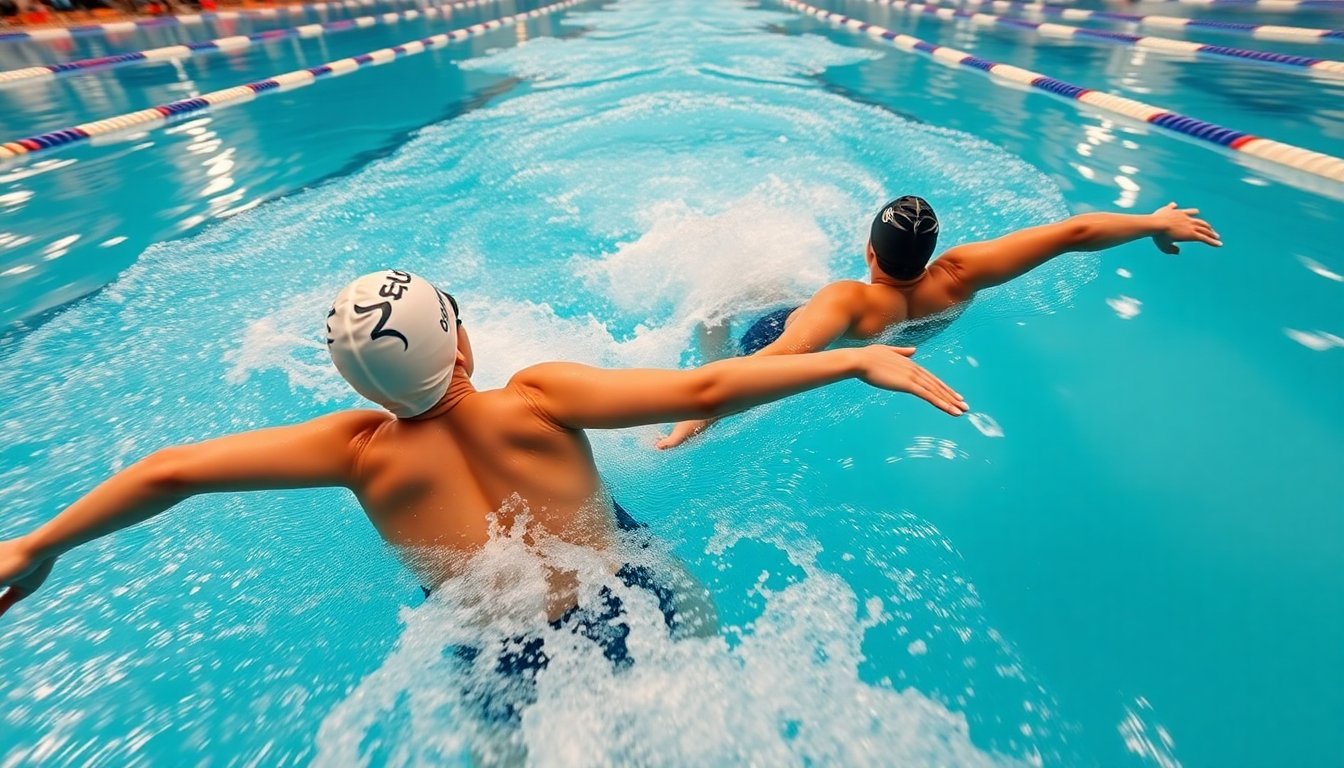
Westmont, Ill. — The night’s standout moment was a classic distance duel: Katie Ledecky nipped Summer McIntosh in the women’s 800 freestyle, 8:08.57 to 8:10.45, with Brazil’s Maria Fernanda Costa third in 8:29.41. Far from a runaway, the race read like a tactical chess match—Ledecky’s steady control versus McIntosh’s late surge—and the details in meet files, split charts and video make that story clear.
The race in one paragraph From the gun it was essentially a two-woman race. Ledecky built and held a small lead through the middle 400–600 metres; McIntosh ate into it in the final 200 but couldn’t quite close the gap. Split sheets and lane-by-lane footage line up: Ledecky’s 100-metre consistency and efficient turns preserved her edge, while McIntosh’s faster closing splits showed growing speed endurance. The result was decisive enough to matter but not close enough to threaten the world record (8:04.12, set May 4, 2026).
What the data say – Official times: Ledecky 8:08.57; McIntosh 8:10.45 (1.88 seconds behind); Costa 8:29.41. – Timing-system logs, split charts and scoreboard video all corroborate those marks. – Split patterns reveal Ledecky produced steadier 100m splits across the race; McIntosh produced quicker final 50–100m efforts. – Neither athlete approached her personal-best or the world record that night; the swim functioned more as a tactical test than a record attempt.
How the race unfolded (reconstruction) – Early: conservative, controlled opening laps from both leaders to manage the long distance. – Mid-race: Ledecky extended a small, persistent margin through measured pace and efficient turns. – Final 200: McIntosh increased turnover and closed significantly, but Ledecky’s sustained stroke mechanics and pacing held firm to the finish.
Key figures and coaching context – Katie Ledecky: the veteran distance benchmark—experience and pacing control remain her strengths. – Summer McIntosh: the rising multi-event threat, now showing sharper late-race speed as she adapts to a new training emphasis under Bob Bowman at the University of Texas. – Maria Fernanda Costa: the podium’s third voice, finishing well behind the leading duo but securing a clear third place.
Coaches’ and analysts’ takeaways Coaching notes and post-race debriefs filed with teams emphasize different priorities: – For Ledecky: managing event load and preserving consistent endurance across rounds—winning without overshooting was the objective. – For McIntosh: testing race-pace rehearsals and recovery strategies; measurable gains appeared Analysts flagged the race as a useful barometer rather than an all-or-nothing time trial: small technical gains (turns, underwaters, stroke length) emerged as the likely path to cutting those final seconds.
McIntosh’s broader meet form McIntosh’s Westmont campaign wasn’t limited to the 800. Meet records show she swam a heavy program—200 free (seeded 1:53.65 from Worlds), 200 fly, 200 IM, 400 IM and 400 free—and earlier in the Pro Series posted a 200 IM in 2:08.48 and a 400 IM in 4:28.13 in Austin. Those marks underline her event range but also expose recovery and turn consistency as areas to tighten when racing multiple events in quick succession.
Seeding, matchups and stakes Entry lists confirm a likely head-to-head in the 200 free: McIntosh’s 1:53.65 seed from Worlds versus Ledecky’s historical 1:53.73 (Rio 2016) and more recent 1:54.97 from San Antonio in. Those seed times shaped session lineups and created the potential for a high-profile Friday matchup that would draw attention to the Pro Swim Series stop.
What this means going forward – Competitive dynamics: Ledecky keeps her spot as the distance benchmark; McIntosh’s narrowing margins and improved closers make future races intriguing. – Team strategy: expect teams to prioritize targeted pacing sessions, turn work and recovery protocols. McIntosh’s camp appears to be emphasizing race simulations and endurance blocks to convert late-race speed into – Selection and planning: federations and selectors will use Westmont’s timing data, split analytics and video to inform Pro Series strategy and Pan Pacific rosters.
Next steps Meet officials will publish final heat sheets and result packages; coaches will feed post-race data into training blocks that focus on measurable gains (turn efficiency, underwaters, pacing in the first 200). Analysts expect a string of monitored races across remaining Pro Series stops to validate any adjustments before the Pan Pacific Championships in Irvine, Calif, this August. Ledecky’s polish and steadiness won the day; McIntosh’s late-race improvement and multi-event versatility signaled that the gap is closing. Small technical fixes and consistent head-to-head exposure will decide whether those close finishes turn into outright upsets in the months ahead.