
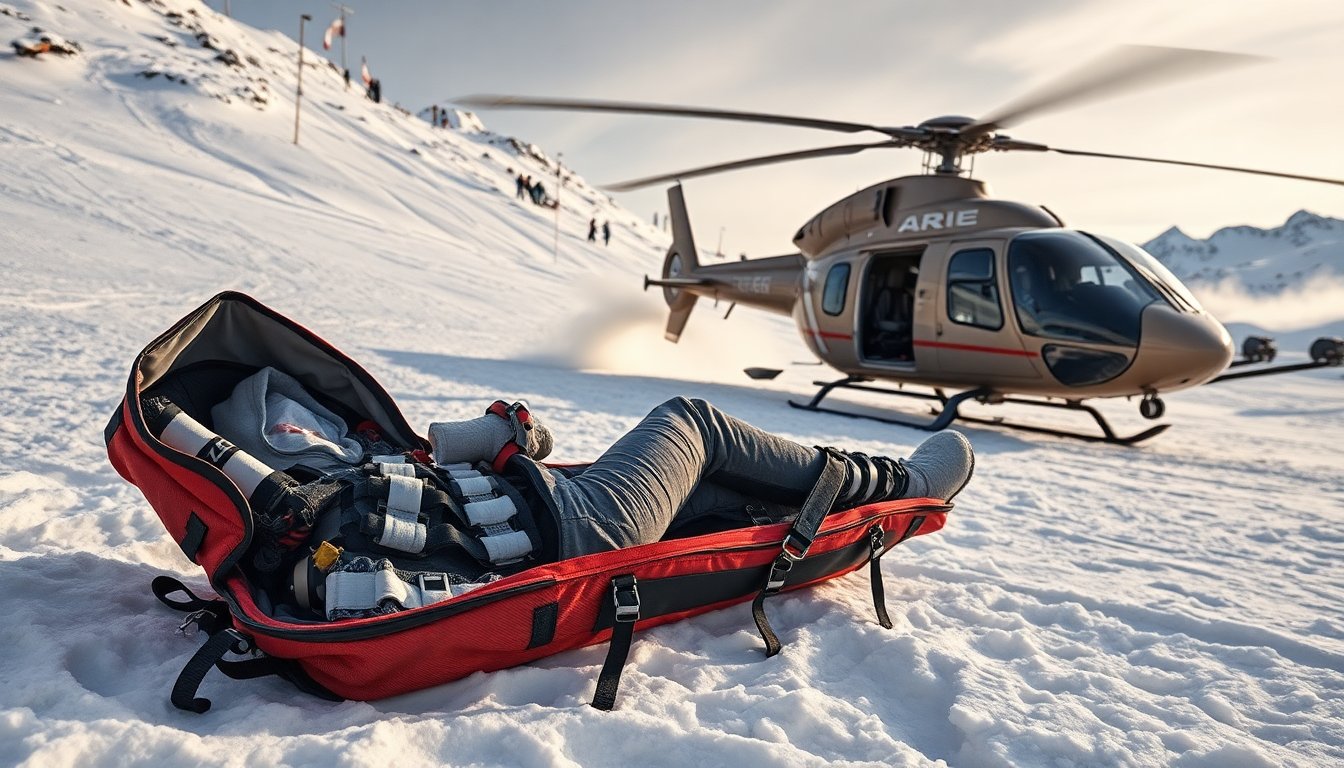
Headline suggestion: Lindsey Vonn airlifted after Winter Olympics crash; complex tibia fracture confirmed
Lindsey Vonn, the 41-year-old Olympic champion, was airlifted from the Dolomites course after a violent crash during the women’s downhill at the Winter Olympics. Early in her run she clipped a gate, was thrown at speed and sustained a complex fracture of the left tibia. Vonn — who entered the Games with a previous ACL tear in her history — underwent multiple operations in Italy and has since been cleared to continue care in the United States.
What happened on the course
Thirteen seconds into the descent, Vonn’s ski caught a gate and she was launched into a high‑energy impact. Spectators and broadcasters described the collision as severe. Emergency crews stabilized her on site and flew her by helicopter first to a local hospital in Cortina, then to a specialist facility in Treviso.
Surgeries and transfer
Italian surgical teams performed several procedures to stabilise the fracture; Vonn confirmed she had a fourth operation before leaving Italy. Team doctors described her condition as stable and said pain was being managed. With specialist follow-up care needed at home, U.S. Ski & Snowboard coordinated her repatriation and the transfer of operative notes and imaging to American clinicians.
Prognosis and expected recovery
Surgeons caution that returning to full weight-bearing and normal walking could take months. Complex tibia fractures require staged surgical management, careful monitoring for complications such as infection or delayed bone healing, and a prolonged rehabilitation program. Typical recovery goals: restore joint range of motion, rebuild strength and neuromuscular control, then progress to sport‑specific loading. Objective metrics — radiographic healing, functional testing and pain‑controlled milestones — will dictate the pace.
Vonn’s updates and family response
From her hospital bed, Vonn posted messages thanking medical staff and asking supporters not to pity her, framing recovery as “one day at a time.” Her sister echoed that measured approach; her father has raised the possibility that this could end her competitive career. Vonn has been clear that she accepted the risks that come with elite racing and that she hopes to return to the mountains when and if that becomes feasible.
Safety review and broader implications
Event organisers and sports authorities will review the incident and the course setup. High‑speed crashes often prompt investigations and, in some cases, tightened safety measures or revised gate configurations to reduce risk. Cross‑border medical transfers like this one also highlight the logistical and legal coordination needed to maintain continuity of care.
What to watch next
Expect an early reassessment once U.S. specialists have reviewed imaging and surgical notes. Key indicators to follow: signs of bone healing on X‑rays/CT, progress in pain and mobility, and how she responds to staged weight‑bearing and physiotherapy. Any plan for a return to training will be conservative and metric‑driven. Recovery is likely measured in months, not weeks, and will depend on surgical outcomes, rehab progress and Vonn’s Fans and the skiing community are following closely as medical teams map out the next steps.