
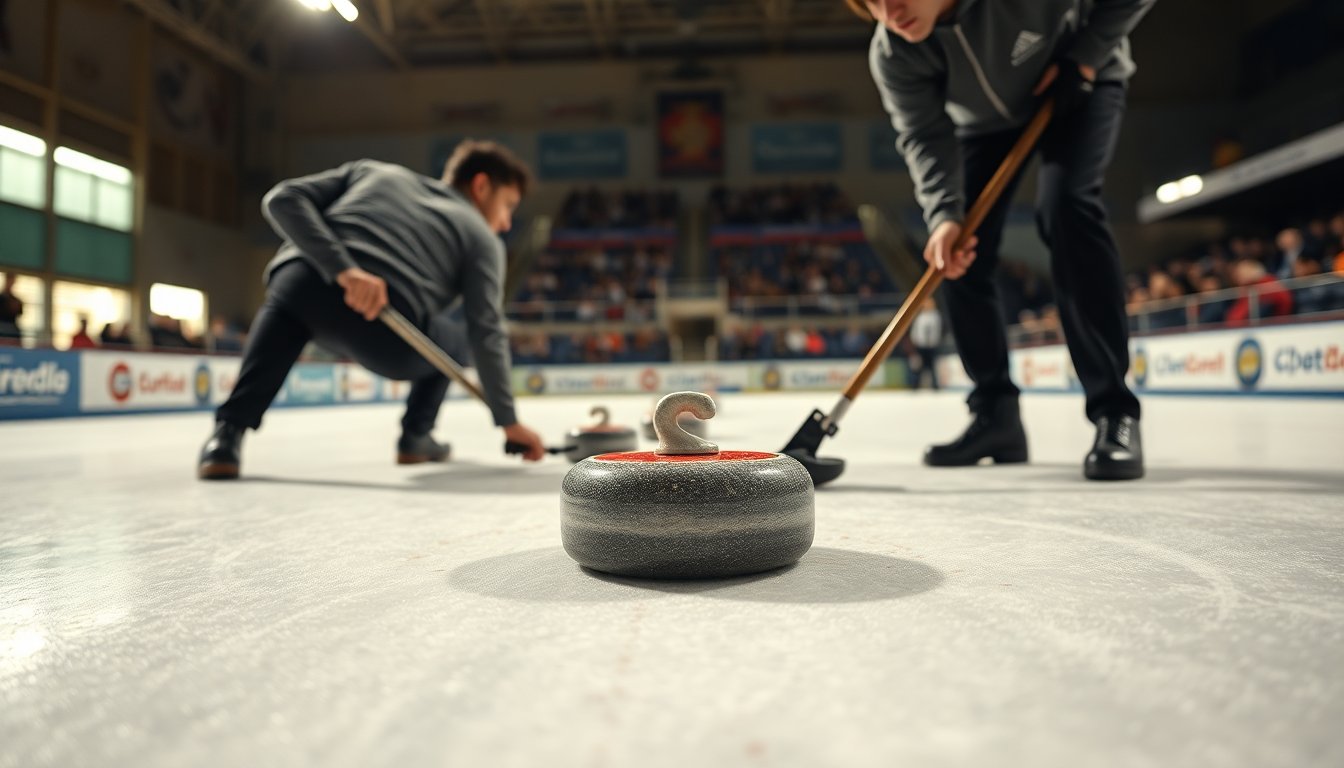
The world mixed doubles curling championship in Geneva produced a tense encounter when Colton Lott and Kadriana Lott of Gimli, Man. edged Italy’s Stefania Constantini and Amos Mosaner 6-5 after an extra end. In the decisive frame the Canadian pair stole a point, turning a tied contest into a win and handing the reigning champions their first defeat of the event. This match stood out for Canada not only because of the result but also for the clear statistical gap: the Lotts outshot Italy by an 89 to 66 per cent margin, one of their strongest displays of the week.
Beyond the single-game narrative, the victory shifted the standings: Canada climbed to 4-0 and into sole possession of Pool B, with Italy sitting at 3-1. The Lotts are now one of just two undefeated teams at the tournament — a distinction shared with Australia in Pool A. Their schedule keeps them busy; Canada was due back on the sheets to face Hungary and Scotland, aiming to maintain momentum and keep pressure on the rest of the field.
The match in Geneva: how the Lotts closed it out
From the springy taps to the final tactical exchanges, the game was a study in controlled aggression. The Lotts mixed takeouts and draws, forcing Italy into difficult choices on several ends. As the final stages unfolded, the pair used precise weight and placement to set up an extra end in which they executed without hesitation, creating opportunities to score without the hammer. The stolen point that sealed the win came after a careful buildup that left the Italians with limited options. That decisive moment exemplified the Lotts’ ability to manufacture scoring chances even when the scoreboard looks even.
Key moments and statistics
Numbers from the contest underline the Lotts’ control: they posted an 89 per cent team shot success rate compared with Italy’s 66 per cent, reflecting both shot-making and strategic choice. Several ends featured tight scoring rings and high-pressure draw shots, but Canada’s consistency on guard and draw weight proved critical. The stolen point in the extra end was the product of incremental gains earlier in the match — forcing single-point ends, protecting angles and finally pressuring the opposition into an error. For the reigning world champions and 2026 Olympic gold medallists, it was their first setback at this championship, making the Lotts’ performance all the more significant.
Where the Lotts came from: form and experience
Colton and Kadriana arrive in Geneva with a deep domestic resume: since 2019 the pair have accumulated two golds, two silvers and a bronze at the Canadian mixed doubles championships, highlighting sustained national-level success. Internationally they posted an 8-1 record at the 2026 world championship but left without a medal, an outcome that has clearly fuelled their determination. The duo sharpened their edge ahead of worlds by winning a Super Series mixed doubles event in Ontario, going undefeated in that warm-up and topping the draw-to-the-button metric — a practical confidence boost prior to facing the globe’s top teams in Geneva.
Experience that steadies the nerves
Part of the Lotts’ edge comes from complementary experiences. Colton’s season included winning the Brier playing third for Matt Dunstone’s Manitoba rink and earning a silver at the world men’s championship, experiences that help absorb pressure on the big stage. Kadriana balances mixed doubles with regular team play as second for Saskatchewan’s Nancy Martin, keeping her sweeping and tactical instincts sharp. Together they emphasize a shot-by-shot focus and a shared mental approach that helps when games move into high-stakes situations such as an extra end.
Outlook and implications for the tournament
This victory not only preserved the Lotts’ unblemished record but also reshaped Pool B dynamics: Canada sits alone at the top, and the defeat hands Italy their first loss in round-robin play. For tournament watchers, the result underscores that the Lotts are legitimate contenders to push for Canada’s first world mixed doubles title. Maintaining composure in close ends, continuing high shot percentages and drawing on recent warm-up success will be crucial as they face Hungary and Scotland next. If the Lotts can repeat this standard of play, they will be a formidable presence as the event moves toward knockout rounds.
Ultimately, the Geneva match was a concentrated example of how tactical discipline and execution combine to decide tight mixed doubles contests. For Canada, the Lotts’ extra-end steal was more than one point on the board; it was a statement of intent from a pairing with domestic pedigree and growing international credentials.


