
Table of Contents
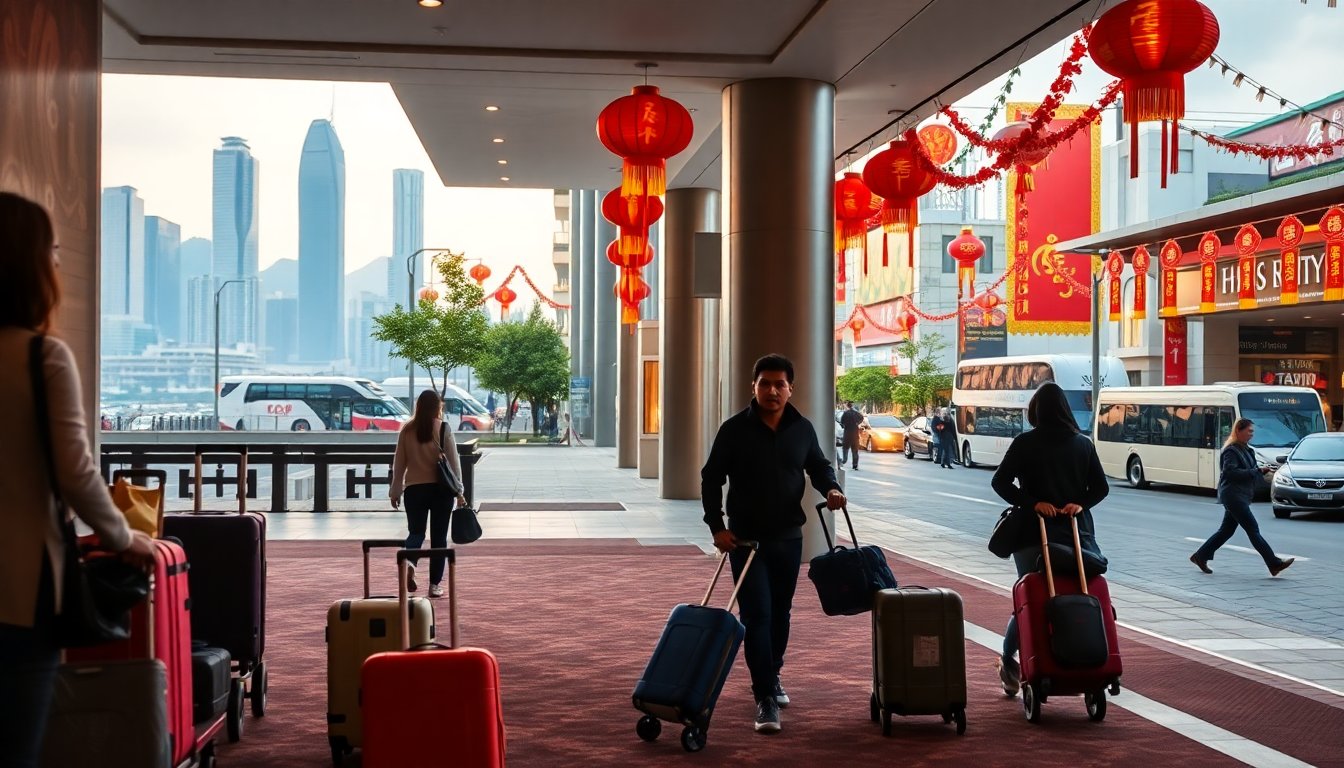
The Lunar New Year travel window produced a vivid uptick in regional tourism activity, with both Hong Kong and Macau reporting pronounced demand for hotels, restaurants and transport links. Locals taking short breaks and a rebound in mainland visitor numbers combined to push occupancy and checkpoint throughput higher than many operators expected. Observers also pointed to geopolitical dynamics and targeted marketing as contributing factors behind shifting visitor mixes.
Official and industry figures collected during the early phase of the holiday illustrate the scale of the surge. Policy notes and transport tallies show how entry points, room rates and event calendars all played roles in shaping the travel picture across the two destinations.
Hong Kong: hotels busy despite outbound travel
In Hong Kong, hotels and eateries in tourist districts reported lively trade through the Lunar New Year stretch. A combination of resident leisure trips and inbound visitors created a more visitor-driven festival economy than in recent years. The city’s workforce leveraged a nine-day holiday by taking two days of annual leave on February 16 and February 20, allowing extended escapes that bolstered both local and cross-border hospitality demand.
Financial commentary from the city indicated healthy early-year momentum: by 13 February, Hong Kong had recorded 7.23 million visitor arrivals year-to-date, an increase of 9.6% versus the same span in the prior year. Overseas arrivals expanded even faster, up 16.4%, reflecting active event promotion and additional long-haul flight capacity. Policy-makers and travel managers were advised to double-check entry rules during peak flows, as visa and documentation logistics can become tight at short notice.
Pricing and business travel implications
Hotel occupancy for key peak nights had reached about 90% in recent industry forecasts, driven largely by group tours from Guangdong, Shanghai and Chongqing. That demand translated into higher room rates: four-star properties have seen increases of roughly 12–15% since Q3 2026, and further upward pressure is expected with major events like Art Basel and the Rugby Sevens returning in March and April. Corporate travel budgets and per-diem allowances may need revisiting as competition for short-stay accommodation tightens.
Macau: border traffic and sold-out rooms
Across the Pearl River Delta, Macau opened the holiday period with nearly 279,400 visitor arrivals over a weekend, according to preliminary police-run checkpoint tallies. On 15 February, a single holiday day for mainland China, Macau received 132,428 visitors. These checkpoint data feed into operational planning for immigration and transport management, while formal tourism statistics are later validated and published through the region’s statistical bureau.
Most arrivals entered Macau via land routes, with the Border Gate, the Hong Kong–Zhuhai–Macao Bridge and the Hengqin checkpoint registering the bulk of throughput. Land crossings continue to dominate because of close connectivity with mainland cities and the convenience of bridge and ferry links. Casino resorts reported that many nights were sold out or nearly sold out, prompting operators to adjust staffing and guest services to match peak footfall.
Gaming trends and revenue outlook
Despite some pre-holiday softness in gross gaming revenue reported by financial analysts, projections expected a meaningful year-on-year increase for the combined January–February period. Industry executives noted no obvious fall-off in tourism demand ahead of the major holiday, and banks projected solid gains in gaming revenue during the peak weeks. The alignment of visitor flows with high occupancy created a busy operating environment for resort casinos and hospitality firms.
Policy signals and market takeaways
Hong Kong’s Financial Secretary highlighted continued inbound momentum and projected around 1.43 million mainland arrivals for the Lunar New Year holiday alone—an expectation that underscores the central role of mainland tourism in the city’s recovery. He also suggested that subsidies for meetings, incentives, conferences and exhibitions (MICE) organisers could return, encouraging postponed regional conferences to resume and supporting future demand for large-scale events.
For travel managers and businesses, the holiday illustrated several practical lessons: review visa and entry requirements in real time, anticipate higher accommodation costs around peak dates, and monitor government announcements for potential travel-support measures. With the early 2026 calendar already busy, stakeholders should prepare for sustained pressure on capacity through the spring event season.
The combination of resident outbound short breaks, strong mainland visitation and an active events pipeline produced robust demand for rooms, restaurants and casinos, while border and immigration operations continued to play a critical role in managing the visitor surge.