
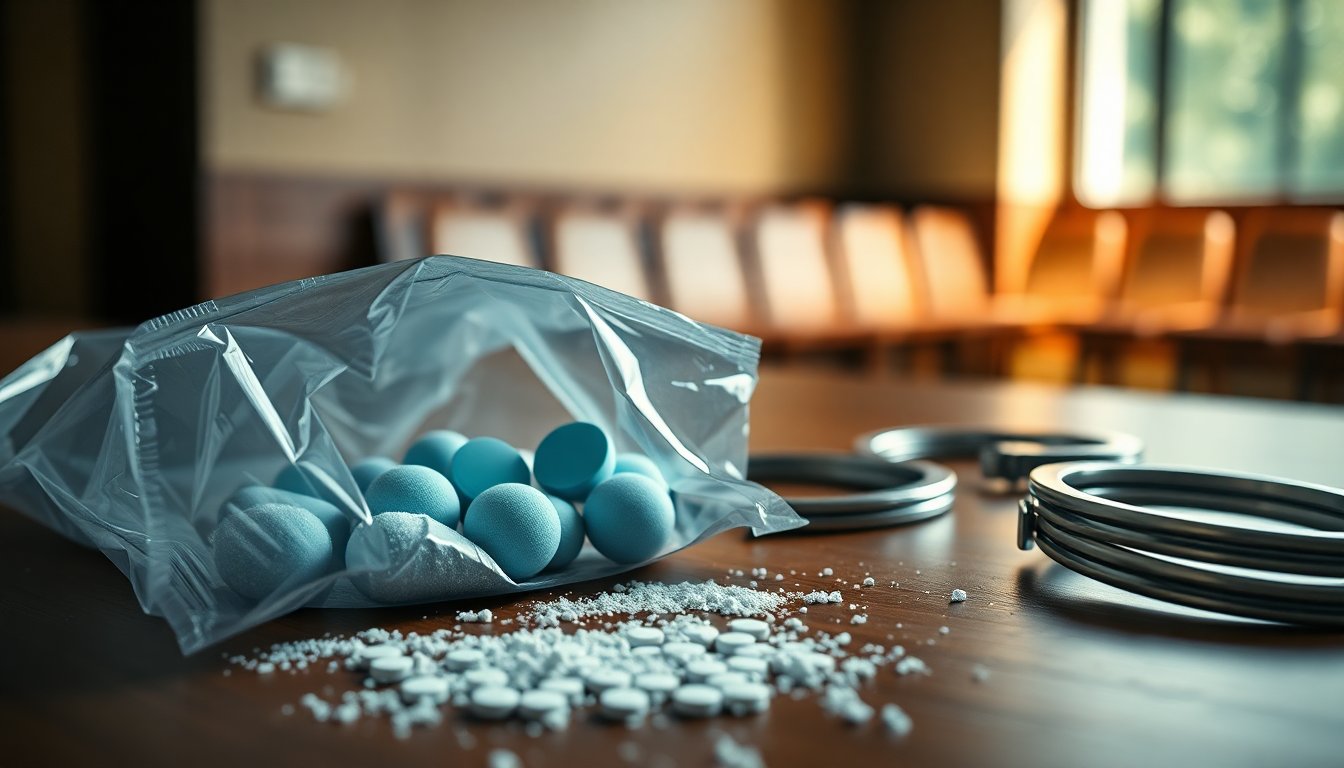
Isaiah Rene Acosta, 28, will spend the next 15 years and eight months in federal prison after a judge found his distribution of counterfeit pills was tied to a fatal overdose. U.S. District Judge Leon Schydlower handed down the sentence on Feb. 10. Acosta had pleaded guilty on Nov. 18 to one count of distribution of a controlled substance causing death.
According to court records, prosecutors say Acosta sold three counterfeit “M-30” tablets on July 16, 2026. Those pills, later tested by forensic labs, contained fentanyl — a synthetic opioid far more potent than heroin. After ingesting the tablets, a woman identified in filings as A.L.M. was found unresponsive, taken to Las Palmas Medical Center and pronounced dead. Forensic toxicology concluded the cause: acute fentanyl intoxication.
Investigators say digital evidence bolstered the case. Photos advertising pills were posted on Snapchat and were shown at a detention hearing on Feb. 27, 2026. The U.S. Drug Enforcement Administration took the lead after the El Paso Police Department notified the agency following the July 16–17 fatality. Federal prosecutors returned an indictment on Feb. 5, 2026; Acosta was arrested on Feb. 21 and remained in custody through the proceedings. The sentence includes five years of supervised release after incarceration and asset restraint measures noted in filings.
Beyond the individual case, federal officials framed the prosecution as part of a broader push against counterfeit-pill networks. U.S. Attorney Justin R. Simmons said these prosecutions aim to interrupt dangerous supply chains and hold dealers accountable. Omar Arellano, the DEA’s El Paso Division special agent in charge, tied the probe to the agency’s “Fentanyl Free America” initiative and warned that traffickers whose products cause death will face federal scrutiny.
The case also illustrates how illicit drug markets have changed: fentanyl is cheaper to produce and far more lethal per milligram than traditional opioids, so pressed counterfeit tablets that mimic prescription brands have become common. Prosecutors increasingly prioritize cases where distribution is directly linked to fatalities, and federal resources — forensic testing, digital-investigation capabilities and interagency task forces — are being deployed more often to trace and disrupt these networks.
That shift has real-world consequences. Emergency responders and hospitals report more overdose calls and severe respiratory-depression cases; community harm-reduction programs see rising demand for naloxone and fentanyl test strips. For law enforcement, the workload now includes more forensic analysis and digital forensics to follow online marketplaces. Municipal budgets and nonprofit funding streams are under greater pressure as public-health and criminal-justice systems adapt.
What comes next is predictable and uncertain at once: prosecutors say similar enforcement will continue while fentanyl-linked fatalities remain high, and forensic results will keep shaping charging decisions. At the same time, suppliers can and do change tactics, which means prevention — expanded testing, treatment access and public education — must go hand in hand with prosecution if communities are to reduce harm.
Key facts at a glance
– Defendant: Isaiah Rene Acosta, 28
– Charge: Distribution of a controlled substance causing death (guilty plea Nov. 18)
– Sentence: 15 years, 8 months in federal prison (imposed Feb. 10) plus five years supervised release
– Incident: Sale of three counterfeit M-30 tablets on July 16, 2026; victim A.L.M. died of acute fentanyl intoxication
– Evidence: Forensic testing of pills, Snapchat advertisements, witness statements
– Investigation: DEA-led after El Paso PD referral; indictment Feb. 5, 2026; arrest Feb. 21, 2026
This case underscores both the lethal risk of counterfeit fentanyl-laced pills and the evolving mix of criminal, medical and policy responses necessary to address the problem.