
Table of Contents
Renewed cross-border strikes force mass displacement in Lebanon
On March 6, 2026, renewed exchanges of attacks drove residents from densely populated neighbourhoods into streets, cars and waterfront areas as they sought safety. The escalation followed cross-border strikes between Israel and the Iran-backed militia Hezbollah, part of a broader confrontation that began after U.S. and Israeli strikes on Iran. Local authorities reported at least 217 fatalities and hundreds more injured as shells and air raids struck Beirut’s southern suburbs and multiple southern districts. Aid agencies and the United Nations warned of a rapidly developing humanitarian disaster.
Who is moving and where they are going
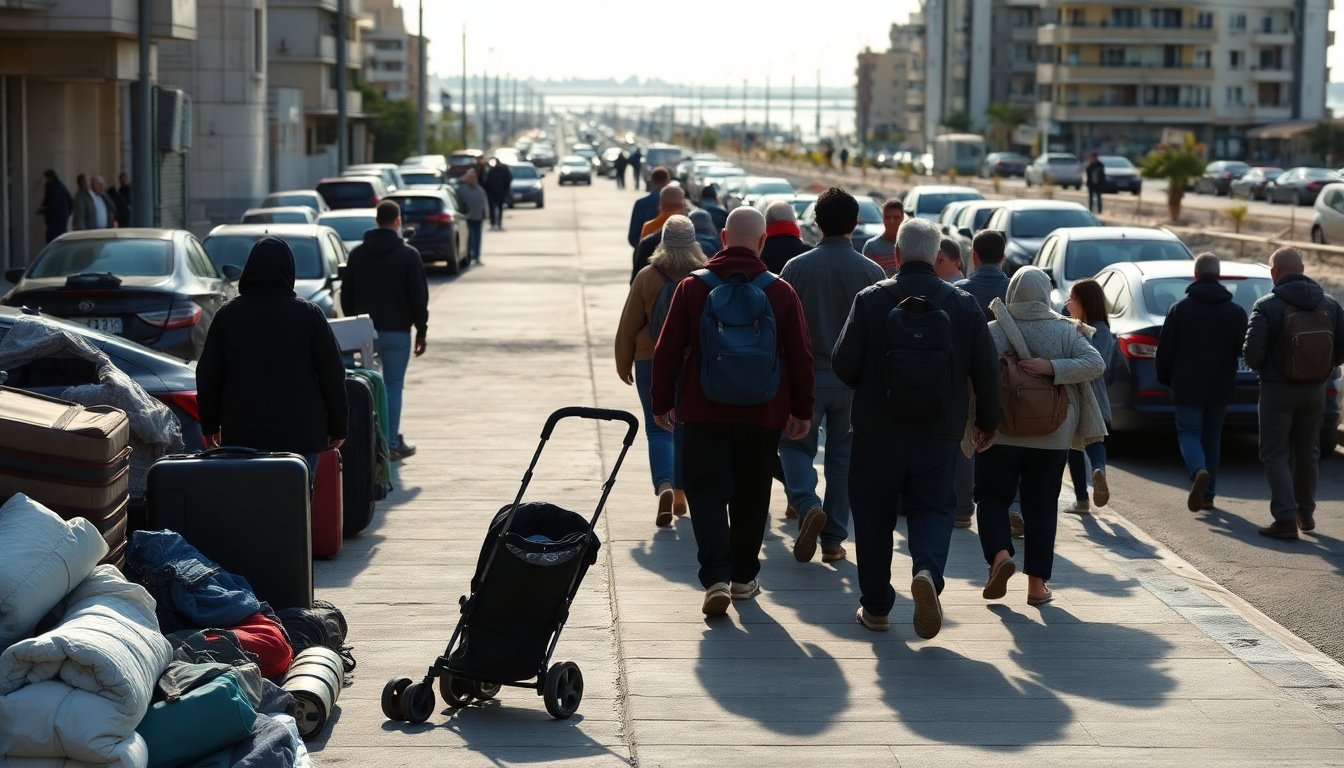
The Israel Defence Forces ordered residents to leave parts of southern Lebanon, Beirut’s southern suburbs and areas of the Bekaa Valley, triggering large-scale civilian movements. Witnesses described chaotic departures, prolonged traffic jams and people stopping wherever space could be found to sleep and prepare food. Improvised camps were reported on the Beirut corniche and families crowded into formal and makeshift shelters. Many displaced people said the upheaval echoed last year’s crisis and left them with few safe options.
Scale of displacement and shelter shortages
Humanitarian organisations estimate that as much as a third of Lebanon has been affected by evacuation directives, with hundreds of thousands ordered to move. The UN humanitarian coordinator said roughly 100,000 people had sought refuge in official shelters, while many more remained in public spaces or private vehicles. Save the Children warned that forced relocations could uproot as many as 500,000 children, disrupting schooling, routines and community protection networks.
Urgent needs and aid gaps
Humanitarian groups reported urgent shortfalls in blankets, clean water, medical care and food. Organisations such as Oxfam described long queues and exhausted evacuees, some repeatedly displaced over the past 14 months. Officials stressed that most displaced people are likely to remain outside formal shelters, complicating aid delivery and needs monitoring across many informal sites.
Political context and official warnings
Lebanon’s caretaker prime minister appealed to the international community to intervene and help halt the attacks, stating that the Lebanese state and its civilian population did not choose the confrontation. Israeli authorities issued evacuation orders near the border and in Beirut’s south. Figures linked to Hezbollah said they would respond to perceived incursions. An Israeli minister compared targeted southern Beirut districts to previously devastated urban areas, heightening fears of intensified bombardment.
Legal and humanitarian implications
Humanitarian actors warned that forced relocations without safety guarantees or adequate services could breach international norms. The regional director for Save the Children said such measures might amount to a serious violation of international humanitarian law if civilians are moved without protection. UN representatives noted that lessons from prior 2026 confrontations, when over a million people were uprooted, remain relevant as displacement repeats.
Frontline developments and security movements
On the ground, the Lebanese army reduced some border deployments as Israeli forces advanced. Hezbollah issued warnings urging Israeli civilians to evacuate towns near the frontier. Reports described damaged apartment facades, shattered roads and buildings rendered rubble after strikes in coastal cities. Israeli authorities reported no confirmed fatalities inside Israel from recent Hezbollah-launched missiles and drones, even as exchanges continued to escalate.
International response and immediate priorities
Diplomats, aid agencies and local leaders called for urgent de-escalation and for donor countries to increase humanitarian support. Immediate priorities include expanding shelter capacity, delivering medical and food assistance and protecting children and other vulnerable groups. The situation remains fluid and dangerous, with potential for further displacements unless hostilities are restrained and humanitarian corridors secured.