
Table of Contents
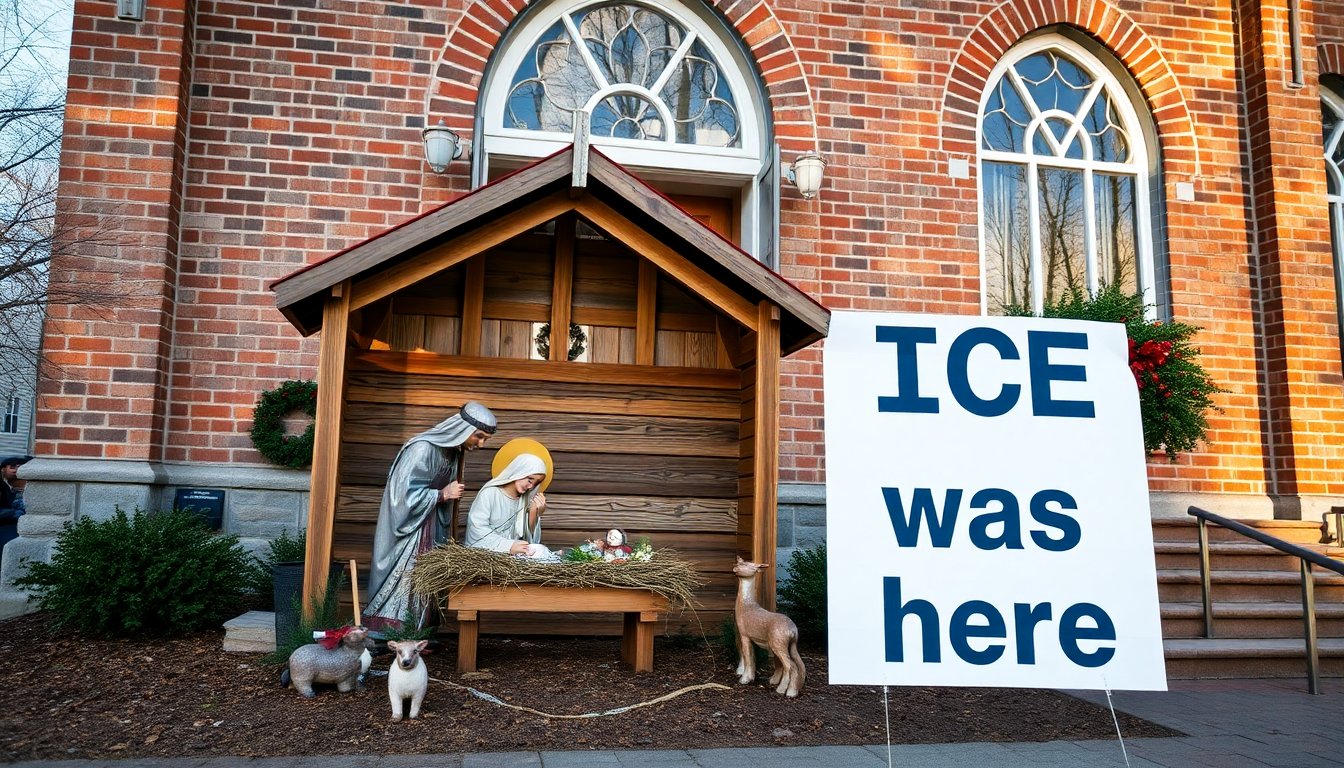
In a notable reinterpretation of the traditional nativity display, St. Susanna Catholic Church in Dedham, Massachusetts, has sparked significant discussion with its latest installation. Instead of the expected figures of Mary, Joseph, and baby Jesus, the church features an empty manger accompanied by a provocative sign stating, “ICE was here.” This exhibit also includes contact information for a group monitoring immigration enforcement in the area. The intention behind this artistic representation is to challenge the congregation and the public to reflect on contemporary societal issues surrounding immigration.
Rev. Stephen Josoma, the pastor of St. Susanna, emphasizes that the church’s peace and justice committee orchestrates this annual display with a specific purpose. He explained to Fox News, “We aim to explore what the birth of Christ would signify in today’s world and the challenges he would confront.” This thought-provoking approach to a cherished Christian tradition raises questions about the intersection of faith and social justice.
Controversy arises over the nativity’s message
While some parishioners appreciate the display’s intent, others express disappointment over the absence of the Holy Family. CJ Doyle, the executive director of the Catholic Action League of Massachusetts, voiced strong criticism, suggesting that the display politicizes a sacred holiday. He stated, “Father Josoma is trivializing the Holy Family and using his parish as a stage for his political advocacy.” This sentiment reflects a broader concern among some church members who believe that the nativity scene should remain focused on its religious significance.
A platform for activism
Rev. Josoma insists that the nativity scene serves as a form of religious art, designed to provoke emotional responses and inspire discussions about pressing issues. “It’s meant to resonate with people on a deeper level, prompting them to consider the realities faced by those in need,” he asserted. This year’s nativity scene is not an isolated incident; Josoma has a history of using similar displays to comment on various social issues, including mass shootings and climate change.
In 2018, his previous nativity display garnered national attention when baby Jesus was depicted in a cage, symbolizing the plight of children separated from their families at the border. “We aimed to create a mirror image of societal issues,” he explained. This ongoing commitment to raising awareness has led to mixed reactions from the community.
Support from the congregation
Despite the criticism, many parishioners stand firmly behind Rev. Josoma’s vision. They highlight the core message of compassion and care for the marginalized, drawing parallels between the story of Jesus and the experiences of modern immigrants. Margo Yie, a 67-year-old parishioner, stated, “Jesus was a refugee himself; his family fled to protect him from harm.” This perspective resonates with the sentiment that the church has a moral obligation to advocate for those facing similar struggles today.
The role of the Archdiocese
While the Archdiocese of Boston has refrained from commenting directly on the display, Doyle argues that the church hierarchy should intervene. He believes that the Archdiocese has previously tolerated Josoma’s politically charged displays and should take a firmer stance against them. Doyle points to a recent statement from the US Conference of Catholic Bishops, which calls for an end to the dehumanization of immigrants, suggesting that the display may contribute to an environment of hostility toward law enforcement.
In contrast, supporters within the parish advocate for a compassionate approach aligned with biblical teachings. Phil Mandeville, a council member, articulated that the essence of Christianity is about welcoming the stranger and feeding the hungry. He passionately argues that it is imperative for Christians to take action in support of immigrants, emphasizing the church’s role in addressing such moral dilemmas.
Broader implications for faith communities
The nativity scene at St. Susanna is part of a larger trend where faith communities engage with contemporary social issues through religious symbols. For example, another church in Illinois depicted baby Jesus with zip-tied hands and gas masks on Mary and Joseph, illustrating themes of family separation. Jillian Westerfield, an associate minister at the Illinois church, explained that their installation seeks to connect the nativity story with the realities faced by today’s migrants, urging reflection on the moral implications of turning away those in need.
This growing trend highlights a significant shift in how religious groups view their role in society. As Rev. Josoma noted, “The church has an obligation to address issues affecting our community, especially during the holiday season when we reflect on the birth of a child who represents hope and refuge.” The ongoing debate surrounding these displays underscores the importance of faith communities engaging with the pressing issues of their time.